How to Find Inspiration as an Artist
✨ Key Points
- Inspiration becomes more dependable when you actively collect ideas and references.
- Exploring unfamiliar subjects and art forms can lead to more original work.
- Consistent practice matters more than waiting for a sudden creative breakthrough.
Whether you are already an artist or are beginning your creative journey, inspiration can feel unpredictable.
Some days ideas arrive easily; on others, even starting a sketch, song, photograph, or story feels difficult.
The solution is not to wait for inspiration to appear.
Artists can build habits and environments that produce ideas more consistently.
Useful sources of artistic inspiration include:
- Personal memories and emotions;
- Nature, architecture, and everyday surroundings;
- Books, films, music, history, and mythology;
- Museums, galleries, performances, and local events;
- Conversations and observations of human behavior;
- Travel and unfamiliar environments;
- Creative prompts and material experiments;
- Social or cultural questions you care about;
- Other art forms outside your usual medium;
- Limitations that force you to approach an idea differently.
Collect references in a notebook, photo folder, voice-note app, or physical mood board.
Record colors, phrases, scenes, questions, and emotions before they disappear. When you lack a new idea, return to this archive and combine two unrelated references into one creative prompt.
Inspiration should begin the process, not control it.
A regular creative routine, curiosity, and willingness to produce imperfect early drafts will help you create more reliably than waiting for the perfect mood.
Find Inspiration Through Other Artists
One of the most reliable ways to find inspiration as an artist is to engage with other creative people.
Visit exhibitions, join studio groups, attend workshops, and talk with artists working both inside and outside your medium.
A creative community can help you:
- Discover unfamiliar techniques and materials;
- Exchange constructive feedback;
- Work through creative blocks;
- Find exhibitions, grants, and collaboration opportunities;
- Learn how other artists price and promote their work;
- Discuss realistic artist merchandise income, production costs, and profit margins;
- Understand how others balance creativity with business responsibilities;
Study how artists develop ideas, but never copy their finished work or signature style.
Instead, examine their process: Where do they find references?
How do they build a collection? What themes and values connect their work?
Local art associations, open studios, classes, online communities, and coworking spaces can provide valuable connections.
The goal is not to prove that you are a “true artist.”
It is to build relationships that support experimentation, honest learning, and a more sustainable creative career.
Find Inspiration in TV Shows and Movies

TV shows and movies combine storytelling, visual composition, music, costume design, architecture, lighting, and character development.
This makes them valuable sources of inspiration for painters, writers, animators, photographers, musicians, and other artists.
Watch consciously and pay attention to:
- Color palettes and lighting;
- Camera angles and composition;
- Character design and costumes;
- Architecture and fictional environments;
- Music, sound, and pacing;
- Dialogue and emotional tension;
- Symbolism and recurring visual themes;
- The social questions explored by the story.
For example, you might study the walls in Attack on Titan as symbols of safety, fear, control, and isolation.
Another artist may be inspired by the animation style, movement, or scale of its fictional world.
A comedy, historical drama, or documentary can be equally useful when it connects with your interests.
The goal of consuming media consciously is not to copy recognizable characters, scenes, or designs.
Instead, identify the creative decision that affected you and translate its underlying idea into your own style.
After watching something memorable, write down:
- What caught your attention?
- What emotion did it create?
- Which artistic decision produced that response?
- How could you explore the same theme differently?
Turning entertainment into active observation helps you build a richer visual and emotional reference library for future work.
Find Inspiration in Books
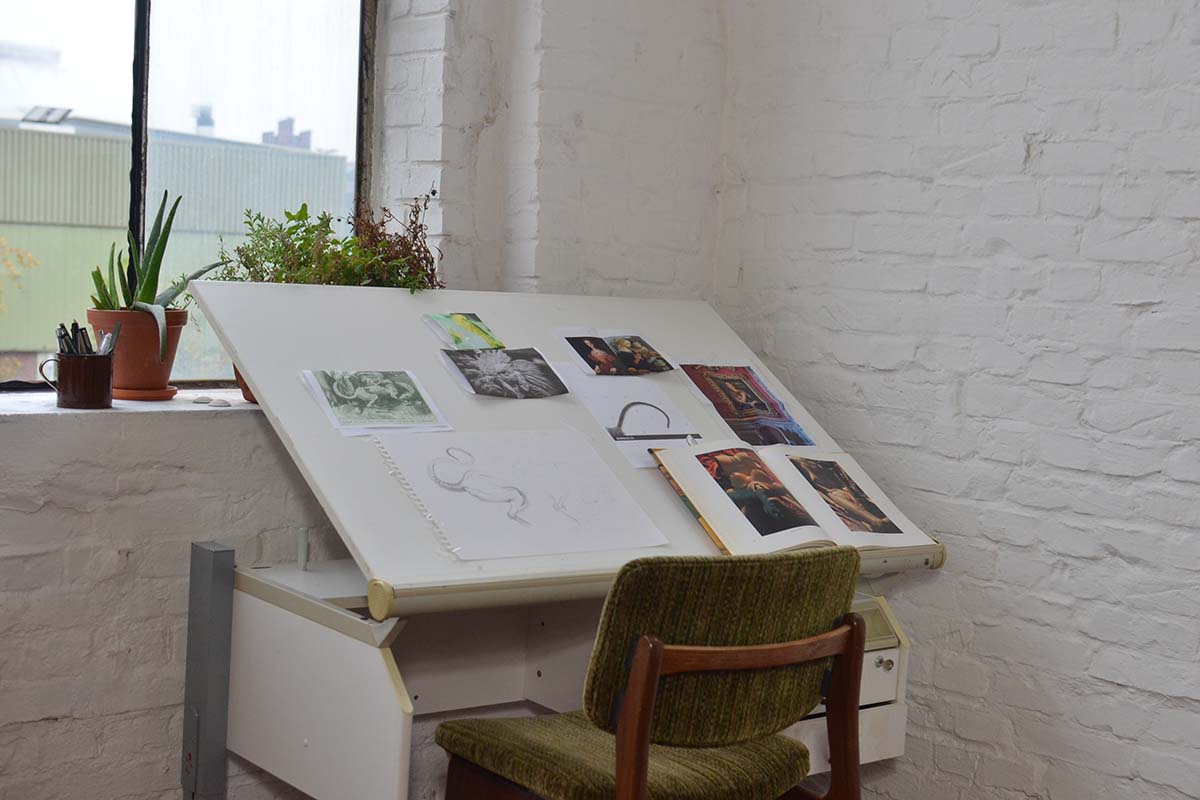
Books remain one of the richest sources of inspiration for artists of all kinds.
Unlike fast-moving digital content, reading gives you time to imagine settings, faces, colors, sounds, and emotions for yourself.
Different types of books can support different creative needs:
- Fiction develops characters, atmosphere, symbolism, and imagined worlds.
- Poetry demonstrates how rhythm, emotion, and imagery can work with very few words.
- Nonfiction provides real events, cultures, ideas, and social questions to explore.
- Biographies reveal how established creators developed their work and careers.
- Art books offer direct access to techniques, movements, compositions, and visual references.
- Research materials add accuracy and depth to projects involving unfamiliar subjects.
For insight into the creative processes of influential filmmakers and visual storytellers, consider:
- The Nolan Variations by Tom Shone: Explores Christopher Nolan’s approach to time, structure, memory, and cinematic scale.
- Catching the Big Fish by David Lynch: A concise reflection on creativity, ideas, meditation, and filmmaking.
- Starting Point: 1979–1996 by Hayao Miyazaki: Collects essays and interviews about animation, imagination, nature, and artistic responsibility.
- Guillermo del Toro: Cabinet of Curiosities: Opens del Toro’s notebooks to show how sketches, monsters, literature, and personal memories develop into finished worlds.
- The Creative Act by Rick Rubin: Examines creativity as a way of observing and responding to the world.
- Ways of Seeing by John Berger: Helps visual artists question how culture, context, and power influence what people see.
Read actively rather than trying to finish as many books as possible.
Mark passages, record visual ideas, sketch imagined scenes, and ask what creative decisions produced your reaction.
A useful reading note can include:
- The idea or image that caught your attention.
- The emotion it created.
- The theme or question behind it.
- How it connects with your own experiences.
- How you could reinterpret it without copying.
Your reading list does not need to be limited to art.
Philosophy, psychology, science, mythology, history, architecture, and nature writing can introduce ideas that artists within your usual field may never encounter.
Find Inspiration by Visiting an Art Gallery
Visiting an art gallery allows you to experience scale, texture, color, and spatial relationships that photographs rarely capture accurately.
It also exposes you to artists, materials, and ideas you may never encounter through your usual online feeds.
You can explore traditional museums, independent local spaces, student exhibitions, open studios, or contemporary institutions such as the Saatchi Gallery in London.
The objective is not to see as much work as possible, but to notice which pieces create a strong response and understand why.
During your visit, pay attention to:
- The first artwork that draws your attention;
- The use of color, texture, light, and negative space;
- How the exhibition creates a story between different works;
- The materials and techniques you have not tried;
- The emotions or questions each piece creates;
- How titles and descriptions change your interpretation;
- How visitors respond to different artworks.
Take notes or make small sketches when photography is not permitted.
Afterward, choose one idea, such as a color relationship, material, emotion, or exhibition theme, and reinterpret it through your own experiences and artistic style.
Regular gallery visits can strengthen your visual vocabulary and critical thinking.
They help you understand not only how art is created, but also how it is selected, presented, explained, and experienced by an audience.