
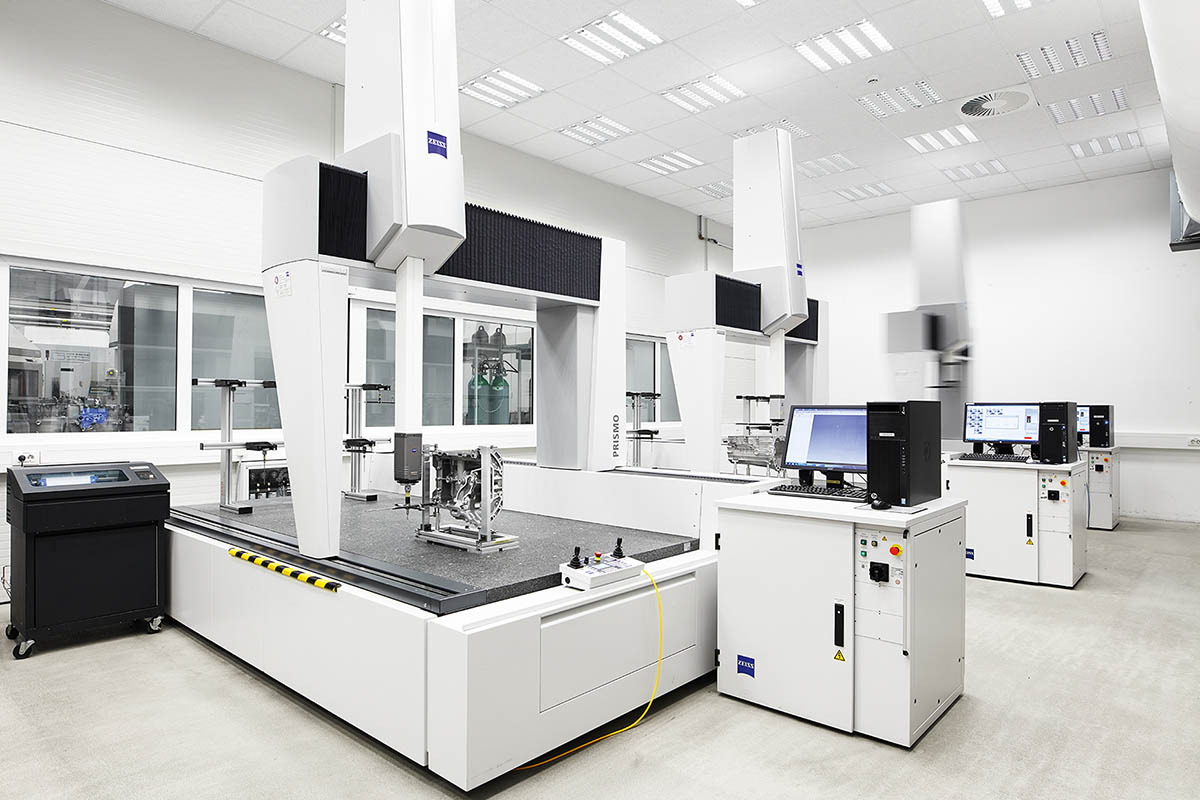
The Kinds of CMM Machines: A Practical Foundation for Understanding Coordinate Measuring Machine Types
✨Key Points
Understanding coordinate measuring machine types helps manufacturers select the right CMM for accuracy, part size, and inspection environment.
From portable CMM machines to bridge and gantry CMM systems, each type supports a specific role in manufacturing quality control.
Advances in coordinate measuring machine technology have made CMM inspection systems essential to modern industrial metrology.
North America’s manufacturing industry might have disappeared altogether if it weren’t for CMM machines, formally known as coordinate measuring machines.
At a moment when globalization placed enormous pressure on domestic factories—forcing them to compete with overseas manufacturers operating under lower labor costs and fewer regulations—coordinate measuring machine technology became a quiet but decisive advantage.
CMM inspection systems allowed manufacturers to automate manufacturing quality control with a level of precision, repeatability, and efficiency that manual inspection simply could not match.
This shift was not cosmetic. It changed what was economically possible.
By reducing scrap, minimizing rework, and ensuring consistency at scale, industrial metrology became a cornerstone of modern production rather than a supporting function.
If the Industrial Revolution began in Europe, the United States became synonymous with factory innovation in the twentieth century, especially after Henry Ford refined the production line.
The Ford Model T rolled off assembly lines at unprecedented rates, setting new global expectations for efficiency and interchangeability.
After decades of dominance, globalization threatened North America’s manufacturing base, and many predicted its decline.
It was during this period that coordinate measuring machine types became standard equipment on factory floors across the continent.
To understand why, it helps to understand how coordinate measuring machine technology works—and why different types of CMM machines exist in the first place.
How Coordinate Measuring Machine Technology Works
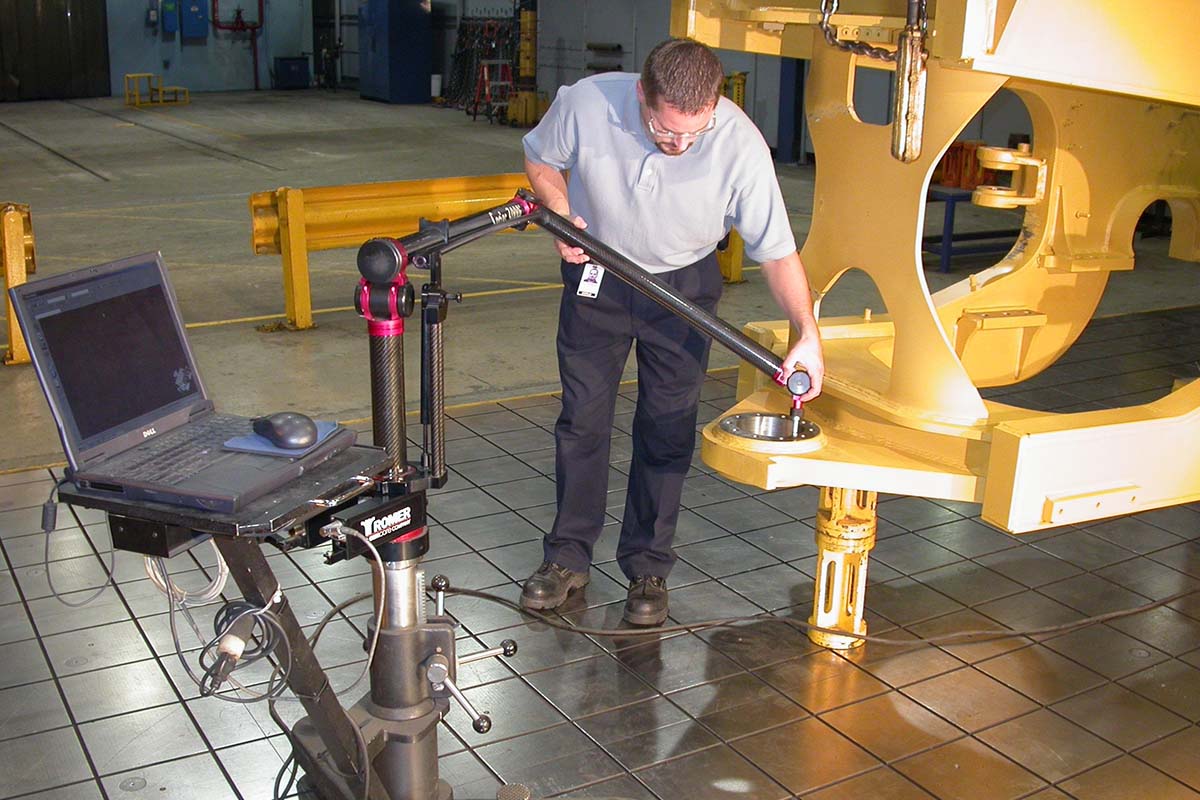
A coordinate measuring machine measures the physical and geometrical characteristics of an object, either manually through a human operator or automatically via a programmed inspection routine.
All CMM machines operate along three axes—X, Y, and Z. Mounted on the moving axis is a probe or sensor that scans the surface of a part and collects precise dimensional data.
That data is then compared against a CAD model or digital blueprint already stored in the CMM inspection system.
If the measured geometry deviates from the model beyond acceptable tolerances, the system flags the discrepancy immediately.
In this way, coordinate measuring machine technology removes subjectivity from inspection and turns quality control into a data-driven process.
Because manufacturers produce parts of vastly different sizes, shapes, and tolerances, several coordinate measuring machine types have evolved over time.
Selecting the right system depends on part size, inspection environment, and required accuracy.
What follows is a practical overview of the four most common types of CMM machines used in modern manufacturing.
Portable CMM Machines
Portable CMM machines are designed for flexibility and speed.
Unlike traditional fixed systems, they allow inspection to happen directly on the shop floor, eliminating the need to transport parts to a controlled measurement room.
One of the most widely known examples is the ROMER Arm, a portable CMM capable of reverse engineering parts when original drawings no longer exist.
These systems are commonly used for quality control, on-machine verification, virtual assembly, and 3D modeling.
Portable systems use articulated arms combined with laser or white light scanning to collect thousands of data points per second.
This makes them especially valuable for manufacturers working with large parts, tight production schedules, or frequent design changes.
By enabling fast, accurate inspection at the point of production, portable CMM machines play a critical role in reducing scrap, preventing rework, and supporting real-time manufacturing quality control.
Bridge CMM Machines
The bridge CMM is the most widely used of all coordinate measuring machine types and has been the backbone of industrial metrology since the 1970s.
Bridge CMM machines are popular because they can measure a wide range of part sizes with excellent accuracy and repeatability.
As a result, they are used across industries including automotive, medical devices, electronics, and general manufacturing.
Structurally, a bridge CMM consists of a precision granite table with two vertical supports that carry the horizontal X-axis beam.
Most bridge CMM machines operate on air bearings, allowing friction-free motion and reducing mechanical wear.
Modern bridge systems often include temperature compensation, vibration isolation, and thermal stability features, allowing reliable operation even in active shop floor environments.
Because of their balance of cost, precision, and durability, bridge CMMs remain a cornerstone of manufacturing quality control.
Gantry CMM Machines
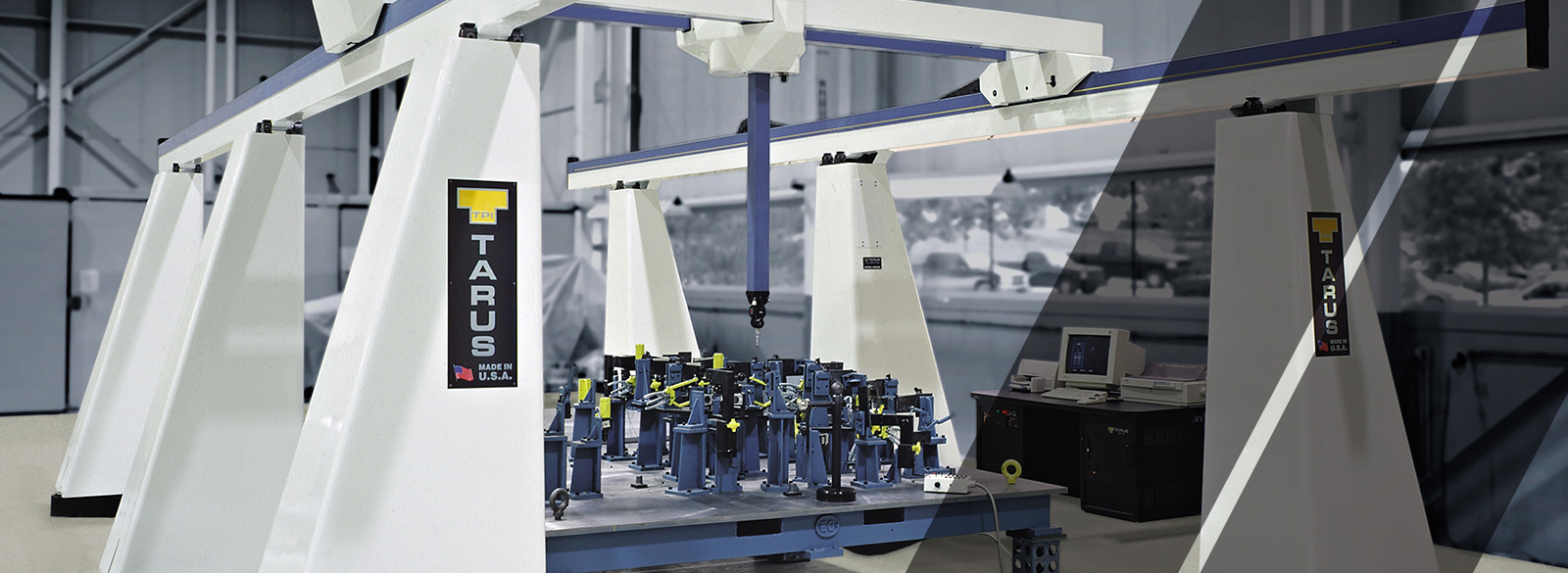
Gantry CMM machines are designed for parts that are simply too large or heavy for traditional bridge systems.
Functionally similar to bridge CMMs, gantry systems are scaled for massive components commonly found in aerospace, automotive, energy, and heavy equipment manufacturing.
These CMM inspection systems are capable of measuring parts that span several meters and weigh many tons.
Instead of a fixed table, gantry CMMs move along floor-mounted rails, providing open access to the measuring volume.
Parts can be loaded using cranes or lift trucks, which simplifies inspection logistics for large assemblies.
Because their guideways and drive systems are positioned away from the measuring area, gantry CMM machines are less exposed to contaminants and require less maintenance over time. When large-scale precision is required, gantry systems are often the only practical solution.
Vision CMM and Multisensor Systems
Some parts are too small, delicate, or intricate to be measured with a traditional tactile probe. In these cases, vision CMM systems and multisensor machines are used.
These coordinate measuring machine types rely on optical measurement technologies such as video imaging, white light scanning, and laser sensors.
Vision CMM systems are ideal for parts smaller than 600 square millimeters in area and less than 200 millimeters tall, including electronic components, medical devices, and precision-machined micro parts.
In a typical vision CMM, the part remains stationary while the sensor head moves along the X, Y, and Z axes.
Advanced systems often use lightweight carbon fiber structures to reduce vibration and improve measurement speed without sacrificing accuracy.
By combining optical and tactile sensing, multisensor CMM machines offer exceptional flexibility for manufacturers working at very small scales.
Why Coordinate Measuring Machine Types Still Matter
Modern manufacturing depends on consistency, and consistency depends on measurement.
That is why coordinate measuring machine technology remains essential to competitive manufacturing operations.
Each of the types of CMM machines described above serves a specific purpose within industrial metrology.
Choosing the right system requires understanding your parts, tolerances, production volume, and inspection environment.
Historically, CMM machines helped preserve North America’s manufacturing base during a period of intense global pressure.
Practically, they continue to support manufacturing quality control by improving accuracy, reducing waste, and enabling data-driven decision-making.
If you want to understand coordinate measuring machine types more deeply—or select the right CMM inspection system for your operation—the best next step is to consult a local metrology expert who understands both the technology and the realities of your production floor.
The right CMM does more than measure parts. It protects your process.