Commercial Paving in 2026: What Materials and Designs Actually Make Sense for Your Property
✨Key Points
- Commercial paving decisions impact safety, brand perception, and long-term costs—not just appearance.
- Asphalt is cost-effective short-term, while concrete and permeable paving offer better long-term ROI.
- 2026 trends focus on sustainability, drainage, and lifecycle value over upfront savings.
When you look at a commercial property, paving might seem like a small detail, but it quietly shapes everything, from first impressions to maintenance costs and even how trustworthy your business feels to a customer pulling into your parking lot.
In 2026, this decision is no longer just about choosing between asphalt and concrete; it’s about durability, long-term ROI, sustainability, and how your space performs under real daily use.
Studies show that up to 70% of first impressions are influenced by exterior conditions, including parking lots and walkways, and businesses that go for the cheapest option upfront often end up spending 30–50% more over time on repairs and resurfacing.
At the same time, newer solutions like permeable paving are gaining traction, with the market growing at around 5–7% annually, driven by stricter drainage regulations and climate concerns.
To make a smart decision, it helps to understand what actually matters today:
- Traffic load and usage (light retail vs. heavy commercial vehicles;)
- Upfront cost vs. lifecycle cost (what you pay now vs. what you maintain later;)
- Drainage and climate impact (especially in rain-heavy regions like the PNW;)
- Visual experience and brand perception (clean, well-designed spaces build trust instantly.)
Each paving material comes with trade-offs that affect performance, durability, and long-term expenses, which is why working with a commercial paving contractor is less about installation and more about making a strategic choice that protects your property and avoids unnecessary costs down the line.
Asphalt
Asphalt is a common paving type used in most roads around the world.
It is readily available and costs less compared to other types of paving materials.
It may also help in extending the life of concrete paving as you can place it on top.
The only drawback to using asphalt is that it does not last for a long time and will need routine maintenance to ensure its smoothness and effectiveness.
It also requires regular filling up, which comes with additional costs.
Concrete
Bituminous Macadam
Bituminous macadam is a practical option that often gets overlooked, especially for driveways and lighter-use commercial areas where you don’t need the full cost of concrete but still want something more structured than basic asphalt.
It’s made from compacted layers of crushed stone bound with bitumen, which gives it a solid, stable surface that can handle regular use without constant upkeep.
One of its biggest advantages is low maintenance.
After installation, there’s usually very little to worry about beyond basic care, keeping the surface clean and sweeping away debris, especially during fall and winter, so water doesn’t sit on top and cause gradual wear.
That said, it’s not completely maintenance-free.
In the first few years, newer surfaces may develop minor wear or surface irregularities, and light repairs might be needed to keep everything smooth and functional.
What makes bituminous macadam appealing is the balance it offers:
- More affordable than concrete, with decent durability;
- Simpler maintenance compared to traditional asphalt surfaces;
- Good for moderate traffic areas like private roads and commercial driveways.
The key, though, is proper installation.
If the base layers aren’t prepared correctly, the surface won’t hold up as expected.
That’s why working with a commercial paving contractor matters here, they can ensure the foundation, compaction, and drainage are done right, so you don’t end up paying for avoidable repairs later.
Stone Paving
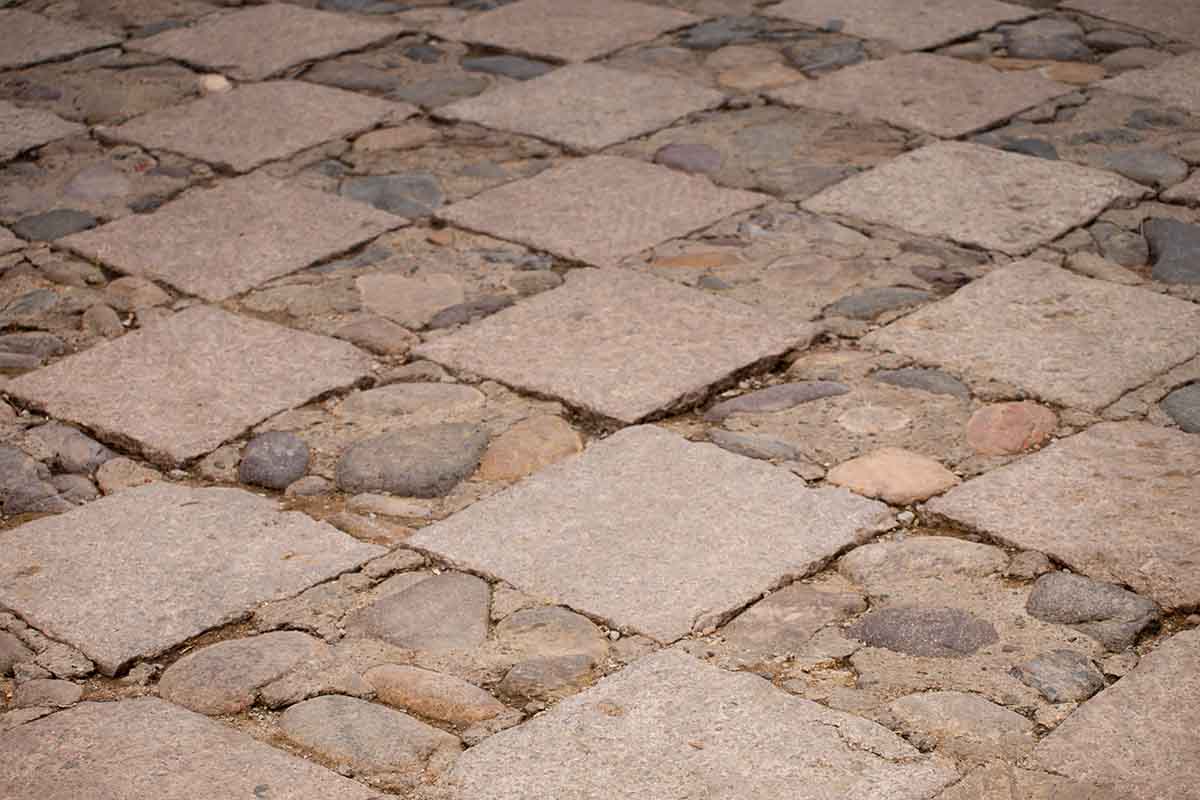
Stone paving is one of the most durable options you can choose, which is why it’s often considered for parking areas, walkways, and high-visibility commercial spaces where both strength and appearance matter.
Unlike standard materials like asphalt or even concrete, natural stone holds up extremely well over time, resisting cracking, weather damage, and heavy use when installed properly.
What really sets stone paving apart is the look.
It has a premium, timeless feel that immediately elevates how a property is perceived, which can be a big advantage for businesses where first impressions matter, think retail spaces, hotels, or mixed-use developments.
It’s also widely available in different textures and finishes, so you can match it to your brand or architectural style.
Here’s where it stands in practical terms:
- Very high durability with long lifespan when maintained properlyl.
- Strong visual appeal that enhances property value and perceptionl.
- Flexible design options (natural stone, cobblestone, flagstone, etc.)
The trade-off is cost.
Stone paving is typically more expensive than concrete or asphalt, both in materials and installation, which is why many property owners only choose it when design, branding, or long-term durability really matter.
In other words, it’s less about necessity and more about strategy, investing in a surface that not only performs well but also creates a stronger visual and emotional impact.
Composite Paving
This type of paving is created by enhancing traditional asphalt with additional materials to improve its performance, making it a smarter option for modern commercial properties.
By mixing asphalt with additives like polymers or even recycled plastics, the surface becomes more flexible, longer-lasting, and better at resisting wear, which helps it stay smooth under constant traffic and changing weather conditions.
What makes this option stand out is the balance between durability and efficiency.
The modified mix is often lighter while still being stronger, which reduces stress on the base layer and improves overall lifespan compared to standard asphalt.
It’s a practical upgrade if you want better performance without jumping all the way to the cost of concrete.
Here’s how it performs in real use:
- More durable than standard asphalt, with improved resistance to cracks and deformation;
- Smoother surface for longer periods, even under regular traffic;
- Can include recycled materials, making it a more sustainable choice.
That said, it’s not completely maintenance-free.
You’ll still need occasional upkeep over time, although typically less frequent than with regular asphalt.
And installation really matters here, because the mix is more advanced, it requires experienced professionals to apply it correctly.
If it’s not installed properly, you won’t get the durability and performance benefits you’re paying for.
Porous Asphalt Paving
This type of paving may be used to restrict water from flowing freely on the surface of roads or parking lots.
This will help prevent flooding due to heavy rains or any other reasons.
The porous asphalt paving is mainly used on commercial properties to prevent damage.
The paving used on commercial properties will depend on several factors, as discussed above.
Besides, paving designs are also essential for commercial properties like parking lots, roads, and even driveways.