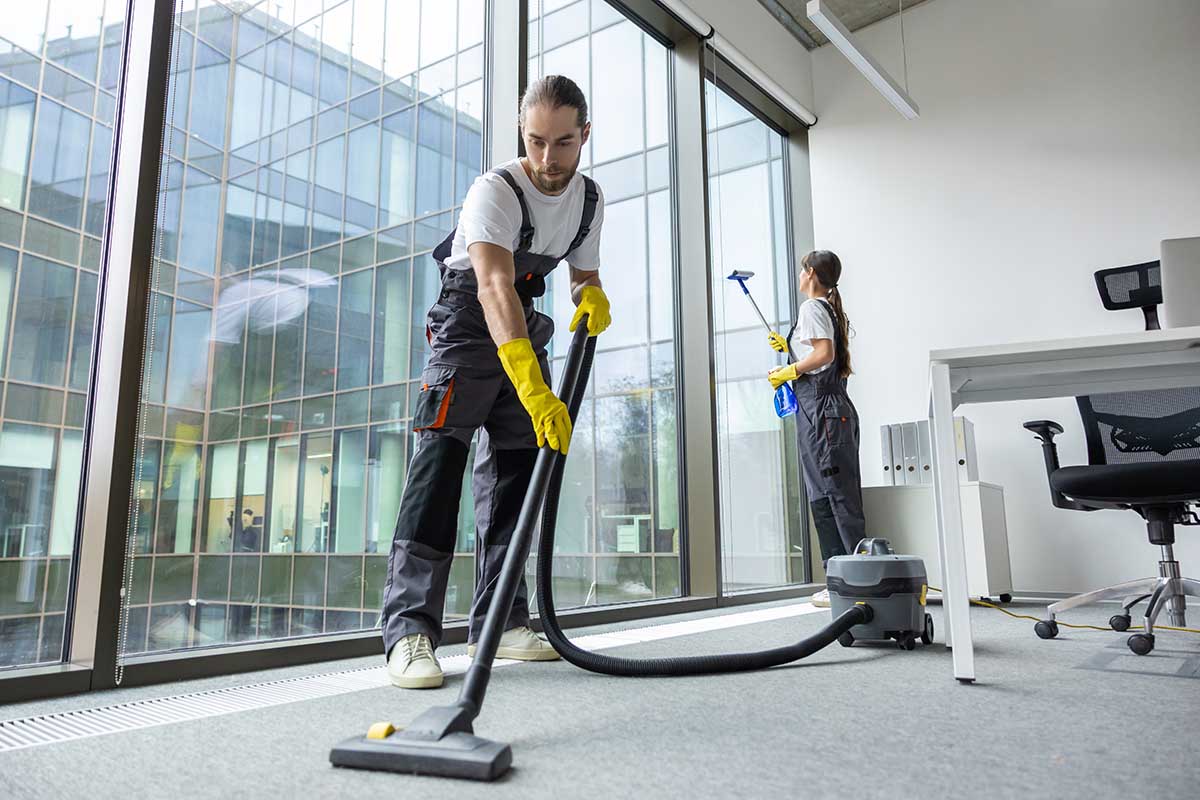
How to Scale Your Commercial Cleaning Business into High-Paying Industrial Markets
✨Key Points
- Industrial contracts often provide higher revenue and longer-term business opportunities than standard commercial cleaning.
- Expanding into industrial markets requires specialized equipment, safety training, and operational expertise.
- Australia’s growing commercial cleaning industry offers significant opportunities for businesses ready to scale.
Transitioning from a standard commercial cleaning operation into the industrial maintenance sector is one of the most lucrative moves an Australian business owner can make.
While office and retail cleaning provide steady income, the real financial growth lies in heavy-duty commercial contracts, warehousing logistics, and municipal tenders.
The financial upside to making this shift is undeniable for companies prepared to elevate their service offerings.
Capturing even a fraction of this expanding market requires moving beyond standard mops and vacuums to enter the high-stakes world of industrial asset management.
According to recent market analysis, the commercial cleaning services industry in Australia is projected to reach $20.1 billion by 2026.
Achieving a share of this massive revenue pool means adapting your operational model to meet the intense demands of the industrial sector.
Upgrading Your Equipment and Asset Base
Scaling into industrial markets means taking on larger physical footprints, such as massive transport depots, complex intersections, and sprawling car parks.
You can no longer rely on manual labour or basic commercial vacuums.
Furthermore, constantly renting heavy equipment eats into your profit margins and makes you less competitive during the tender process.
Taking ownership of your capital assets is a strict prerequisite for bidding on local government jobs and prime warehouse contracts.
When you decide to transition from renting to owning, researching a street sweeper for sale becomes a necessary operational step.
Owning robust, mechanised sweepers allows your business to collect large windrows, clear complex commercial pedestrian zones, and manage seasonal leaf removal efficiently.
Tender specifications, such as those frequently issued by local city councils, consistently mandate the use of mechanised vehicles that leave zero loose material on road pavements.
Owning the right machinery proves to facility managers that you have the internal capacity to handle multi-year commitments without relying on third-party equipment hire.
It also demonstrates that you understand how to know if a walk-behind sweeper is the best fit for a facility’s size, layout, and cleaning requirements, helping clients trust your expertise and operational capabilities.
Formalising Your Expansion Strategy

Once your physical capabilities are upgraded, your operational framework will need a significant overhaul to match. Industrial property in Australia is experiencing massive growth.
Master Builders Australia recently revealed that work in the industrial property sector rose by 8.75 percent in the 2024 financial year to $11.8 billion.
With ultra-tight logistics vacancy rates across the country, such as just 2.0 percent in Perth, existing warehouses are operating at maximum capacity.
Facility managers simply cannot afford downtime, and they rely on highly organised cleaning contractors to keep their operations moving seamlessly.
Before you start bidding on these massive jobs, you need a highly structured roadmap.
You cannot guess your way through complex municipal requirements or massive distribution centre schedules.
Documenting your goals, setting measurable timelines, and outlining exactly how you will train your staff are essential prerequisites.
For advice on getting these structural elements right, you can review helpful guides on turning a business action plan into reality.
A formal strategy ensures your capital investments and operational changes actually result in sustainable long-term growth.
Navigating Strict Safety and Environmental Compliance
Winning high-paying industrial contracts is not just about having the right gear.
It is equally about proving your capability to manage complex safety and environmental risks.
Warehouses and municipal zones carry significant occupational hazards that require strict adherence to local regulations.
If your business cannot demonstrate a flawless compliance record, you will be disqualified before the tender review process even begins.
To successfully secure and maintain these premium contracts, your cleaning business must master several critical compliance areas:
- Dust Hazard Management: Under Safe Work Australia guidelines, the time-weighted average exposure standard for respirable crystalline silica is aggressively capped at just 0.05 milligrams per cubic metre over an eight-hour workday. Dry sweeping with brooms is often prohibited in these environments, necessitating vacuum-assisted mechanised sweeping to capture airborne particles safely.
- Environmental Protection: The Australian Environmental Protection Authority enforces strict stormwater protection mandates on municipal sweeping contracts. You must ensure your cleaning vehicles prevent silt and hazardous debris from washing into local drainage systems.
- Workplace Prequalifications: Top-tier industrial clients expect cleaning contractors to hold specialised operational overheads, including ISO certifications and Cm3 workplace safety pre-qualifications.
- Waste Tracking: Comprehensive environmental waste tracking systems must be implemented to document exactly how and where industrial debris is disposed of. This protects both your business and the property owner from potential environmental liability.
Securing Multi-Year Contracts and Long-Term Profitability
Once your equipment and compliance frameworks are aligned, the focus shifts to securing long-term agreements.
The current demand for road freight and logistics services has dramatically expanded the physical footprint requiring specialised sweeping.
The Valuation Insights Report noted that prime warehouse capital values have more than doubled over the past decade in major hubs like Sydney and Melbourne.
Property owners are highly motivated to protect these valuable assets through premium facility maintenance.
Specialised industrial cleaning services in Australia recently experienced a 4 percent rise in sector demand, directly driven by the rapid expansion of e-commerce warehousing.
By positioning your business as a fully equipped, compliance-focused industrial service provider, you can transition from highly competitive short-term jobs to highly lucrative multi-year commitments.
The initial capital investment and strategic planning required to enter this space act as a barrier to entry, keeping your less-prepared competitors out and securing your place in a highly profitable market.