Home Lighting Solutions: How to Choose the Right Bulbs for Every Room
✨Key Points
- Choose lumens, not wattage, for brightness: Wattage measures energy consumption rather than the amount of light produced.
- Match the bulb to the fixture: Confirm the base, shape, rating, maximum wattage, and dimmer compatibility before buying.
- Use layered lighting: Combining ambient, task, and accent lights creates a more functional and comfortable home.
Good lighting affects how comfortably and safely people cook, work, read, relax, and move through their homes.
Yet many homeowners choose bulbs based only on wattage or appearance, leading to dim work surfaces, harsh bedrooms, screen glare, mismatched colours, and fixtures that cannot be dimmed properly.
Energy efficiency is another practical concern.
According to the U.S. Department of Energy’s 2026 guidance, top-performing LEDs consume approximately 80% less energy than traditional incandescent bulbs.
LEDs also require fewer replacements, which is particularly useful for high ceilings and difficult-to-reach fixtures.
Before selecting a bulb, check:
- Fixture base and bulb shape;
- Light output measured in lumens;
- Colour temperature measured in kelvins;
- Colour Rendering Index, or CRI;
- Dimming and smart-control compatibility;
- Whether the fixture is open, enclosed, damp-rated, or wet-rated;
- Maximum wattage and manufacturer requirements;
- Intended use of the room;
It is also important to understand that E12 describes a bulb’s base, not its lighting technology.
The “E” identifies an Edison screw base, while “12” refers to its approximate 12-millimetre diameter.
E12 bulbs are commonly used in chandeliers, wall sconces, decorative lamps, and ceiling fans, and they are available in LED and other formats.
This guide explores practical lighting solutions for bedrooms, kitchens, bathrooms, living rooms, workspaces, and outdoor areas.
The goal is to help you layer ambient, task, and accent lighting so every room feels comfortable, functional, and visually balanced.
Lighting Solutions for the Home Environment: Traditional Lighting Options
Traditional lighting remains one of the most popular solutions, thanks to its convenience and affordability.
Incandescent bulbs are still widely used in many homes for general lighting purposes, and halogen bulbs can be used for spot or directional lighting.
For a more energy-efficient option, you can switch to compact fluorescent lamps (CFLs) which are becoming increasingly popular.
These bulbs offer long life and economical lighting solutions, making them a great option for areas in the home that need to be lit for extended periods.
Technology has advanced, however, and so now offers further alternatives and ways of using less energy to help with environmental concerns.
This has become a more important issue more recently, or at least one that is currently being taken more notice of.
LED Lighting Solutions
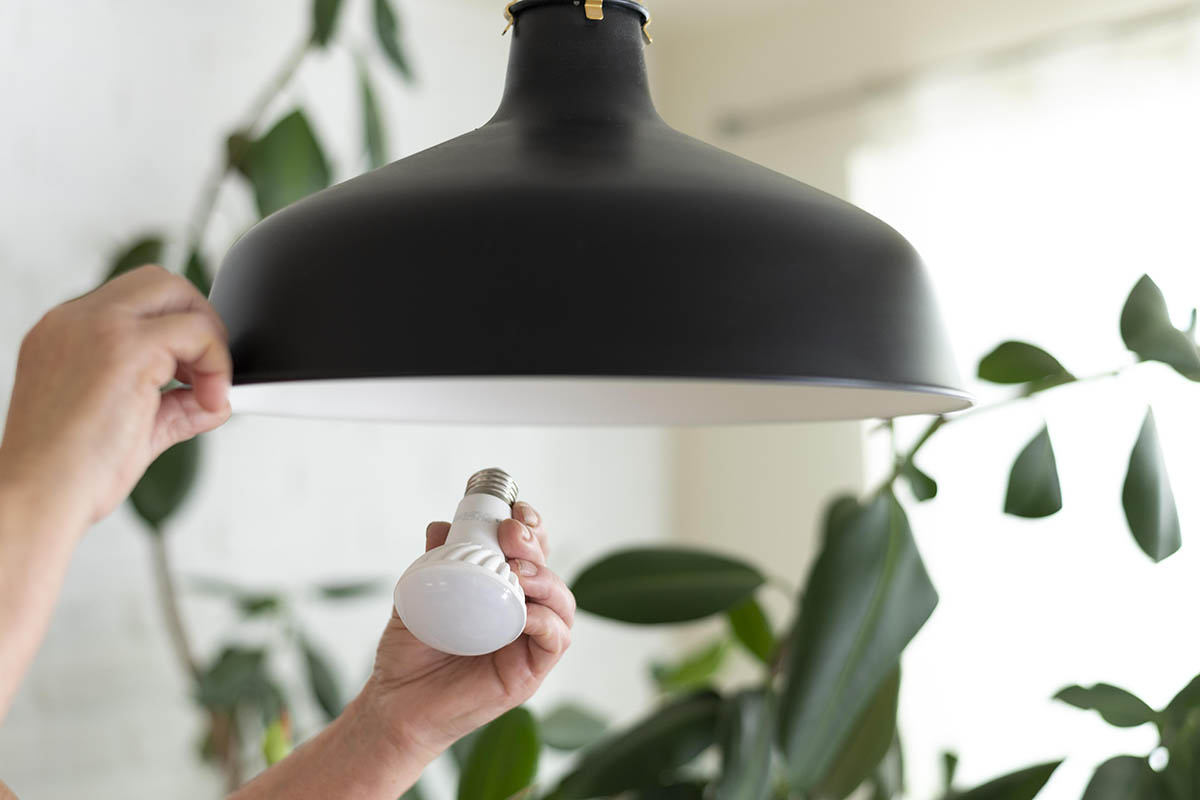
For those considering more efficient lighting options, the LED (light-emitting diode) has become an increasingly popular choice.
It uses much less energy than traditional lighting, making it a great option for illuminating large spaces or rooms that need to be constantly lit. LEDs also provide superior lighting quality and are available in a wide range of colors.
Considering the energy savings further, it is said that LEDs are 90% more efficient than the incandescent light bulb alternative.
They work via an electrical current that passes through their microchip, which then illuminates the tiny light source that is the LED, resulting in visible light.
Many LEDs can prove very effective and they come in different colors.
Such lighting solutions can also be integrated with other home automation products such as motion sensors, timers, and dimmers, enabling you to have complete control over the lighting in your home. It is good to have this kind of control.
A big part of how we view our home is, after all, how it is lit for all to see.
Smart Lighting Solutions
In recent years, smart lighting systems have become increasingly popular as they offer several benefits over traditional approaches.
They allow you to control the lighting in your home remotely using your smartphone or tablet, allowing you to change the levels and even set timers for when lights should be turned on or off.
These systems are also highly energy efficient and can help you save money on your electricity bills.
Additionally, smart solutions offer a range of lighting options that can be programmed to suit different moods or tasks.
If you are one for keeping up with the latest technology then you will enjoy the smart option.
Conclusion
The right lighting does more than improve a room’s appearance.
It can make cooking safer, reduce shadows while working, create a calmer evening routine, and help family and friends feel more comfortable in your home.
Before replacing bulbs or fixtures, consider how each room is actually used.
A practical lighting plan should help you:
- See clearly while cooking, reading, cleaning, and working.
- Reduce glare during computer work or television viewing.
- Create a clear boundary between productive daytime hours and evening relaxation.
- Make stairs, entrances, and hallways safer to navigate.
- Use dimmers and layered lighting to adjust the atmosphere.
- Reduce energy consumption with efficient LED bulbs.
- Highlight artwork, furniture, and architectural details.
- Make social spaces feel warmer and more inviting.
Start by correcting the room that causes the most frustration.
That might mean adding task lighting above a kitchen counter, choosing a warmer bedside bulb, or replacing a harsh overhead light with several softer sources.
Simple bulb replacements can often be handled independently after checking the fixture specifications.
New wiring, permanent fixtures, or recurring problems such as flickering, heat, buzzing, or tripped breakers should be evaluated by a licensed electrician.
A thoughtful lighting plan should support your routines, comfort, work-life balance, and budget, not merely make the home look brighter.