
How to Find Meaning in Life When You Feel Lost or Burned Out
✨ Key Points
- Losing your old direction does not mean your life has lost its value: It may mean that your previous goals no longer fit who you are becoming.
- Purpose is often built through experimentation: Small actions can provide more clarity than waiting for complete certainty.
- A meaningful future does not have to resemble your past: You are allowed to redefine success, change direction, and build a life around new values.
For almost two years, I felt stuck in burnout.
I had lost my direction in life, and the goals that once motivated me no longer felt meaningful.
I was still functioning and handling everyday responsibilities, but internally, I could not clearly answer a simple question:
What am I moving toward now?
This experience taught me that losing direction does not always look dramatic.
Sometimes, it looks like:
- Completing your daily tasks without feeling connected to them;
- Losing interest in goals that once excited you;
- Knowing that something must change but not knowing where to begin;
- Feeling guilty because your life looks acceptable from the outside;
- Questioning your abilities, identity, or previous decisions;
- Waiting to feel motivated before taking any new action;
During that period, I kept returning to questions many people now ask search engines and AI tools:
- How can I find meaning in life when I feel lost?
- Why does my life feel empty even when everything looks fine?
- How do I rediscover purpose after burnout?
- How can I find direction after losing a career or business?
- What practical steps can make everyday life feel meaningful again?
- Can my purpose change as I enter a new stage of life?
- How do I start over when I no longer recognize my old goals?
I gradually realized that I could not wait for one perfect purpose to rescue me.
I had to begin noticing what still created curiosity, connection, energy, and a sense of personal value, even in small amounts.
Meaning did not return as one dramatic revelation. It began to develop through honest self-reflection, new interests, supportive relationships, creative work, and small decisions that felt more aligned with the person I was becoming.
This reflects broader guidance suggesting that purpose can evolve and may be strengthened through values, relationships, personal strengths, and contribution.
This article is not a formula for instantly escaping burnout.
It is a practical guide based partly on my own experience of losing direction and slowly beginning to build a new one.
The following ideas can help you identify what still matters, experiment with possible paths, and create a life that feels more intentional.
Protect Your Health While Rebuilding Your Direction
When I was experiencing burnout, I learned that it was difficult to search for a new purpose while my body and mind were already exhausted.
Health does not determine a person’s value, and illness is not a personal failure.
However, caring for yourself can give you more energy and stability to explore what you want from life.
Start with manageable foundations rather than attempting a complete transformation:
- Schedule overdue medical, dental, and vision appointments;
- Create a more consistent sleep routine;
- Eat regular meals that provide adequate nourishment;
- Add movement that suits your health and current energy;
- Reduce smoking or excessive alcohol use with appropriate support;
- Spend time outdoors and away from screens;
- Notice persistent changes in mood, energy, appetite, or concentration;
- Seek professional mental-health support when you cannot recover alone.
The goal is not to become healthier than other people or follow an unrealistic wellness routine.
It is to build enough physical and emotional capacity to participate in your own life again.
Choose one realistic action and repeat it consistently.
A short walk, a medical appointment, an earlier bedtime, or a nourishing meal may appear unrelated to finding purpose, but these acts send an important message: your future is worth preparing for.
Build Movement Into Your Routine
Regular movement can support your energy, mobility, mood, and confidence while giving you a simple goal to work toward.
You do not need to become an athlete; walking, swimming, yoga, dancing, or strength training can all count.
My routine began with making myself go for a walk even when I did not feel motivated.
At first, it required conscious effort, but repetition gradually turned walking into a habit rather than another decision I had to negotiate with myself.
Start small and focus on consistency:
- Choose an activity you can realistically repeat;
- Set a minimum goal for low-energy days;
- Track frequency rather than perfection;
- Increase the duration or intensity gradually;
- Adapt your routine to your health and physical abilities.
Progress can remind you that change is still possible.
Every completed walk or workout becomes evidence that you can keep a promise to yourself and move forward one step at a time.
Experiment Until You Discover What You Love

After losing my career direction, I started by asking a basic question: What do I genuinely enjoy? I did not have one confident answer, so I began looking for it through experience rather than endless thinking.
I started using a 90-day approach, choosing one new interest, skill, or direction and exploring it consistently for three months. During each experiment, I would:
- Learn the fundamentals;
- Complete a small practical project;
- Notice which tasks created or drained my energy;
- Speak with people already working in that area;
- Consider whether the interest could support my desired lifestyle;
- Review my progress honestly after 90 days;
Three months is long enough to move beyond the initial excitement but short enough to change direction without feeling trapped.
An experiment does not need to become a new career to have value; it may reveal a skill, preference, or boundary that brings you closer to the right path.
You do not have to love every part of your job, and financial stability still matters.
The goal is to test possibilities before making a risky career change and gradually move toward work where your abilities, values, curiosity, and practical needs can coexist.
Find a Hobby That Brings You Back to Yourself
A hobby is not merely a way to fill empty time.
It can restore curiosity, creativity, and a sense of personal identity, especially when burnout has made life feel repetitive or emotionally flat.
To find a hobby you love, start by experimenting rather than searching for the perfect choice.
Try activities connected to:
- Something you enjoyed as a child.
- A skill you have always wanted to learn.
- A subject you naturally research.
- A creative ability you rarely use.
- A physical activity that feels enjoyable.
- A community you would like to join.
If time, money, or transportation is limited, consider smartphone hobbies to try, such as photography, video editing, digital drawing, language learning, journaling, or creating short-form content.
The phone can become a creative tool rather than only a source of passive entertainment.
For me, traveling is one of the best hobbies because it combines discovery, storytelling, photography, and learning about different cultures.
Even local day trips can create the feeling of exploration when a major journey is not possible.
I am also turning my love of beauty into a new UGC hobby.
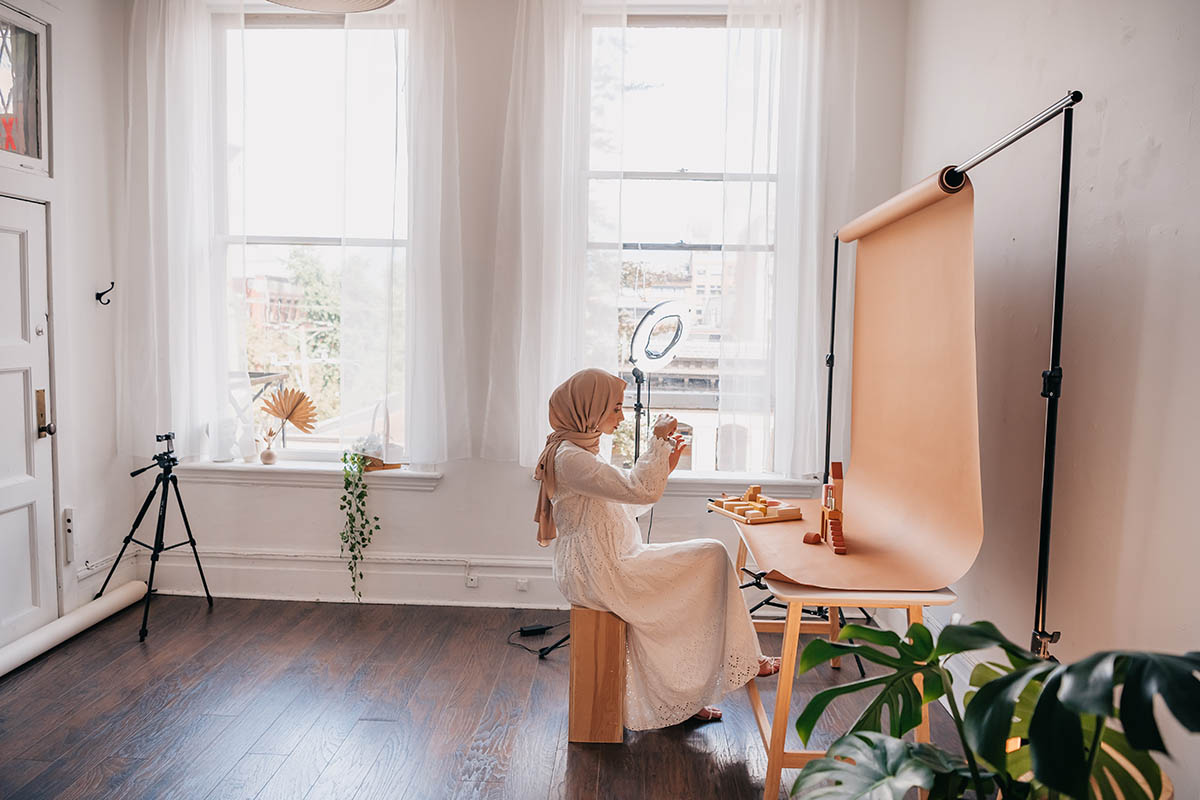
Creating beauty-related photos and videos allows me to experiment with styling, storytelling, lighting, and product presentation while building a skill that may eventually create professional opportunities.
A hobby does not need to become a business to be valuable. However, when curiosity, creativity, and practical ability begin to overlap, it can sometimes reveal a new direction you could not have discovered by thinking alone.
Spend Meaningful Time With Other People
When I felt lost, spending time with other people reminded me that meaning does not come only from career achievements or major personal goals.
It can also grow through belonging, shared interests, and small traditions that give us something to anticipate.
I live in Seattle, where local art walks make it easy to combine creativity with community.
The Pioneer Square Art Walk is my favorite.
What began as an enjoyable way to explore galleries and discover local artists has become a tradition: my friends and I now meet there and experience it together.
You can create similar opportunities by:
- Joining a local art walk, book club, or creative workshop;
- Inviting a friend to explore a neighborhood event;
- Turning a recurring activity into a shared tradition;
- Reconnecting with someone you have not seen recently;
- Joining a group connected to a hobby you want to try;
- Scheduling time together instead of waiting for everyone to be free;
Hobbies can introduce you to people outside your usual social circle, but you do not need a formal activity to reconnect.
A walk, coffee, gallery visit, or regular phone call can restore a sense of closeness.
The deeper benefit is not simply having plans.
It is knowing that you belong somewhere, that people expect to see you, and that parts of your life are being experienced and remembered together.
Protect Your “Me Time”
“Me time” is one of my favorite forms of self-care. I enjoy being with people I love, but I also need quiet space to hear my own thoughts, follow my curiosity, and reconnect with myself without performing for anyone.
My alone time may include:
- Reading a book in a coffee shop;
- Writing or planning in my notebook;
- Taking a walk without rushing;
- Cooking something I genuinely enjoy;
- Exploring a new interest;
- Resting without feeling that I must be productive;
- Completing a small task that makes my home feel better;
Being alone is different from feeling lonely.
Healthy solitude can help you understand what you want, notice what is draining you, and return to relationships with more energy and presence.
During burnout, “me time” should not become another self-improvement assignment.
Sometimes, its greatest value is simply giving yourself permission to exist without expectations. That quiet space can gradually help your own voice become audible again.
Give Back in a Way That Helps Others
Giving back can create meaning by reminding you that your time, abilities, and resources can improve someone else’s day.
The purpose is not to compare lives or view another person’s hardship as a lesson.
It is to participate respectfully in your community and contribute where help is genuinely needed.
You might:
- Volunteer with a local nonprofit;
- Support a food bank or community pantry;
- Share a professional skill;
- Help at an animal shelter;
- Donate to a cause you understand and trust;
- Check on an elderly or isolated neighbor
- Participate in a neighborhood cleanup;
Donating useful belongings is also one of the best ways to declutter your home while helping other people.
Clothing, books, furniture, kitchenware, and unopened household products can continue serving someone instead of occupying space or becoming waste.
Donate items that are clean, safe, functional, and accepted by the organization.
Removing what you no longer use can make your home feel calmer and easier to maintain, while giving those belongings a valuable second life.
Meaning often grows when something you already possess, time, knowledge, attention, or an unused object, becomes genuinely useful to another person.
Build the Kind of Comfort You Actually Need
Comfort is not only about owning a house or earning more money.
It can also mean having a safe home, manageable expenses, supportive relationships, time to rest, and enough freedom to enjoy your life.
Financial stability matters, but define it for yourself:
- Which expenses are genuinely necessary?
- How much security would help you feel calmer?
- What experiences are worth saving for?
- Which possessions improve your life?
- What are you willing, and unwilling, to sacrifice for a higher income?
Managing spending and finding ways to make enough money can create more options for the future.
However, comfort should support your life rather than postpone it indefinitely.
Move at Your Own Pace
It is easy to feel left behind when other people appear to be getting married, buying homes, having children, or reaching career milestones.
Their timelines, however, are built around different circumstances, values, resources, and responsibilities.
New experiences and travel helped me discover values I had not fully recognized before.
Every unfamiliar place showed me something about what I need, what energizes me, and how I want to live.
Through these experiences, I began to value:
- Freedom to explore;
- Curiosity and continued learning;
- Meaningful relationships;
- Creativity and self-expression;
- Courage to begin again;
- Time for experiences rather than only possessions;
- Flexibility when life changes unexpectedly.
Your direction may become clearer through living, traveling, experimenting, and meeting people, not by following a timeline established by someone else.
Move intentionally, but do not confuse slower progress with failure.
Do Not Take Every Part of Life Too Seriously
Constant exposure to bad news and social comparison can make life feel heavier than it already is.
Staying informed matters, but you do not need to carry every problem at every moment.
Create room for:
- Humor and playfulness;
- Unplanned adventures;
- Music, books, and art;
- Time in nature;
- Imperfect creative projects;
- Conversations that make you laugh;
- Small pleasures without a productive purpose;
Enjoyment is not ignorance. It gives you moments of relief, restores perspective, and reminds you that life contains more than responsibilities and problems.
How to Find Value in Your Life: Final Thoughts
After nearly two years of burnout and feeling that I had lost my direction, I learned that meaning does not always return as one clear answer.
Sometimes, it emerges gradually through a walk, a new hobby, creative work, travel, friendship, generosity, or the courage to try something unfamiliar for 90 days.
My new experiences did more than distract me from feeling lost.
They helped me discover new values and recognize parts of myself that my previous life no longer expressed.
If you are searching for direction:
- Care for your physical and emotional health;
- Build movement into your routine;
- Test new interests instead of waiting for certainty;
- Spend meaningful time with other people;
- Protect quiet time for yourself;
- Give your time or useful belongings to others;
- Travel and explore when circumstances allow;
- Define comfort and success in your own words;
- Let your values evolve as you gain new experiences;
You do not need to reconstruct your old life exactly as it was.
The deeper opportunity is to build a future that reflects who you have become.
Finding meaning is not a single decision. It is an ongoing relationship with your values, choices, experiences, and the people around you.
Keep experimenting, remain curious, and pay attention to what makes you feel more present and genuinely alive.