
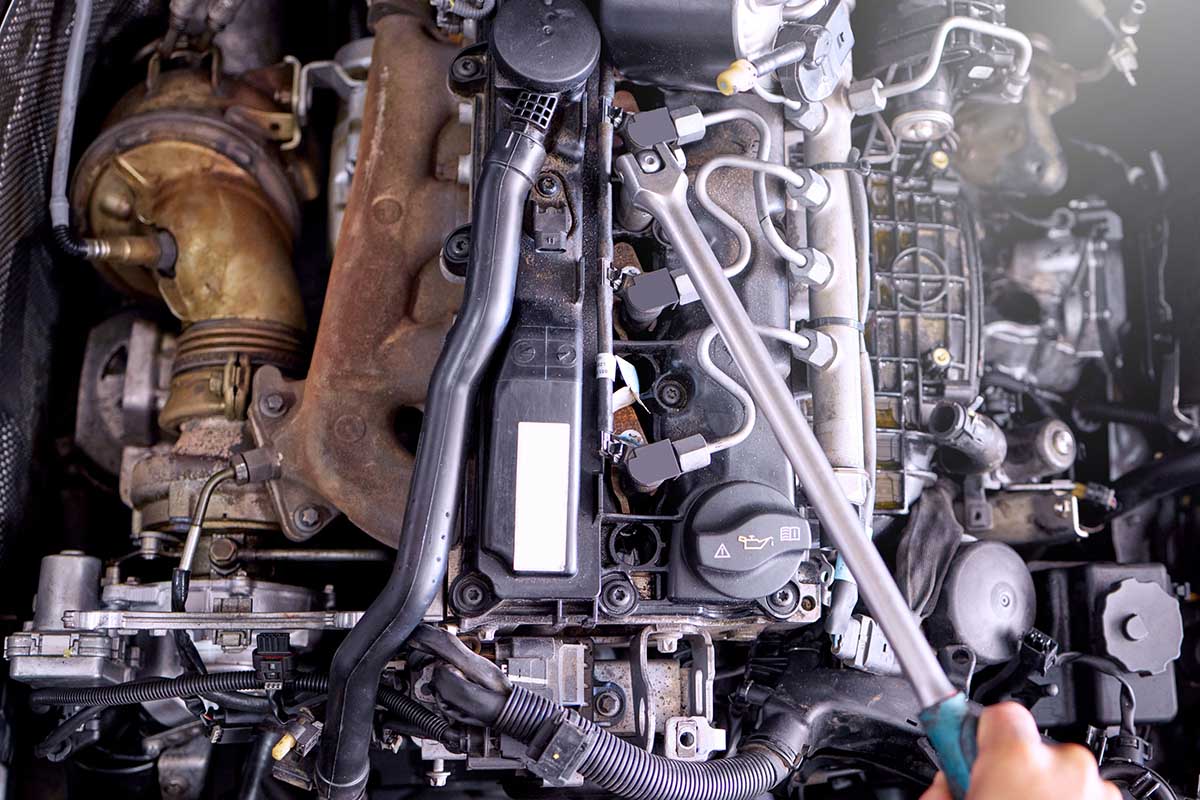
Laying the Groundwork for Diesel Upgrades
✨ Key Points
- Diesel upgrades fail most often when power is added without understanding engine limits and real-world use.
- Baseline data and realistic goals protect reliability and prevent expensive engine damage.
- Precision tuning delivers safer, longer-lasting performance than chasing big horsepower numbers.
Before you touch a wrench or order parts, it’s important to know what you’re actually trying to achieve.
Many diesel builds fail not because of poor parts, but because there was no clear plan from the start.
Shops and fleet data consistently show that engines pushed beyond safe limits are far more likely to fail within 20,000–40,000 miles, especially when upgrades aren’t matched to the engine’s condition.
That’s why understanding your starting point matters more than chasing power.
Smart builders begin by:
Running a baseline dyno or pulling clean data logs;
Considering mileage, maintenance history, and real-world use;
Accounting for known weak points in their engine and model year;
Not all trucks are built for the same goals.
A fleet truck with 300,000 hard miles has far less tolerance than a lightly used weekend hauler, even if the engines are identical.
Another common mistake is chasing big numbers seen online.
Exceeding safe exhaust gas or fueling limits dramatically raises the risk of cracked pistons, bent rods, and turbo failure, repairs that can easily reach five figures.
A better approach is setting realistic goals, such as:
Improving torque and towing performance;
Making small efficiency gains;
Prioritizing reliability before aggressive tuning;
Precision beats aggression in diesel builds.
When upgrades respect factory limits and are guided by real data, the result is usable power, better longevity, and far fewer expensive surprises.
Enhancing Airflow for Boosted Diesel Output

Factory intake manifolds are designed for cost, noise control, and emissions compliance, not maximum airflow.
As power demands increase, these stock manifolds often become a bottleneck that limits how much air the engine can efficiently use.
Upgrading to a high-flow intake manifold improves engine airflow and volumetric efficiency, which helps the cylinders fill more completely with air.
The result is stronger midrange power, better throttle response, and more consistent performance under load, especially in diesel performance upgrades focused on towing or reliability.
Intercooler swaps fall into the same category of functional upgrades, not cosmetic ones.
A larger intercooler core or improved materials reduce intake air temperatures, which stabilizes combustion, protects engine components, and supports sustained boost during heavy use like towing or hard acceleration.
For these airflow upgrades to actually work, the small details matter just as much as the big parts:
Boost leaks from worn gaskets or seals can bleed off pressure and cancel out expensive upgrades;
Pressure drop testing helps identify restrictions or collapsing hoses in the intake and intercooler system;
Proper fitment and mounting prevent vibration, cracked piping, and airflow obstruction over time.
These checks are especially important in diesel turbo and intercooler upgrades, where higher boost pressures amplify even small weaknesses in the system.
At the end of the day, improving airflow isn’t complicated science, but it does require precision.
More air, lower restriction, and stable temperatures work together to create usable, reliable power.
When intake, intercooler, and sealing systems are treated as one complete airflow path, performance gains become predictable instead of risky.
Precision Fuel Delivery for Diesel Power
Fuel delivery is the heartbeat.
High-pressure common-rail injectors can feed big turbos without leaning out.
Mechanical pump upgrades suit certain legacy engines, but only when matched to proper nozzle geometry.
Spray patterns matter—they dictate burn quality and torque curve shape.
Heavy-duty fuel lines and filters aren’t optional when the stakes include injector scoring or pump grenades.
Keep contamination out at all costs. If your operation burns ethanol blends or biodiesel, confirm every component is compatible.
Ignoring that detail ends with clogged internals and downtime you can’t afford.
A clean, pressurized feed makes horsepower honest.
Custom Tuning and Diesel Performance Calibration
ECU remapping isn’t magic. It’s fuel, timing, and boost manipulated by deliberate code changes.
Off-the-shelf tunes can deliver safe gains, but they’re built for averages, not your truck.
Bespoke calibrations exploit unique engine behavior for sharper response or deeper torque.
Real-time data logging feeds tuners the truth, frame by frame, letting them refine without guesswork.
Push timing too far and you court destructive cylinder pressures that no rod likes.
Treat mapping as a scalpel, not a sledgehammer.
Aggressive curves look great on paper until the piston crowns tell a different story.
Exhaust Modifications to Unlock Diesel Torque
Deleting a DPF or swapping in a high-flow downpipe can unleash low-end torque, but it comes with consequences.
Backpressure isn’t just a buzzword; it shapes turbo spool characteristics and throttle feel.
Choose materials wisely: stainless resists rot, aluminized offers budget relief, ceramic coatings contain heat.
Modifying exhaust sound is easy, keeping it within noise regs is harder.
Legal constraints vary, and fines are real.
A great exhaust upgrade moves gases efficiently without inviting trouble from inspectors or killing civility on the road.
Keeping Diesel Systems in Peak Condition
High-strain setups demand obsessive maintenance. Oil sampling catches bearing issues before they cascade.
Coolant checks prevent thermal damage, especially under heavy towing. Injectors need periodic cleaning to keep spray patterns sharp.
Filters must be swapped sooner than factory intervals when feeding performance parts.
Watch for warning signs like unexplained smoke or sudden pressure drops—they’re mechanical distress signals.
After every major mod, inspect everything.
Small cracks become big failures fast.
Weighing the Returns on Diesel Performance Upgrades
Upgrades are rarely free lunches.
Break cost into dollars per horsepower or torque increase.
DIY work saves cash but risks expensive mistakes.
Professional labor commands rates that sting, yet the results often outlast home garage jobs.
Expect something in the ballpark of a hundred dollars per 10 horsepower gain in many common diesel engines.
Factor in the unspoken costs—warranty loss, insurance changes, or resale value drops.
The smartest builds weigh numbers beyond the dyno sheet.
Applying Parleys’ Diesel Performance Techniques
A sharp operator chooses partners with results, not promises.
Dyno graphs, customer feedback, and repeatable gains are your proof.
If you want a trustworthy filter for suppliers, Parleys diesel performance makes the cut.
Start with a base tune, confirm on the dyno, revise, repeat.
This cycle isolates improvements from variables, ensuring progress isn’t smoke and mirrors.
Peer reviews and forum threads add texture to raw numbers.
Pattern recognition over time separates hype from durable performance advancements.
Sustaining Diesel Gains Beyond the Shop
When making diesel performance upgrades, monitoring boost pressure, exhaust gas temperatures, and fuel trims is essential.
These readings act as early warnings and help prevent costly engine damage.
Software is just as important as hardware. ECU updates and retuning may be needed as seasons change or fuel blends vary, since tuning that once worked well may no longer be optimal.
Experienced diesel owner communities can be a powerful resource.
Many problems are identified and solved faster through shared knowledge than through trial and error alone.
With new developments in turbo design, fuel injection, and hybrid assist technologies, diesel performance is constantly evolving.
That’s why a build is never truly finished, it’s an ongoing process of learning, monitoring, and refining.