Stop Wasting Setup Time: How to Launch a Professional Pop-Up Tent Fast
✨Key Points
- Fast setup drives first impressions — most visitors judge booths in under 5 seconds.
- Proper preparation enables 5–10 minute deployment with a two-person team.
- Secure anchoring and clean layout protect both safety and brand professionalism.
At trade shows and outdoor corporate events, speed and professionalism often determine first impressions, and research shows attendees form an opinion of a booth in under five seconds.
A well-designed professional pop-up tent gives your team instant shelter, strong branding visibility, and a welcoming presence, but its real value appears when it can be deployed quickly and correctly under pressure.
Modern custom event tents are engineered for fast setup and structural reliability, allowing exhibitors to create a polished, sophisticated look without complicated installation.
With the right approach, most quality pop-up tents can be fully assembled in about 5–10 minutes using two people, which is why preparation matters.
To ensure smooth deployment and a professional result, focus on these essentials:
- Choose a level, high-traffic location that maximizes booth visibility;
- Lay out and inspect all components before expanding the frame;
- Extend the tent gradually from opposite corners for safe setup;
- Attach the canopy early for easier tensioning and fewer wrinkles;
- Lock all joints and sliders securely before final positioning;
- Use proper weights or stakes to anchor the tent, especially outdoors;
- Arrange tables and banners so your branding reads clearly from a distance;
- Keep cables, boxes, and clutter out of the visitor pathway.
Quick, efficient deployment does more than save time; it ensures operational readiness, maintains marketing consistency, and reinforces a confident brand image the moment the exhibition floor opens, allowing your team to focus on conversations and lead generation instead of struggling with equipment.
Five Essential Steps for Quick and Professional Tent Deployment
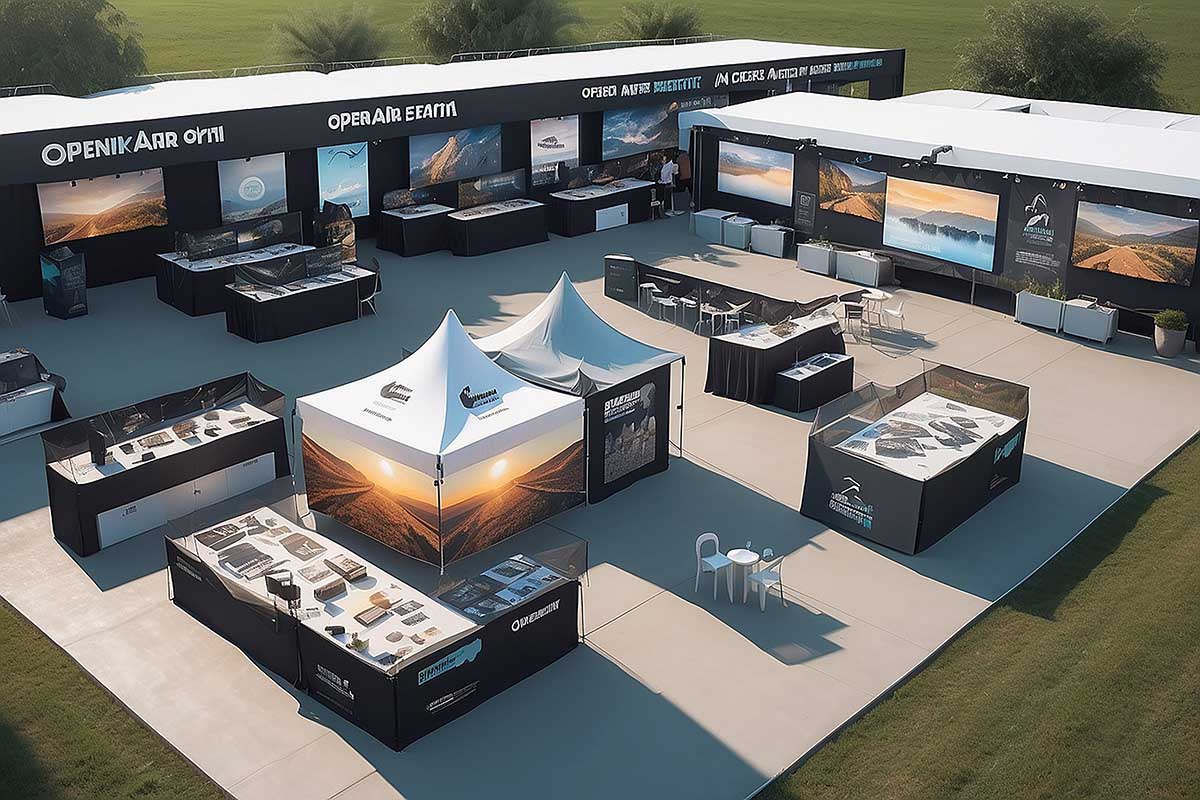
Begin with a Structured Setup Using a Custom Pop-Up Canopy
The deployment process begins by identifying a stable, flexible frame system, including a custom pop-up canopy that can be expanded along all support arms.
The structured unfolding reduces the stress to the joints and will not have uneven tension on the canopy fabric. Setting up the equipment in a coordinated task keeps all corners at the same level, minimizing fabric distortion and frame imbalance.
The controlled expansion process prevents graphic print wrinkling and maintains alignment, giving the event a professional look.
Correctly setting the base structure will ensure the canopy remains stable in the face of environmental changes, such as wind or people movement, which adds to safety and aesthetics.
Secure the Frame Before Full Elevation
As the canopy structure starts to form, locking mechanisms and support bars become visible by lifting part of the legs.
By ensuring that internal sliders and trusses are in the correct positions, one prevents unnecessary collapse or misalignment of the elevation.
This is a middle ground: all connection points are checked to ensure they are hooked up, and then the tent is raised to its full length.
Slowly placing a leg weight on each side of the frame evenly distributes the load and extends the life of the tent parts.
An aircraft framework supports overhead graphics and does not fall; it also means that at a distance, the branding is clearly visible.
Attach Canopy Fabric with Precision
When attaching the canopy top, alignment must be considered, as incorrect alignment can cause tension imbalances that affect aesthetics and durability.
It should be laid over the frame in the middle of the piece, tied at the corners, and then further fixation is applied.
Hook-and-loop attachments or Velcro straps are to be tightened at all points to prevent wind lift or fabric fluttering when used at an outdoor event.
Regular fastening will keep printed graphics flat and readable throughout the exhibition.
An appropriately installed canopy not only increases brand exposure, but it also prevents internal display items from being subjected to the elements like sun or heavy rain.
Elevate Gradually for Maximum Stability
Lifting the tent legs in smaller steps ensures the weight is evenly distributed throughout the structure and that it is not straining any particular joint.
One leg must be pushed, then the other, and the internal locking pins must be fully engaged before moving on to the next support.
The gradual raising will minimize the risk of sudden frame changes and ensure the canopy cloth is evenly stretched across the top.
This technique is also open to modification if uneven ground is encountered, to adjust the positioning of the legs.
Constant height enhances overall security and ensures the deployed tent maintains its desired form throughout the event.
Anchor the Tent to Prevent Movement
Once the tent has reached full height, anchoring is an important step in stabilizing it.
The structure should have weight bags, stakes, or tie-down straps installed at each leg to ensure it is anchored against environmental disturbances.
Correct anchoring will ensure the structure does not tip or move due to wind or unintended contact by attendees.
Proper structural integrity will ensure the safety of equipment and human life and will not ruin the professional outlook of the display.
Consistency in signage and interior displays through anchored tents also promotes effective brand presentation during the event.
End Point
The efficient deployment of a professional pop-up tent is a complex task that requires careful organization to be both fast and stable.
From synchronized frame expansion to careful anchoring, all these actions will be implemented to establish a safe and aesthetic exhibition space.
High-quality tents improve brand presence, enhance staff functionality, and open events with confidence and professionalism.
Practical deployment enables companies to optimize their display investments and ensure safety and presentation standards across a wide range of event environments.