Facial Recognition Access Control for Condos: A Smarter Way to Secure Residential Buildings
✨ Key Points
- Stronger security with less credential sharing. Facial recognition access control for condos eliminates lost, shared, or copied keys and fobs, reducing unauthorized entry.
- Faster, hands-free access for residents. Residents enter without keys, cards, or phones, improving convenience during peak hours and high-traffic periods.
- Lower long-term management and maintenance costs. Fewer replacements, reduced service calls, and remote system management make facial recognition more efficient over time.
If you manage an apartment building or condominium, one of your core responsibilities is maintaining strong apartment access control without creating unnecessary friction for residents.
Choosing the right system can be challenging because it affects security, daily convenience, staff workload, and long-term costs.
Most apartment access control decisions today come down to three main options: facial recognition access control for condos, key fob systems, and mobile access.
Each option solves the same problem in a different way, and each comes with trade-offs that matter in real-world use.
Here’s how they typically compare:
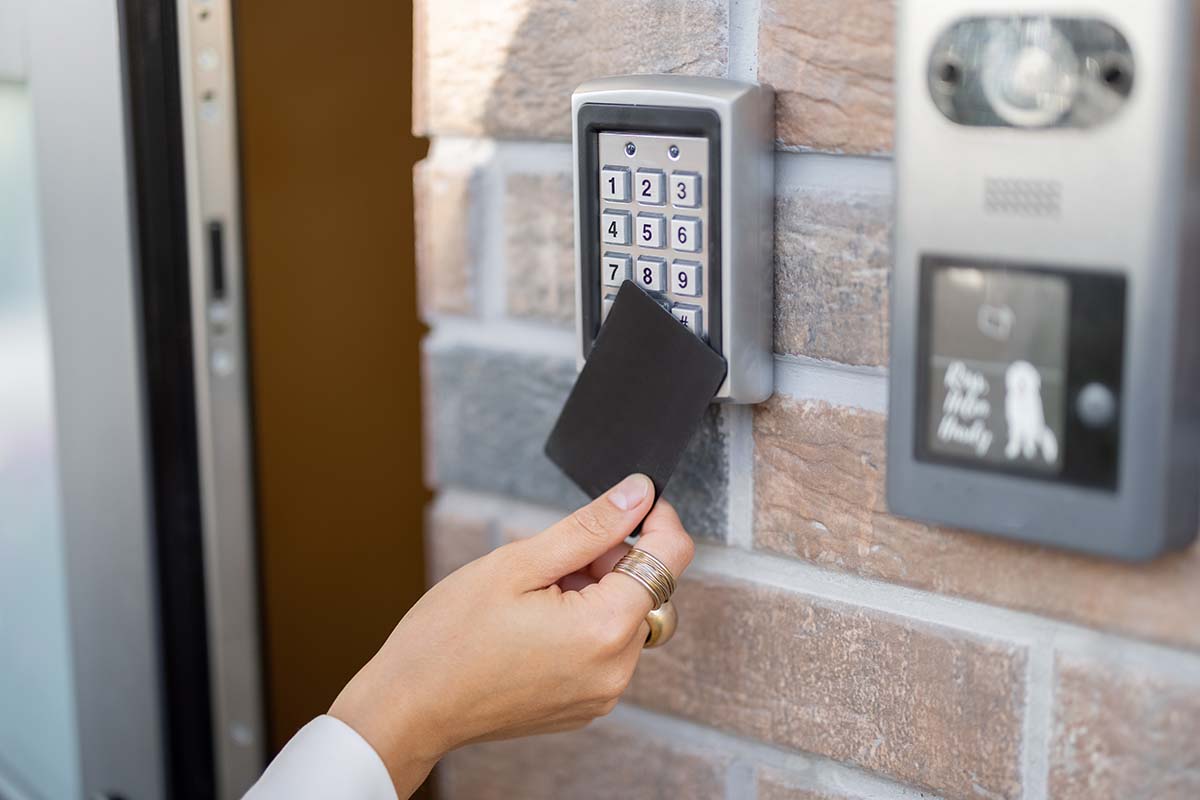
Key fob systems are familiar and relatively low-cost upfront, but fobs are easily lost, shared, or copied. Replacements create ongoing administrative work, and shared credentials are a common source of unauthorized access.
Mobile access systems allow credentials to be issued or revoked remotely, reducing physical hardware. However, access depends on residents having charged phones, compatible devices, and reliable connectivity, which can cause issues during outages or emergencies.
Facial recognition access control for condos removes physical credentials altogether. Residents gain entry through biometric verification, which reduces credential sharing, speeds up entry during peak hours, and lowers access-related service calls.
When choosing an apartment access control system, the goal isn’t to adopt the newest technology, but to select a solution that fits how residents actually move through the building and how much ongoing management the system requires.
The right apartment access control setup should improve security, simplify operations, and create a smoother daily experience for residents and staff alike.
Remote Access and Management

Your Face is Your Key: Unlock your smart lock for front door effortlessly with Lockly Visage’s advanced facial recognition technology - just walk up, and the lock detects your face to open automatically. Dual infrared sensors ensure accuracy in any lighting, even at night.
One of the most transformative features of modern access control systems, including facial recognition access control for condos, is the ability to manage and control access remotely.
This is especially valuable for owners or managers who oversee multiple properties, units, and access points, because access permissions can be updated instantly without physical keys, fobs, or on-site visits.
Remote access allows property managers to control and monitor entry points from anywhere via their smartphones.
The ability to operate from a smartphone is one of the biggest modern-day features that you absolutely cannot overlook when choosing an access control system.
Additionally, using a cell phone for building access appeals to millennials, who make up the largest percentage of renters in the United States.
Remote management allows you to grant or revoke access permissions in real-time and respond to emergencies quickly.
It also grants you the ability to issue temporary access codes or visitor passes to guests or service providers.
For instance, if a resident has a visitor or maintenance service scheduled, the property manager can generate a one-time access code to allow them into the building.
This level of control ensures that access is granted only when necessary and is automatically revoked when no longer needed, reducing the risk of unauthorized access.
Integration with Other Systems
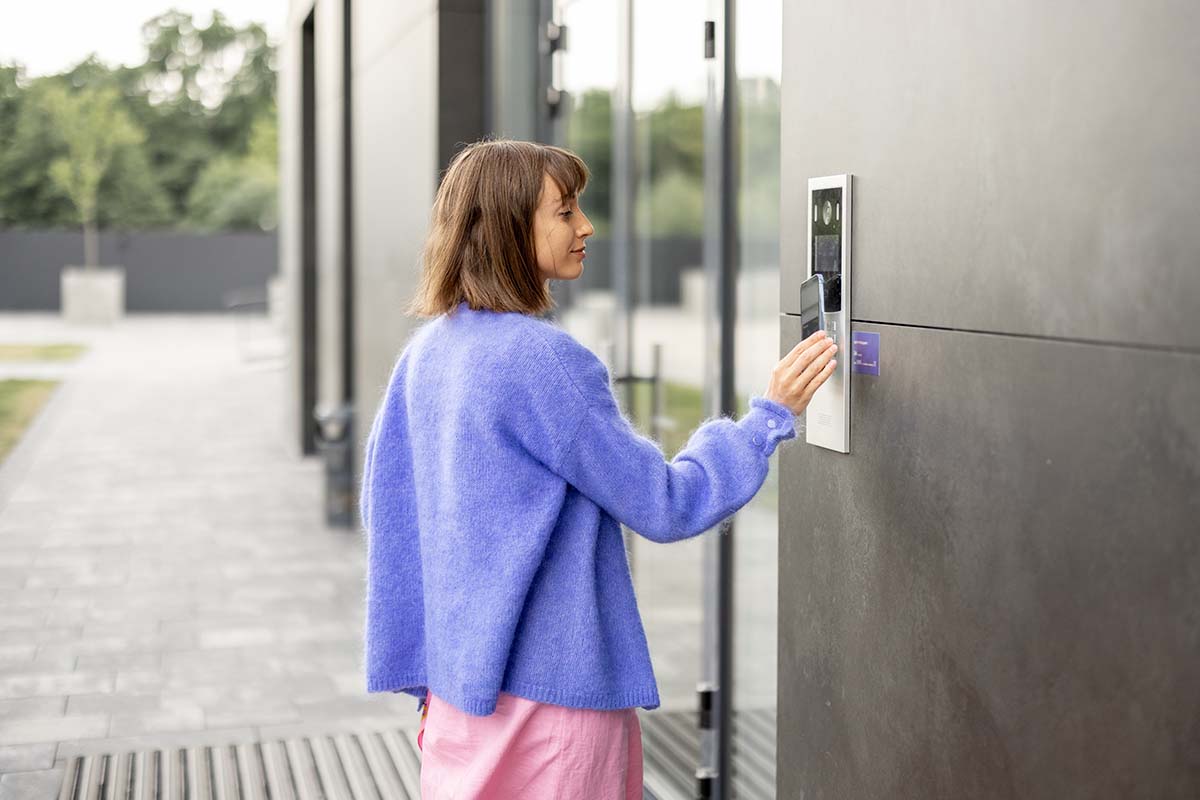
A good access control system integrates well with other security or management systems at your property.
This is important because you don’t want to replace all your existing appliances to accommodate.
The best access control system will easily integrate with:
- Security cameras;
- Alarm systems;
- Building automation systems;
- Elevators;
- Lights;
- HVAC systems.
When access control is integrated with surveillance cameras, for example, it allows for real-time monitoring and recording of access events, providing a comprehensive view of who is entering and exiting the building.
This synergy enables property managers to track and respond to security incidents more effectively.
Furthermore, when it comes to lighting and HVAC systems, a well-integrated system will adjust lighting or climate settings based on occupancy detected through access points.
This not only improves residents’ convenience but also helps optimize energy consumption and reduce your property’s NOI.
Audit Logs
An essential feature of any robust access control system is the ability to generate detailed audit trails and reports.
These logs record every access event, including the time, date, and identity of the individual who entered or exited a particular area.
This feature is invaluable for security management, as it allows property managers to track access patterns, identify potential security breaches, and conduct informed investigations of tresspassing if needed.
Audit trails can also be useful for compliance purposes, as they provide a documented record of access events that can be reviewed to ensure adherence to security policies and regulations.
The ability to generate customized reports based on specific criteria further enhances the system’s utility, allowing property managers to analyze data and make informed decisions about security measures and access policies.
Multiple Entry Options
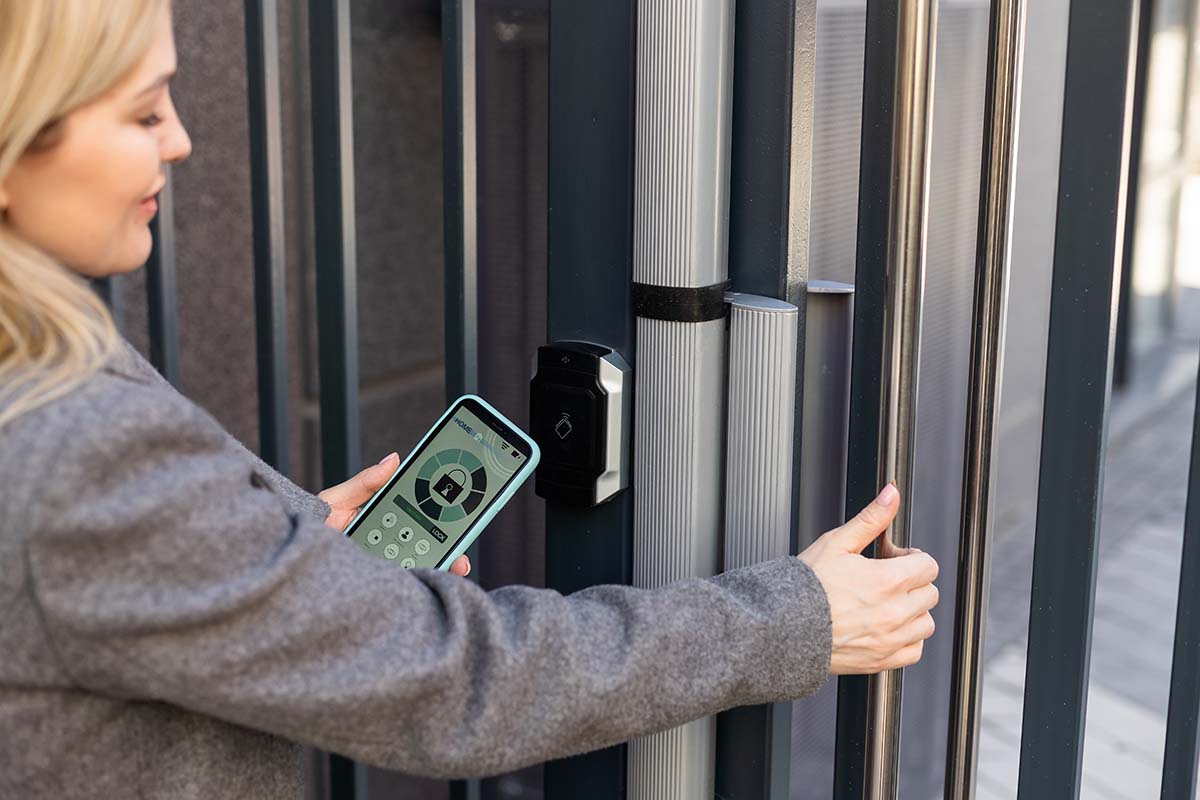
Traditional access control methods, such as keys and keypads, have evolved significantly, with advanced authentication methods becoming a standard feature in modern systems.
These methods include biometric authentication, smart cards, and mobile credentials — each offering enhanced security and convenience.
Biometric authentication, which includes fingerprint recognition, facial recognition, and iris scanning, provides a high level of security by verifying individuals based on unique physiological characteristics.
This method eliminates the risks associated with lost or stolen keys and ensures that only authorized individuals can gain access.
Additionally, biometric systems can often store and manage multiple biometric profiles, accommodating various users with varying access needs.
Smart cards, which are embedded with encrypted information, offer a more secure alternative to traditional key cards.
These cards are difficult to duplicate and can be programmed with various access levels, making them suitable for different areas within an apartment complex.
Similarly, residents can use their mobile devices for access, reducing the need to carry cumbersome additional credentials in the first place.
Scalability
Scalability is a crucial feature for access control systems in apartment buildings, especially those that anticipate growth or changes in usage.
Residents are always coming and going, after all.
A scalable system can accommodate the addition of new access points, users, and features without requiring a complete overhaul.
This flexibility allows property managers to expand the system as needed, whether they are adding new buildings, upgrading existing infrastructure, or implementing new security measures.
Furthermore, modern access control systems offer a high degree of flexibility in terms of configuring access permissions.
Property managers can create and manage multiple user profiles with varying levels of access, ensuring that different areas within the building are accessible only to authorized individuals.
This granular control helps in managing diverse access needs and enhances the overall security of the complex.
Emergency Override

In any access control system, having a reliable emergency override and backup plan is essential.
This feature ensures that access can be granted in critical situations, such as power outages, system failures, or emergencies.
Emergency override mechanisms typically involve physical keys or backup access codes that can be used to bypass electronic systems if necessary.
This is a crucial feature so that residents can enter and exit your building if an emergency does occur.
Additionally, modern access control systems often include backup power supplies or battery backups to maintain functionality during power disruptions.
This ensures that the system remains operational even in adverse conditions, providing continued security and access control.
User-Friendly Interfaces
For an access control system to be effective, it must be user-friendly and intuitive for both residents and property managers.
Modern systems often feature interfaces that simplify the process of managing access permissions, generating reports, and monitoring access events.
These interfaces are designed to be accessible on various devices, including smartphones, tablets, and computers, making it easy for users to interact with the system and perform necessary tasks.
In addition to ease of use, user-friendly systems often include features such as automated alerts and notifications.
For instance, property managers can receive real-time notifications if unauthorized access attempts are detected or if certain access thresholds are met.
Residents can also benefit from automated reminders or alerts related to their access permissions or upcoming maintenance schedules.
My only other suggestion would be to add one internal link further down in the post to another post in their tech category. Great job!