
Sometimes You Gotta Knock It All Down to Build Something Better
✨Key Takeaways
Most business failures are caused by delayed structural change, not lack of effort.
Starting over in business early reduces burnout, financial risk, and long-term damage.
Rebuilding is not erasure — it’s informed design based on experience.
Founder burnout is not primarily caused by long hours.
Research on occupational burnout shows it’s driven by loss of control, misalignment, and sustained effort toward outcomes that no longer feel meaningful.
This is why founders can work fewer hours and feel worse.
They are spending their energy maintaining complexity instead of creating value.
A useful way to understand this is through demolition.
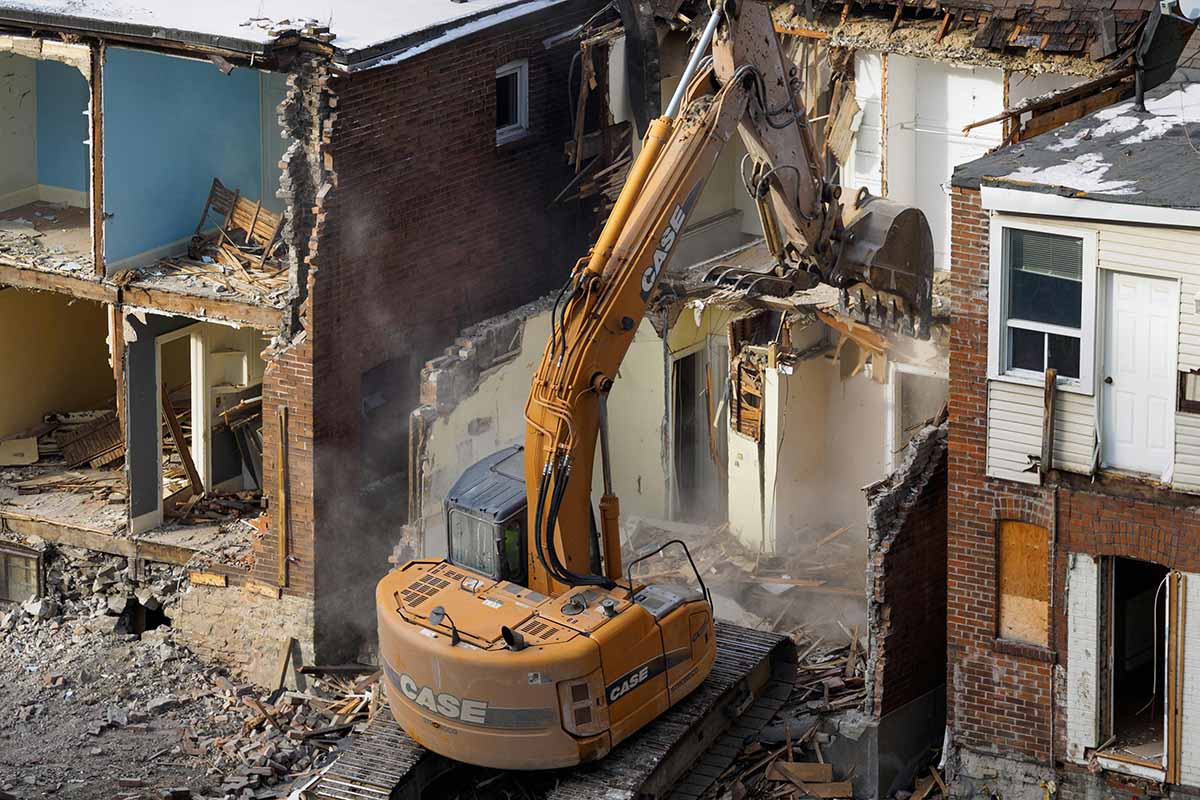
When my friend in Perth reached the point where repairing her inherited house no longer made sense, she didn’t rely on emotion or nostalgia.
She consulted a House Demolition Perth Company Bellaluca, who assessed the structure objectively the foundation, the damage, the cost of repair versus the value of rebuilding.
The conclusion was simple and unemotional: continuing to patch the house would drain more time, money, and energy than starting again.
The same pattern shows up in business.
Common signs this is happening:
You keep adding offers instead of removing weak ones;
You discount to keep legacy clients instead of redefining your market;
You avoid strategic thinking because it feels overwhelming;
You tell yourself “this is just how business is now”;
Calling yourself burned out is often easier than admitting the business model itself is outdated, because acknowledging that reality brings you face to face with the idea of starting over in business. That can feel far more threatening than simply pushing through another difficult season.
Like a structurally compromised house, the issue isn’t effort at all; it’s that the underlying design can no longer support what you’re asking it to carry, no matter how much work you put into reinforcing the cracks.
When Fixing Becomes Riskier Than Starting Over
There’s a point most founders reach without realizing it. Nothing has “failed” yet, but something feels off.
You’re working, you’re adjusting, you’re fixing, and somehow the business feels heavier than it used to.
That’s usually the moment when fixing starts to cost more than rebuilding.
The reason most founders miss it is simple: maintenance costs are hidden.
They don’t show up as one big crisis.
They show up as a thousand small drains that feel manageable on their own but exhausting in total.
Maintenance often looks like this:
Constant small adjustments that never resolve the real issue;
Emotional exhaustion before the workday even begins;
Declining margins masked by higher volume and more activity;
Decision fatigue from managing exceptions, edge cases, and workarounds.
On the surface, it can look like progress. Underneath, it’s stagnation.
From a risk perspective, this matters more than most founders realize, because starting over in business earlier often reduces risk rather than increasing it.
Studies on distressed businesses consistently show that companies that delay decisive structural change are significantly more likely to enter insolvency than those that act while they still have time, clarity, and options.
In plain terms, waiting too long increases the chance of bankruptcy.
That’s why starting over in business early is often safer than holding on too long.
The longer you wait, the fewer options you have, and the more emotional every decision becomes.
A Practical Example: Choosing Demolition Before Collapse
A friend of mine inherited a residential property that was structurally unsound.
Engineers confirmed that the cost of repairs would exceed the value of the house.
Continuing to fix it wasn’t responsible. It was sentimental.
So she chose demolition.
What matters most here is timing. She made the decision before the structure collapsed.
Most founders don’t do this. They wait until cash flow forces the issue.
They wait until stress is constant, margins are thin, and every option feels bad. By then, clarity is gone, and decisions are reactive instead of deliberate.
The same principle applies in business. Choosing to start over while you still have:
Financial runway;
Reputation and credibility;
Mental energy and perspective.
is fundamentally different from being forced to start over when those things are already depleted.
My Own Experience With Starting Over in Business
I once ran an agency that looked healthy from the outside, with stable revenue, recognizable clients, and no obvious signs that anything was wrong.
From a distance, it appeared to be working exactly as it should, which made it harder to admit that something felt deeply off once I was inside the business every day.
Internally, the misalignment showed up in ways that were subtle at first but exhausting over time.
I had taken on too many services that pulled my attention in different directions, I continued working with clients I no longer wanted to serve out of obligation rather than choice, and I was operating within a structure that had been designed for a growth phase the business had already moved past.
In practical terms, that meant:
The service mix had expanded beyond what I could deliver well or enjoy.
Client relationships were maintained out of habit instead of alignment.
The business structure no longer supported the way I wanted to work or lead.
I tried to fix these issues incrementally, believing that a series of careful, responsible adjustments would eventually bring everything back into balance.
I made small changes to offerings, adjusted client agreements, and tweaked internal processes, but instead of simplifying the business, each fix added another layer of complexity and made the system harder to manage.
Eventually, I made the intentional decision to shut the agency down rather than continue propping it up.
I stepped back, gave myself the space to think clearly, and rebuilt the business from zero with far more intention than I had before. In the months that followed:
Revenue dipped temporarily as the new model took shape.
Profit increased significantly once complexity was removed.
Decision-making became clearer and far less emotionally charged.
The work stopped draining my energy and started supporting the life I wanted.
That experience showed me the real difference between maintaining something that no longer fits and rebuilding something that finally does.
What Starting Over in Business Actually Means (Practically)
Starting over in business doesn’t mean quitting impulsively or burning everything down overnight.
Practically speaking, it’s a design decision, not an emotional one.
It usually starts with clarity:
Auditing which parts of the business create real value;
Identifying which parts create friction or constant tension;
Noting what you would not rebuild if you were starting today;
Separating your identity from the structure you’ve been operating inside.
Many successful founders rebuild more than once.
They don’t frame it as failure. They see it as updating the structure to match current reality.
The Question Burned-Out Founders Must Ask
Not:
“How do I fix this?”
But this:
“If I were starting over in business today, knowing what I know now, would I build this?”
If the honest answer is no, continuing isn’t loyalty. It’s avoidance.
Conclusion: Starting Over Is Often the Responsible Choice
Starting over in business is not a rejection of effort.
It’s an acknowledgement of reality.
Businesses fail every day not because founders are incapable, but because they stay attached too long to models that no longer work.
The data is clear. The pattern is consistent.
Sometimes the safest, smartest move isn’t to fix what’s broken, but to admit the structure no longer fits and build something that actually supports where you are now.