The PNW RV Trip Everyone Says You HAVE to Take
✨Key Points
- Terrain shapes RV strategy: The Cascade Range shapes nearly every Pacific Northwest RV trip by dividing the region into a wet western side that requires serious moisture control and a dry eastern side that is ideal for boondocking but demands stronger off-grid self-sufficiency with solar power and larger water tanks.
- Weather mastery means managing pervasive damp and chill west of the Cascades: seasoned RVers rely on propane heat, 12v electric blankets, and the practice of “chasing sun” by moving east or south to stay comfortable.
- The PNW RV lifestyle is a culinary and cultural immersion: travelers enjoy farm-to-RV dining, craft coffee rituals, winery campgrounds, and outdoor festivals, making the journey itself a local experience.
- Iconic routes include: Crater Lake National Park, Oregon’s Highway 101 with ocean-view campsites, and the Columbia River Gorge; a recommended 9–13 day “Coast-Volcano-Gorge” loop from Portland is ideal for first-timers.
- Essential safety gear is non-negotiable: a robust tongue jack for stability, a compressor dehumidifier, a Bluetooth leveling sensor, a 12v electric blanket, heavy-duty ground anchors, blind-spot mirrors, and a TPMS are critical for safe, comfortable PNW RVing.
Welcome to the Pacific Northwest (PNW) – a vast region encompassing Washington, Oregon, frequently stretching into British Columbia, Canada, and Idaho.
This isn’t just a corner of the map; it’s a living geography textbook carved by mountains, rainforests, coastlines, and plateaus.
It’s a sensory feast blending rich coffee aromas, craft brews, and outdoor adrenaline.
For RVers, it presents a magnetic paradise full of both beauty and challenges, which is exactly why many travelers consider RV travel the right way to explore the Pacific Northwest.
Here, your rolling home doesn’t just deliver you to stunning scenery; it immerses you in a unique way of life that makes a Pacific Northwest RV trip feel far more personal and unforgettable than a typical vacation.
Nature’s Blueprint – PNW Terrain & Your RV Strategy
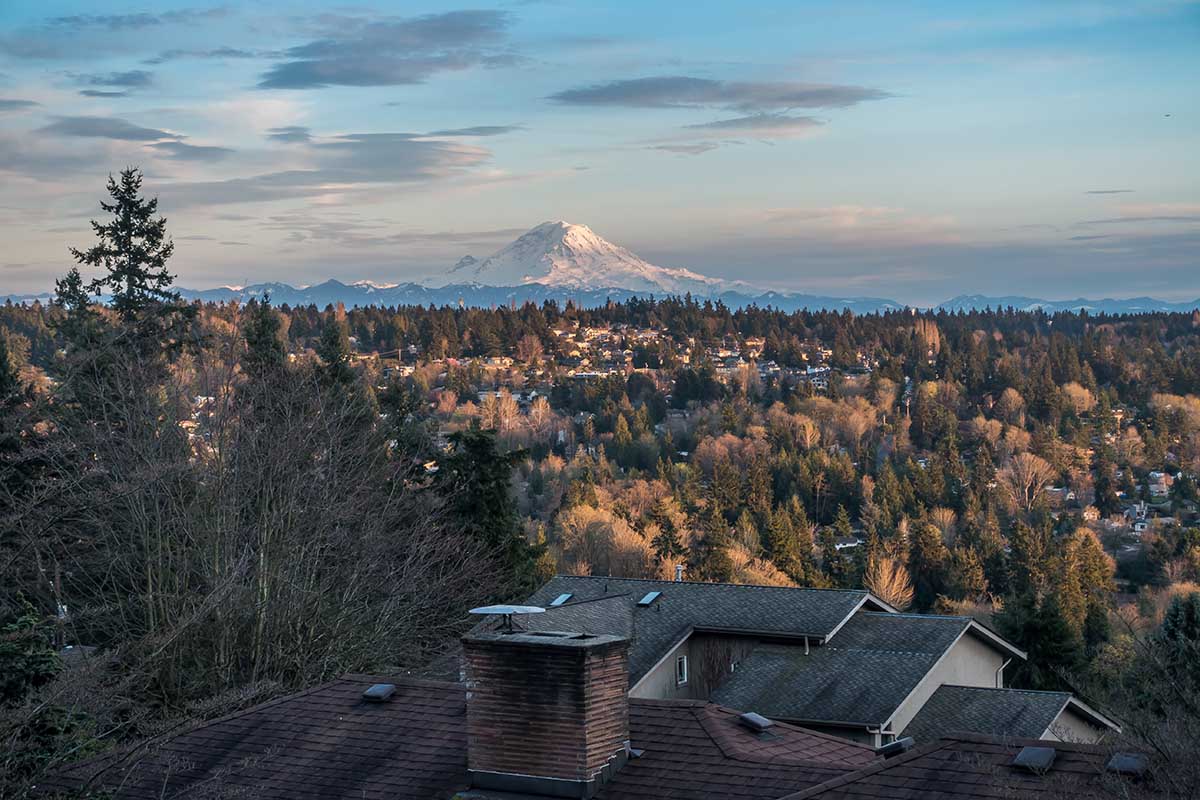
The soul of the PNW is defined by the towering Cascade Range running north-south.
This natural spine not only creates dramatically different landscapes, but also shapes the entire Pacific Northwest RV trip experience by creating completely different RV travel styles across the region.
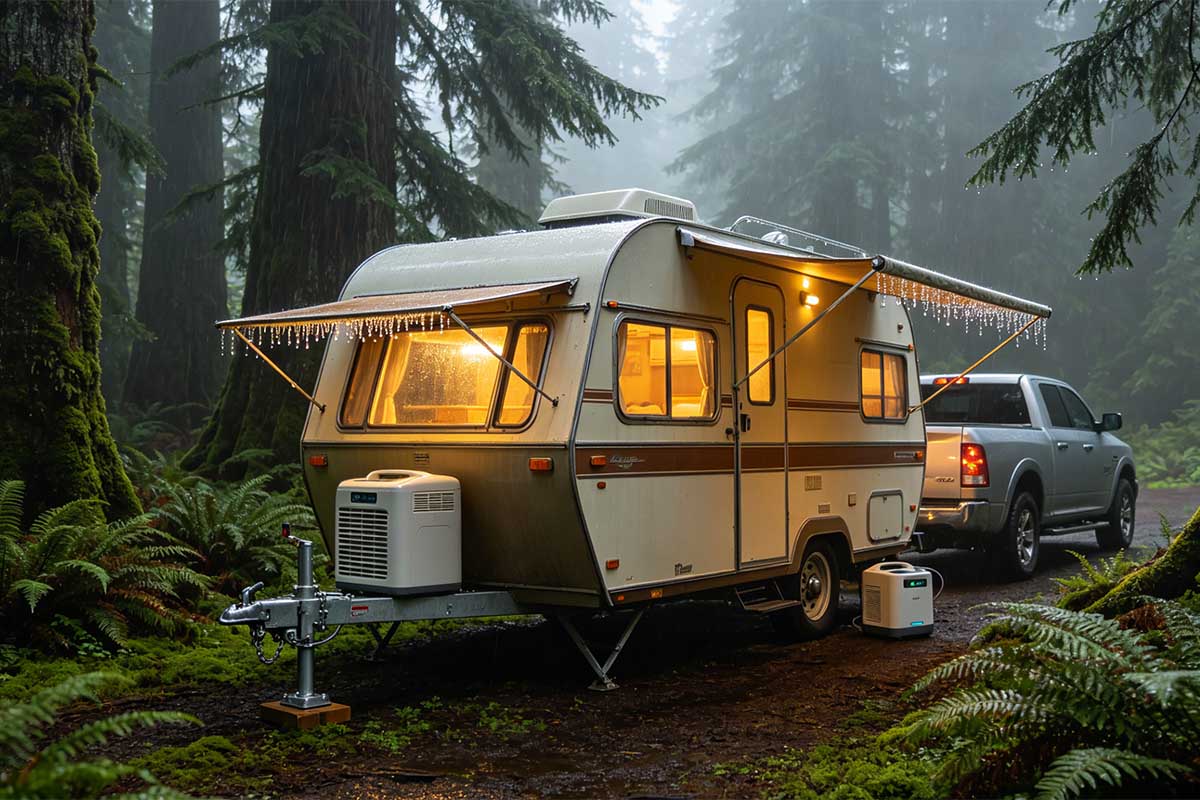
- West (The Emerald Coast & Rainforest Dream):Expect rugged, winding coastlines and ancient, moss-draped temperate rainforests like Olympic National Park. RV parks here are often tucked amongst towering evergreens, with the gentle patter of rain on your roof a natural lullaby. However, persistent moisture is a stern test for your rig’s seals, mold resistance, and your patience. A powerful compressor dehumidifier and robust roof waterproofing aren’t luxuries here; they’re necessities for comfortable living in this “green wonderland.” Forest camps offer strong privacy and a deep sense of seclusion.
- The Cascade Divide – Your RV Lifestyle Crossroads:Drive just one day and you can journey from a damp, emerald forest camp west of the mountains to a sun-drenched, spacious high desert plateau east of the passes. This incredible geographic shift gives RVers the power to tailor their environment – chase forest coolness or desert sun and dryness as you please.
- East (High Desert & Boundless Freedom):Cross the Cascades to vast tracts of dry, public land (like BLM land). Here, boondocking (dispersed camping) reigns supreme. Enjoy near-total freedom and tranquility under expansive starry skies for minimal cost, all while respecting the pristine landscape. But freedom has demands: this harsh environment requires robust self-sufficiency. Efficient solar power, large fresh/grey water tanks, and meticulous energy management (supplemented by generator/fuel reserves) are critical for extended stays.
The Sky’s Mood – Gear & Mindset for PNW Weather
PNW weather is just as unique as its landscapes, and understanding it becomes an important part of planning a successful Pacific Northwest RV trip.
While Seattle’s “Rain City” reputation is famous, it actually receives less annual rainfall than many cities on the East Coast.
The real tests are:
- Pervasive Damp & Chill (Especially West):The challenge isn’t downpours, but the drizzle and wet fog that seeps into bones, encourages mildew, and dampens spirits. Seasoned PNW RVers master the art of “chasing sun and dryness.” Essential weapons against the chill: ample propane for heat, a dedicated drying line strung inside, and a comforting 12v electric blanket (more direct and fuel-efficient than running the furnace all night) to warm your bed. That moment slipping into a warm, dry bed is pure bliss on a damp night.
- The Art of Chasing Sun & Warmth:Local RVers have migration down to a science: head east over the Cascades for desert sun in fall/winter, or south to areas like Bend, Oregon. Chase high mountain beauty (Mt. Rainier, Olympics) in spring/summer from bases near Seattle or Portland.
Local Flavor – The PNW Vibe & RV Living
In the PNW, RVing isn’t just roughing it; it’s an elegant extension of a conscious lifestyle:
- “Farm-to-RV” Perfected: Stock your RV fridge with fresh artisan cheese from Pike Place Market or local smoked salmon. Pull into a winery RV park in Oregon’s Willamette Valley – taste robust Pinot Noir by day, savor local cuisine by campfire light at night. Travel and daily life blend seamlessly. A PNW journey is, first and foremost, a culinary adventure.
- Coffee Culture on Wheels: A quality hand grinder and pour-over setup (or Aeropress) signal the seasoned PNW RVer. Delightfully, you’ll often find mobile craft coffee carts and beer bars near popular campgrounds – mental fuel on the go is easy to find.
- Outdoor Spirit & Independent Soul: People RV here not just for the landscapes, but to join a lakeside indie music festival or reach the trailhead of a world-class hike. Campgrounds during a Pacific Northwest RV trip often become small mobile communities where travelers share stories, road tips, and hidden destinations, while the region’s grunge roots and strong spirit of freedom and exploration seem to follow every mile of the journey.
Your Moving Viewpoint – Iconic PNW RV Routes
PNW’s grandeur unfolds uniquely from an RV. Explore must-see national parks and legendary highways:
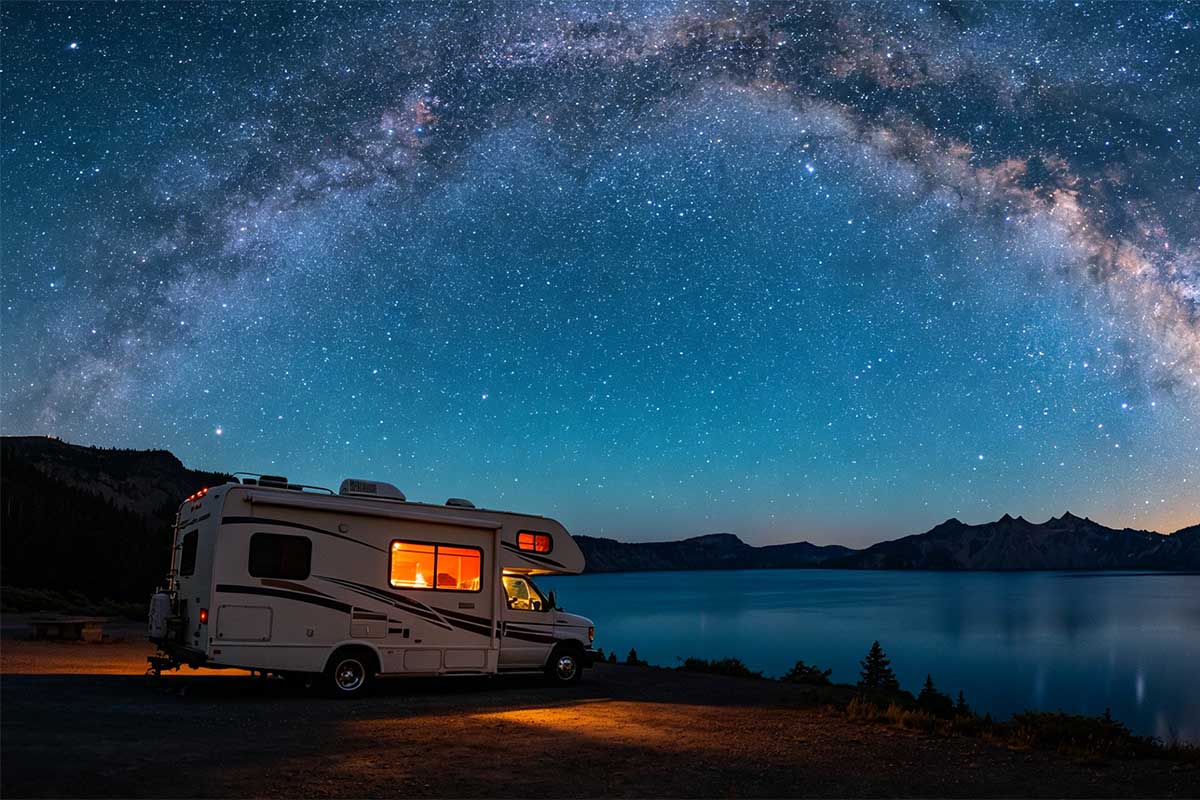
- Crater Lake National Park: More than sightseeing; it’s “sleeping atop a volcano.” On clear summer nights, gaze at the Milky Way galaxy directly overhead from your RV bed. ✨Tip: Book Mazama Campground (inside the park, highly competitive) months ahead for peak season. Nearby private resorts offer more amenities.
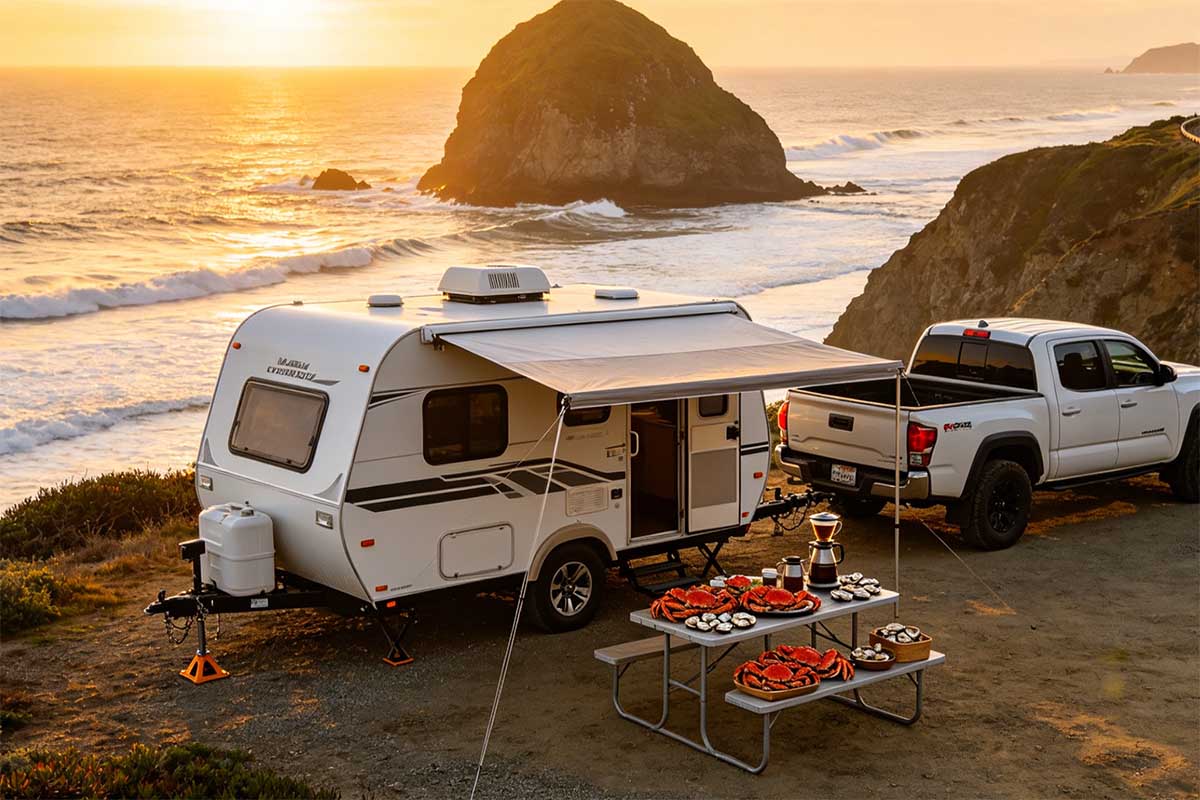
- Oregon Coast Highway 101: Turn the dream of an “RV ocean balcony” into reality. Choose a cliffside campsite (like Hart’s Camp / AAA RV Park) where the Pacific’s rhythm becomes your constant backdrop. (Prime location is key here!).
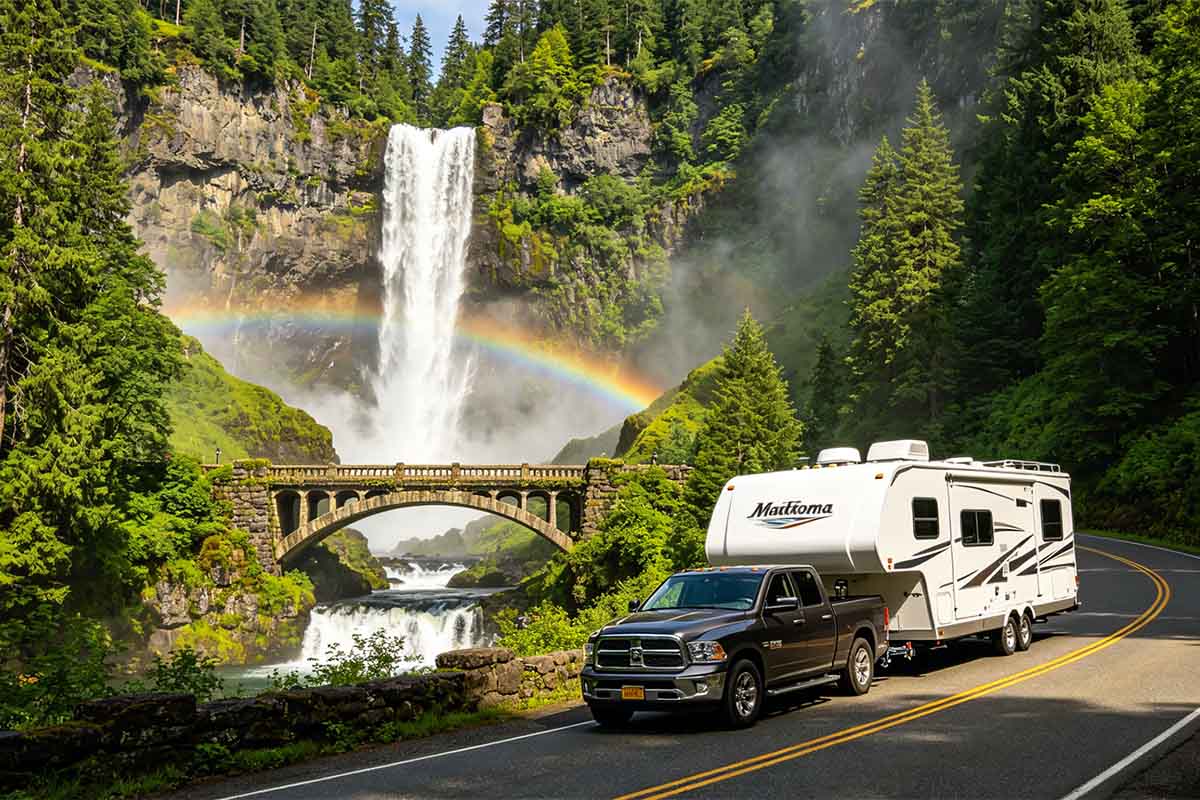
- Seattle Urban Camping & Columbia River Gorge: While downtown overnight parking offers urban thrills, waterfront camps like those on Lake Washington provide serene mornings waking to coffee aromas on the water. East of Portland, the Historic Columbia River Highway is an RV paradise. Explore waterfalls (Multnomah, Latourell), stunning vistas at Vista House, and the vibrant riverside town of Hood River. Tip: Ainsworth State Park inside the gorge offers proximity but is tight (length limits for big RVs). Outside parks like Sandy Riverfront RV Resort often provide more space and amenities.
✨Featured Route: Oregon’s “Coast-Volcano-Gorge” Loop (9-13 Days)
Perfect for first-timers exploring the PNW by RV, starting and ending in Portland:
- (3-4 days) Portland -> Oregon Coast:
- Route:Astoria (Columbia River views from Astoria Column) -> Cannon Beach (iconic Haystack Rock) -> Three Capes Scenic Loop (wild coastline) -> Yachats/Cape Perpetua (Thor’s Well).
- Eat/Drink:Fresh Dungeness crab, oysters; coast craft brews like Pelican Brewing.
- Stay:Cannon Beach RV Resort, Hart’s Camp/AAA RV Park, Sea Ranch RV Park (oceanfront views a priority!).
- (3 days) Coast -> Crater Lake NP:
- Experience:Marvel at America’s deepest lake’s intense blue. Drive the Rim Drive.
- Stay:Mazama Village Campground (inside, very limited) OR Crater Lake Resort (outside, good facilities).
- (3 days) Crater Lake -> Bend (pitstop) -> Columbia River Gorge:
- Experience:Waterfall tour via Historic Hwy, Vista House views, Hood River charm.
- Stay:Ainsworth State Park (gorge-proximate, compact) OR Sandy Riverfront RV Resort (spacious).
✨Why this Loop? Condenses classic PNW contrasts (Coast/Volcano/Gorge), diverse climates (wet/dry), easy access to food/drink gems (seafood, Willamette wine), and well-equipped campgrounds easing the first RV trip jitters.
(Note: The volcano route may be challenging to drive, so please assess your own capabilities.
Please keep an eye on campsite booking information.)
Safety Toolkit – Must-Have Gear for PNW RVing
Conquering PNW’s beauty demands preparedness. This gear isn’t optional; it’s your safety net:
- Robust Tongue Jack: The Foundation of Safe & Stable RVing! (for RV Trailer)
A reliable tongue jack is what makes hitching, unhitching, and leveling your travel trailer a safe one-person job.
It eliminates rocking, prevents frame stress, and protects your A-frame and propane lines from scraping on rough campground entries, especially along routes like Highway 101.
Choosing correctly is simple but critical: your jack must match your trailer’s tongue weight (roughly 10–15% of GTWR).
And never use stabilizer jacks for leveling—they’re only for slight wobble control after setup.
Misusing them will destroy them fast.
Safe operation always follows the same sequence: park on solid ground, chock wheels firmly first, then operate the jack.
Most importantly, never get under an RV supported only by a tongue jack. Proper jack stands are mandatory for any under-vehicle work—no exceptions.
After two seasons of PNW mud, gravel, and coastal salt, the hot-dip galvanized tongue jack from Goodin still cycles like new, zero rust, zero binding.
It’s a simple manual jack that levels our rig in about thirty seconds. Goodin specializes exclusively in trailer jacks, and every unit undergoes salt-spray and pressure testing before leaving the factory.
They’re the kind of engineering-first brand experienced RVers discover by word of mouth.
- Compressor Dehumidifier: Your primary defense against pervasive PNW dampness (west of Cascades especially). Maintains comfortable dryness, prevents mold/mildew, and protects gear. A model with a permanent drain hose maximizes efficiency – crucial for wet forests or rainy spells.
- Bluetooth Leveling Sensor (e.g., LevelmatePRO): Ditch the awkward yelling and checking. Mount the sensor, check your phone app for instant precise level readings. Saves time, increases accuracy/safety for a stable setup.
- 12v Electric Blanket: Far more efficient, direct, and quiet than relying solely on propane heat for bed warmth during PNW’s damp, cool seasons. Essential for cozy, quick-warming sleep comfort. (Ensure it has auto shut-off/safety features).
- Heavy-Duty Ground Anchors (Spiral, Long Steel Stakes) & Mallet: Standard tent pegs fail in PNW’s soft forest duff, sandy coast, or gravel desert. Heavy spiral anchors or long steel stakes paired with a serious mallet are mandatory to keep your awning secure against coastal/foothill winds.
- Blind-Spot Convex Mirrors: RV blind spots are massive and dangerous. Essential add-ons if your rig lacks comprehensive backup cameras, dramatically improving visibility for lane changes, merging, and maneuvering. A small cost for immense peace of mind.
- Tire Pressure Monitoring System (TPMS): Highly Recommended. PNW terrain demands vigilance. Wireless TPMS provides real-time pressure/temp alerts for all RV tires, giving critical warnings for slow leaks or overheating before a blowout occurs. A primary safety layer.
Epilogue: Your Rolling Home, Your Place to Breathe Again
The Pacific Northwest offers far more than beautiful scenery.
For many people, RV travel becomes a slower, calmer, and more intentional way of living in a world that constantly feels rushed and overwhelming.
Life on the road can offer:
- More freedom and flexibility;
- A deeper connection with nature;
- Less daily stress and noise;
- More meaningful experiences and memories.
The RV culture of the PNW is about more than travel.
It is about quiet mornings, hidden roads, campfire conversations, and reconnecting with life outside constant screens and routines.
For many travelers, this journey is not about escaping life, it is about feeling present in it again.
So pack wisely, embrace the changing weather, and follow the road wherever it takes you.
Sometimes the best part of the journey is who you become along the way.