How to Choose Power Cables for Events and Construction
✨Key Points
- Match the cable to the required electrical load, equipment, and working environment.
- Choose weather-resistant, heavy-duty cables designed for outdoor events or construction sites.
- Verify OSHA and NEC compliance to reduce safety risks, downtime, and potential liability.
Choosing the wrong power cable for a job doesn’t just slow things down.
It can create real safety risks, lead to compliance issues, increase equipment downtime, and, in some environments, even become a fire hazard.
Whether you’re powering a large outdoor event, running temporary distribution on a construction site, or setting up a generator feed for a commercial project, the cable you choose has a direct impact on both safety and performance.
Power cables are designed for different loads, environments, and applications, so a one-size-fits-all approach rarely works.
Understanding the key differences before making a purchase helps ensure the installation is reliable, compliant, and suited to the demands of the job.
Here’s what you need to know to choose correctly.
Why Cable Selection Is a Safety and Compliance Issue
Power cable selection for construction and events is not simply a matter of finding something that fits the connector.
OSHA and the National Electrical Code (NEC) set specific requirements for cables used in these environments.
According to OSHA’s construction electrical standard 29 CFR 1926.405, flexible cords used on construction sites must be rated for hard or extra-hard usage.
The standard also requires that temporary wiring be used only for the duration of the construction project and removed immediately upon completion.
Cables not rated for the conditions in which they’re used, whether that means exposure to weather, physical abrasion, or high-load demand, create recognised hazards that violate OSHA standards and expose contractors and event producers to liability.
Understanding the key variables is the first step to selecting correctly.
Key Variables That Determine the Right Cable
Choosing the right power cable starts with understanding the factors that affect its performance and suitability for the job.
Here are the key variables to consider before making a selection.
- Ampacity. This is the current-carrying capacity of the cable. Every cable has a maximum ampere rating, and running it above that rating causes heat buildup, insulation degradation, and fire risk. Always calculate the full load of what you’re powering before selecting a cable.
- Voltage rating. Cables are rated for specific voltage ranges. Using a cable rated for a lower voltage in a higher-voltage application is a serious hazard. Event power distribution and construction generator feeds often operate at 208V, 240V, or 480V, confirm the cable is rated for the actual voltage in your system.
- Usage rating. The NEC defines usage ratings for flexible cables. W-rated cables are designed for outdoor use and resistant to weather and moisture. Cables rated for hard usage (H) or extra-hard usage (HH) are designed to withstand the physical abuse of construction environments. OSHA specifically requires hard or extra-hard usage ratings for construction sites.
- Conductor gauge. Cable gauge affects both ampacity and voltage drop over distance. Longer runs require larger gauge to prevent excessive voltage drop that reduces equipment performance and can cause overheating.
- Temperature rating. Cables operating in high-ambient-temperature environments, near generators, in direct sunlight, or in enclosed spaces, need temperature ratings appropriate for those conditions.
Power Cable Types by Application
Different environments place different demands on power cables.
Choosing a cable that’s designed for the specific application helps improve safety, reliability, and overall performance.
- Construction sites: Temporary power distribution typically uses SO, SOW, or SOOW cable because it’s outdoor-rated, oil-resistant, and built to withstand demanding job-site conditions. Generator cables and spider box distribution sets are common choices, and OSHA requires three-wire construction for cables powering tools and equipment.
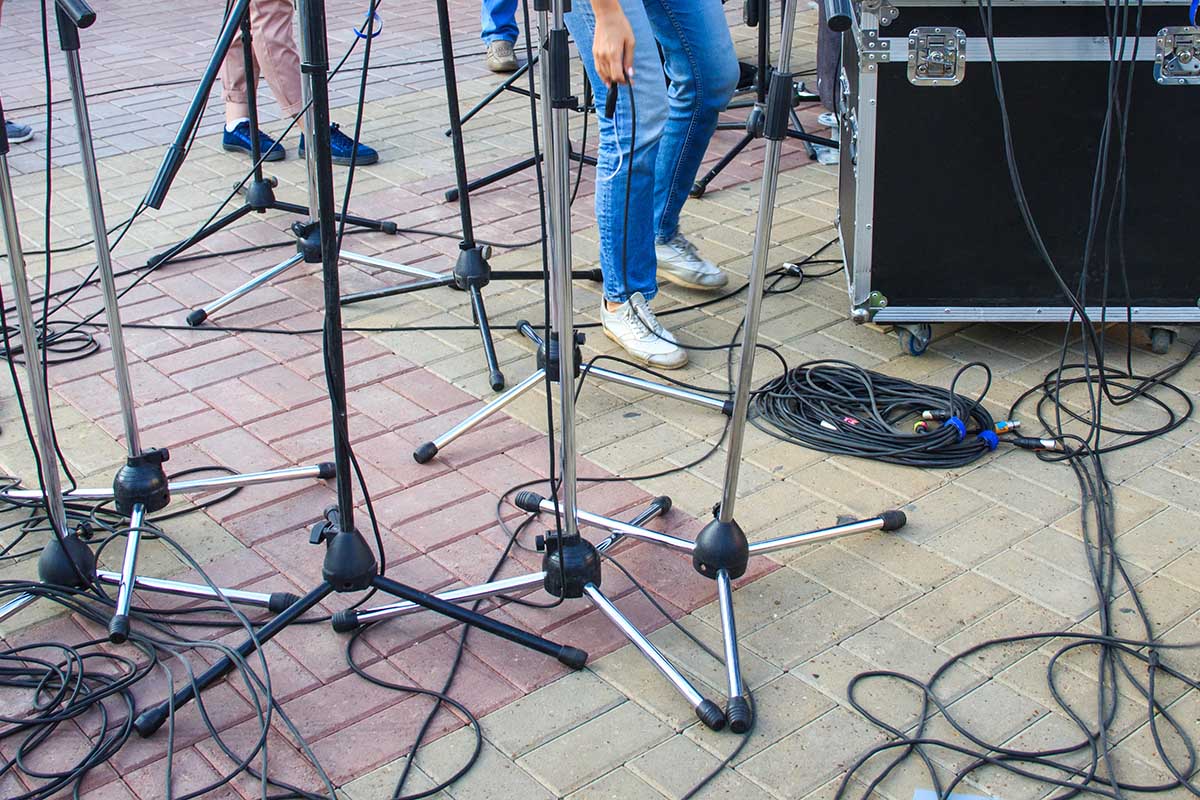
- Events and entertainment: Event power systems need cables that can handle frequent setup and teardown, high electrical loads, and outdoor conditions. Cam-lock connectors, power stringers, and feeder cable assemblies are widely used for fast, reliable deployment.
- Generator feeds: Cables connecting portable or mobile generators to distribution panels must match the generator’s voltage and amperage ratings. Using the correct connectors also helps prevent incompatible connections and improves safety during repeated use.
- Temporary lighting: String light systems and temporary work lighting generally require lower ampacity cables, but they still need to meet appropriate outdoor and job-site safety requirements when used in demanding environments.
Matching the cable to its intended application reduces the risk of equipment failure, improves job-site safety, and helps ensure the installation meets relevant electrical standards.
When in doubt, selecting a cable designed specifically for the environment is always the safer choice.
The Right Connector System
Cam-lock connectors, single-pole connectors colour-coded by phase, are the standard for high-ampacity temporary power distribution in both events and construction.
They allow fast, safe connection of heavy feeder cables to distribution equipment and are designed to prevent misconnection between incompatible conductors.
NEMA connectors are used for lower-amperage circuits and must be matched precisely to the receptacle type and voltage configuration of the equipment being powered.
Mismatched NEMA connections are a common source of connection problems at events and on job sites.
Where Duraline Fits in This Space
For event producers, contractors, and facility managers who need power distribution equipment engineered for demanding applications, the right supplier makes a significant difference.
Looking for the right power cables for your next event or construction project means working with a source that understands the specific application requirements and can recommend the right product for your actual conditions.
Duraline has manufactured engineered power cables and electrical distribution systems since 1946, holds US Navy certification, and produces UL/cUL-listed cam-type connectors, NEMA products, generator cables, and event power stringers designed for the real-world demands of professional power distribution.
Practical Checklist Before You Buy or Deploy
Before selecting or deploying power cables for an event or construction application, work through these questions:
- What is the maximum load in amperes that this cable will carry?
- What is the operating voltage?
- Will the cable be exposed to moisture, weather, oil, or abrasion?
- What is the run length, and does the gauge selection account for voltage drop?
- Are the connectors compatible with both ends of the connection?
- Does the cable carry an appropriate OSHA and NEC rating for the application?
Getting all of these right before the cable leaves the warehouse is significantly cheaper than discovering a problem during setup.
Conclusion
Power cable selection for events and construction is a technical decision with real safety and compliance consequences.
The right cable matches the ampacity, voltage, usage environment, and connector type of the specific application. OSHA’s requirements for hard or extra-hard usage ratings on construction sites are a legal floor, not a suggestion.
Working with a supplier who understands the engineering behind power distribution, not just the catalogue of products, produces better outcomes on every job.