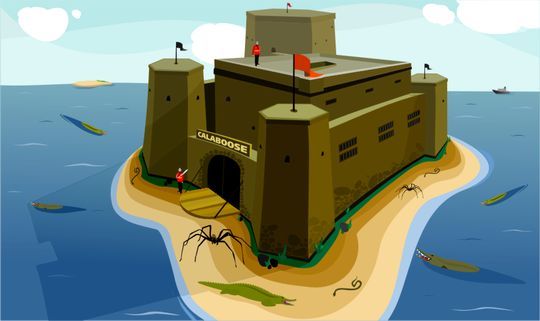
The Social Network That Put 22 Users in Virtual Prison—Before Modern Content Moderation
✨ Key Points
- WeCheese allowed members to report misconduct and try private conflict resolution first.
- Unresolved cases went before a public community court where users could comment and vote.
- The experiment raised an important question that remains relevant today: can communities help govern themselves safely and fairly?
Long before AI moderation, community notes, automated filters, and independent appeals, one little-known social network tried something far more theatrical: it built a virtual court and sent troublesome members to an online prison.
In 2007, 22 users of WeCheese.com were reportedly confined to a digital “Calaboose” after the community found them responsible for harassment, threats, or other misconduct.
The prison was not real, but the problem it attempted to solve, how to protect people without giving one company complete control over justice—remains strikingly current.
Today, large platforms use less dramatic versions of the same ideas:
- Reddit combines volunteer moderators, community rules, discussions, and voting to shape what remains visible.
- Discord allows server moderators to create rules while AutoMod filters potentially harmful messages before members see them
- Facebook, Instagram, and Threads allow certain disputed decisions to reach Meta’s independent Oversight Board after internal appeals are exhausted.
- X Community Notes lets contributors collaboratively add context to potentially misleading posts, although it addresses information rather than punishing users.
Modern systems generally rely on automated detection, human moderators, warnings, temporary restrictions, account suspensions, and appeals.
WeCheese made those consequences public and allowed the community to debate individual cases, something that could create accountability but also encourage bias, retaliation, and public humiliation.
For readers interested in digital culture, online safety, platform governance, or the history of social media, this forgotten experiment offers a fascinating question: was WeCheese ahead of its time, or did the internet wisely move away from turning moderation into a public trial?
How the Virtual Court Worked
When a member experienced threatening or inappropriate behavior, they could submit a complaint.
The case first entered a private resolution process designed to help both users settle the conflict without public intervention.
If that failed, the complaint moved to the community court.
Members could review the case, discuss the alleged behavior, and vote on the outcome.
The accused user could then be:
- Cleared of the complaint;
- Warned by the community;
- Temporarily restricted;
- Sent to the virtual Calaboose;
- Permanently removed from normal participation.
It was part moderation system, part courtroom drama, and part digital social experiment.
Did Virtual Prison Make the Community Safer?
According to WeCheese founder Mawuna Koutonin, misconduct dropped significantly during the first three months of the system.
He also claimed that complaints and account cancellations among women, the primary targets of abuse on the platform, declined by 95%.
These figures were reported by the founder and were not independently verified.
Still, members reportedly described feeling safer because identified risks became visible and the community openly discussed unacceptable behavior.
Why Public Accountability Changed User Behavior
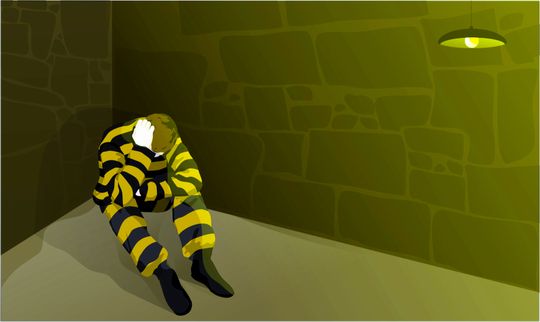
The system’s power came from more than punishment.
Users knew that their behavior could become part of a visible community record.
That created several possible deterrents:
- Misconduct was harder to hide;
- Other members received warnings about risky users;
- Victims had a formal way to report problems;
- The community helped define acceptable behavior;
- Repeat offenders faced escalating consequences;
In other words, the platform did not simply remove a user quietly.
It turned moderation into a public community process.
Was Community Voting Really Fair?
The idea was innovative, but it also carried serious risks.
Popular opinion is not always accurate, and community members may vote emotionally or without complete evidence.
A responsible system would also need:
- Clear rules and definitions;
- Protection against false accusations;
- Private handling of sensitive evidence;
- Impartial moderators;
- A transparent appeal process;
- Consistent consequences;
- Strong privacy and anti-harassment safeguards.
Without these protections, a virtual court could easily become a popularity contest or a new form of public humiliation.
What Today’s Social Platforms Can Learn

WeCheese disappeared from the social-media conversation, but its central idea remains surprisingly current.
Online communities still struggle with harassment, fake accounts, threats, and users who return after being banned.
The experiment showed that effective moderation requires more than a report button.
People feel safer when they understand what behavior is prohibited, know their complaints will be reviewed, and can see that harmful actions have consequences.
Virtual prison may sound like an internet novelty from another era.
Yet the deeper lesson still matters: healthy online communities are not created by technology alone.
They need clear rules, fair enforcement, human judgment, and systems that protect people without turning justice into entertainment.