
Fall Lawn Care Tips That Set You Up for a Greener Spring
✨Key Points
- Fall care helps your grass build strong roots (so it actually survives winter and comes back healthier.)
- Taking care of your lawn now means fewer weeds later (you’re stopping problems before they start.)
- A little effort in the fall makes your lawn look way better in spring (fuller, greener, and not patchy.)
Fall might feel like the season when your lawn is “done,” but in reality, it’s when the most important work happens.
This is the time when grass builds stronger roots, stores nutrients, and prepares to survive winter, so what you do now directly impacts how your lawn looks next spring.
Search trends for “fall lawn care checklist,” “how to prepare lawn for winter,” and “best fall lawn maintenance tips” continue to rise, especially as more homeowners focus on long-term lawn health instead of quick fixes.
And it makes sense, according to recent landscaping insights, lawns that are properly maintained in the fall can grow up to 30% thicker in spring compared to neglected ones.
Even though grass growth slows down, your lawn is still active beneath the surface.
Fall is your window to fix damage, strengthen roots, and prevent common issues like weeds, patchy growth, and soil compaction.
Before we get into the exact steps, here’s what fall lawn care actually does for your yard:
- Stronger root system (helps your lawn survive winter and grow back faster in spring.)
- Fewer weeds next season (fall treatments reduce weed growth before it starts.)
- Healthier, thicker grass (improves density and reduces bare spots.)
When you approach fall lawn care with this mindset, it stops feeling like seasonal cleanup and starts becoming a strategy for a better-looking lawn year-round.
Remove Fallen Leaves
Deciduous trees shed their leaves before winter arrives to preserve resources and protect against being blown over during this windier season.
As such, your lawn will be decorated with several colorful leaves that may look nice to play in during fall.
However, these leaves do more harm than good to the grass.
They trap moisture and block out sunlight, starving the turf underneath of essential ingredients for normal growth.
Consequently, removing fallen leaves from your lawn is crucial during this season.
You can use a garden rake for the job or opt for a back pack leaf blower for quicker results.
According to several experts, removing leaves from your lawn at least once a week is best.
Rather than let these leaves go to waste, you can make leaf mold to create a great mulch for your garden borders, so keep this in mind.
Keep Mowing the Grass

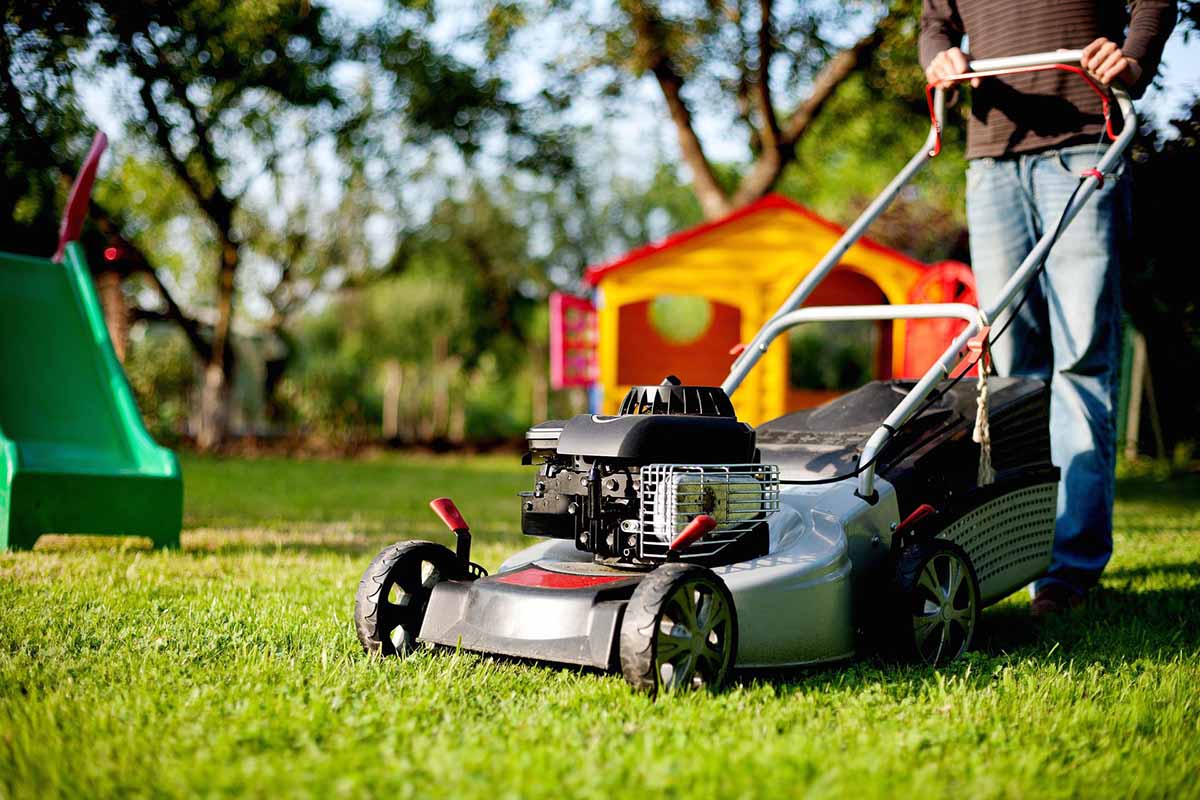
Grass doesn’t stop growing until winter when it frosts over, so there is no reason to cease mowing during fall.
The longer the grass becomes, the less sunlight the base of the grass plants receives.
Robert E. Kozlowski at the Cornell University Cooperative Extension suggests that mowing your lawn with a lawn mower set at the right height can prevent you from having to bag or rake lawn clippings.
You can mow when your grass is 3 to 3.5 inches tall and extremely dry.
However, never trim it shorter than 2 to 2.5 inches or remove over a third of the leaf surface during a single mowing.
Also, you can leave some grass clippings behind after mowing to ensure that your lawn benefits from their valuable nutrients.
Kozlowski’s lawn care advice will mean mowing more frequently, but it will ensure a healthier lawn supported by nutrients you would have thrown away.
Watch Out For Fall Pests
Moles may still be active during fall and will make themselves at home on your lawn if it is rich in insects and grubs.
These carnivores are perhaps the biggest pest threat to your lawn during fall, so it is vital to keep an eye out for them during this season.
You can use mole repellent to make your lawns undesirable to moles and avoid overwatering your lawns since these furry, tunneling pests love soft and damp earth.
Chafer grubs are also key pests to look out for.
They are active between September and April and are known to eat grass roots, causing several yellow and dying patches on the lawn.
Their presence also invites hungry birds who peck at the grass for food, further destroying the lawn.
You can get rid of chafer grubs naturally by applying parasitic nematodes.
You can easily purchase these beneficial nematodes online, at garden centers, or in big box stores.
Furthermore, several armyworm species are known killers of lawns across America.
Armyworms move in masses to destroy lawns, stripping away leaf tissues and causing brown patches.
Fortunately, nematodes and many targeted insecticides on the market can eliminate these pesky pests.
Ticks, leatherjackets, billbugs, and ants are other lawn pests to look out for during fall, so keep this in mind.
Prioritize Aeration
Lawns usually suffer varying degrees of soil compaction and heat stress over the summer.
These two problems are responsible for most of the thinned or brown grass you may have noticed last season. A compact lawn surface doesn’t absorb rainwater well, leading to waterlogging.
In addition, valuable nutrients will struggle to reach the grassroots in compact soil.
Consequently, prioritize aeration during fall to open up passageways for the grassroots to receive nutrients and water.
This way, your lawn will be lush and green for the next year.
You can aerate by driving a garden fork about 10cm deep at frequent intervals over the lawn, softly rocking it to loosen the compact soil.
Beyond loosening compacted soil, managing water delivery is key to protecting aeration benefits and preventing the over- or under-watering that stresses roots.
Adjusting run times and repairing misaligned or leaking heads in early fall helps moisture move into aeration channels and supports stronger root recovery.
For homeowners who want practical, site-specific guidance, local teams like sunriseirrigation.com can audit sprinkler performance and recommend schedules that complement aeration work.
Small, targeted irrigation tweaks after aeration often translate to noticeably healthier turf by spring.
Apply Appropriate Fall Lawn Fertilizer
Your goal is to keep your lawn in excellent condition but not encourage growth from October to mid-March.
Therefore, it wouldn’t be prudent to apply particular kinds of fertilizers during fall, depending on the kind of grass you have.
For example, nitrogen-rich fertilizers can provoke a lot of tender new growth that may be vulnerable during winter.
In addition, applying nitrogen to warm-season grass late in the fall supports the growth of cool-season weeds that will destroy your lawn as it lies dormant.
Therefore, apply potassium and phosphorus-rich fertilizers if you have warm-season grass like Centipede or Zoysia.
Phosphorus gives the grass what it requires to store energy for a lovely spring green-up, while potassium will protect it from winter’s chill.
On the other hand, you can apply nitrogen-rich fertilizers to cool-season grasses like Fine Fescue and Perennial Ryegrass.
Spread Seed
Dense lawns offer great protection against weeds, so spreading seed over your existing turf is vital.
These seeds will grow to fill in bare patches and thin spots and will help you introduce some drought-resistant and resilient grasses.
Fall is the perfect time to overseed because the soil is still warm with a lot of moisture.
Also, the sun is not quite hot during the day, and the nights are cool.
However, you will have to do better than merely broadcasting the seeds over your lawn by hand.
You can use handheld spreaders for small lawns and drop or broadcast spreaders for larger ones.