Lab-Grown vs. Natural Diamonds: How to Tell the Difference
✨Key Takeaways
- Lab-grown and natural diamonds can look identical: Both have essentially the same chemical, physical, and optical properties, so visual inspection alone cannot reliably determine a diamond’s origin.
- Professional testing provides the most reliable identification: Review an independent grading report, verify its number with the issuing laboratory, and use a qualified gemologist when the diamond’s origin is uncertain.
- The best choice depends on more than appearance: Compare purchase price, rarity, documentation, sourcing, insurance requirements, and resale expectations before choosing a lab-grown or natural diamond.
What if you spend thousands of dollars on a diamond and later discover that its origin, long-term value, or grading report is not what you expected?
For many buyers, the biggest concerns are not simply about appearance.
They are afraid of:
- Overpaying because they do not understand the market;
- Receiving a lab-grown diamond advertised as natural;
- Confusing a lab-grown diamond with a simulated stone;
- Choosing a ring that may be difficult to insure or resell;
- Regretting a decision influenced by marketing rather than facts.
These concerns have become increasingly relevant as lab-grown diamonds move into the mainstream.
According to The Knot’s 2026 Real Weddings Study, 61% of engagement rings purchased by surveyed U.S. couples in 2025 featured a lab-grown center stone, while 40% said it was specifically important for their stone to be laboratory-grown.
Price is a major reason for this shift.
The study reported an average lab-grown engagement ring spend of approximately $4,600, with an average stone size of 1.9 carats. Lab-grown diamonds may cost 50% to 70% less than comparable natural diamonds, although actual prices depend on cut, color, clarity, carat weight, certification, setting, and retailer.
A lab-grown diamond is not an imitation such as cubic zirconia.
It has essentially the same chemical, physical, and optical properties as a natural diamond, but it is produced using controlled technology rather than formed underground.
✨That similarity creates an important challenge: even an experienced jeweler cannot reliably distinguish the two by sight alone. Conclusive identification generally requires advanced testing by a qualified gemological laboratory.
This guide compares lab-created and natural diamonds by origin, appearance, identification, grading, price, sourcing, and ownership considerations so you can make a confident decision based on evidence rather than assumptions.
Origins: How Natural and Lab-Grown Diamonds Form
The fundamental difference between natural and lab-grown diamonds is their origin, not whether one is a “real” diamond.
- Natural diamonds formed deep within Earth’s mantle under intense heat and pressure, typically billions of years ago. Volcanic activity later carried diamond-bearing material toward the surface, where it could eventually be mined, cut, graded, and polished.
- Lab-grown diamonds are manufactured in controlled facilities over several weeks using one of two principal methods: High Pressure High Temperature (HPHT) or Chemical Vapor Deposition (CVD).
HPHT recreates high-pressure and high-temperature growth conditions, while CVD builds diamond crystal from carbon-containing gas inside a chamber.
Both types consist primarily of crystallized carbon and have essentially the same chemical, physical, and optical properties.
However, they are not identical in every microscopic detail.
Their different growth environments can produce distinctive structures, inclusions, trace elements, fluorescence patterns, or atomic-level defects that specialized laboratory equipment can detect.
Origin therefore does not determine whether a stone is a diamond, it determines whether that diamond formed naturally inside Earth or was produced through technology.
Environmental and Ethical Considerations
After comparing engagement ring styles, many buyers also want to understand what their diamond purchase supports—and whether claims such as “ethical,” “sustainable,” or “eco-friendly” can be verified.
Natural diamond mining can disturb land, use water and energy, produce mineral waste, and create social or labor concerns when supply chains lack transparency.
However, impacts vary between mines, regions, and companies, and some natural diamonds are sold with stronger traceability documentation than others.
Lab-grown diamonds avoid the land excavation required for mining, but they are not automatically environmentally harmless.
HPHT and CVD production require substantial energy, so the carbon footprint depends heavily on:
- The electricity source used by the facility;
- Production efficiency and diamond-growing method;
- Factory location and labor standards;
- Water use and waste-management practices;
- Independent verification of environmental claims.
Research indicates that lab-grown diamonds produced with clean energy can have a significantly lower environmental impact, while fossil-fuel-powered production may reduce that advantage.
The FTC also advises companies to substantiate environmental claims rather than relying on broad terms such as “eco-friendly” or “sustainable.”
Among the most important factors to consider when choosing a diamond engagement ring are:
- Country and facility of origin;
- Natural or laboratory-grown disclosure;
- Renewable-energy documentation;
- Independent grading and traceability reports;
- Recycled metal content;
- Labor and workplace standards;
- Repairability and expected years of use.
For buyers seeking to minimize demand for new extraction or production, an antique, vintage, or reset diamond may also be worth considering.
No diamond should be assumed ethical based only on whether it was mined or created in a laboratory. T
he strongest choice is one supported by transparent sourcing, credible documentation, and values that genuinely matter to the person who will wear it.
Assessing Diamond Quality and Value
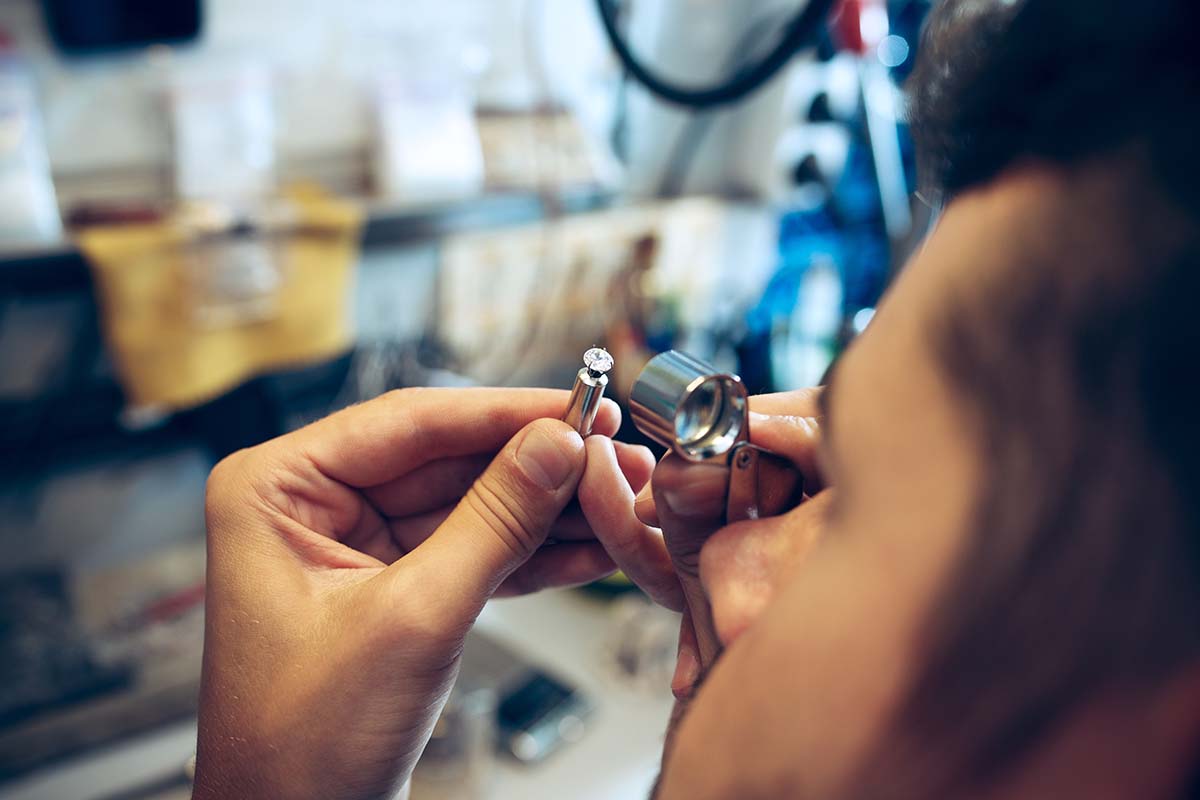
The Four Cs—cut, color, clarity, and carat weight—remain essential when comparing diamonds.
For buyers asking “What are G color diamonds?”, G sits within the near-colorless range and can offer an attractive balance between appearance and price.
Keep these distinctions in mind:
- Quality: Both natural and lab-grown diamonds are available in different cuts, colors, clarity levels, and carat weights.
- Grading: Reporting systems may differ. GIA now describes qualifying lab-grown diamonds as “Premium” or “Standard,” while natural diamonds continue to use its established color and clarity scales.
- Price: Lab-grown diamonds generally cost less upfront, allowing buyers to choose a larger or higher-quality stone within the same budget.
- Long-term value: Natural diamonds often retain more resale value because of their rarity, but neither type is guaranteed to appreciate.
Always compare independent reports, verify the issuing laboratory, and purchase the diamond primarily for personal enjoyment rather than treating it as a guaranteed investment.
Visual and Physical Similarities
As any reliable diamond jewelry buying guide should explain, natural and lab-grown diamonds cannot usually be distinguished by appearance alone.
Both consist primarily of carbon atoms arranged in the same crystal structure and have essentially the same optical, chemical, and physical properties.
They share:
- A hardness of 10 on the Mohs scale;
- Similar thermal conductivity and refractive properties;
- Comparable durability for everyday jewelry;
- The ability to display brilliance, fire, and scintillation.
Their sparkle depends mainly on cut quality rather than origin.
A well-cut lab-grown diamond can appear just as brilliant as a well-cut natural diamond.
Because visual inspection and basic diamond testers may not reveal the origin, buyers should rely on a verified grading report, laser inscription, or advanced testing by a qualified gemological laboratory.
Identification Techniques
Advanced identification techniques are often necessary to differentiate between natural and lab-created diamonds.
Expert gemologists employ sophisticated tools to identify minute variations in trace components and crystal development patterns.
While natural diamonds may contain minute traces of nitrogen, these diamonds often have specific metallic inclusions or distinctive growth patterns unique to the laboratory process.
Additionally, some lab-grown diamonds may exhibit fluorescence under UV light, further assisting their identification and distinction from natural diamonds.
Conclusion: Choose the Diamond That Reflects Your Priorities
The choice between a lab-grown and natural diamond is not a decision between “real” and “fake.”
Both are diamonds, both can provide lasting beauty, and both can become meaningful symbols of an engagement, anniversary, or personal milestone.
Your decision should reflect what matters most to you:
- Choose lab-grown if you prioritize a larger stone, higher specifications, or a lower initial price.
- Choose natural if geological rarity, traditional appeal, and stronger resale potential are important to you.
- Consider vintage or reclaimed if you want to avoid new mining or manufacturing.
- Request documentation if environmental impact, labor practices, and traceable sourcing influence your choice.
Do not assume every lab-grown diamond is sustainable or every natural diamond is unethical.
Ask for an independent report, verify the stone’s origin, investigate sourcing claims, and understand the seller’s return, warranty, and trade-in policies.
Technology may make the two diamonds visually difficult to distinguish, but their origin, market behavior, and personal meaning remain different.
The best diamond is not automatically the rarest, largest, or most expensive, it is the one you understand fully, can afford comfortably, and will remain proud to wear for years.