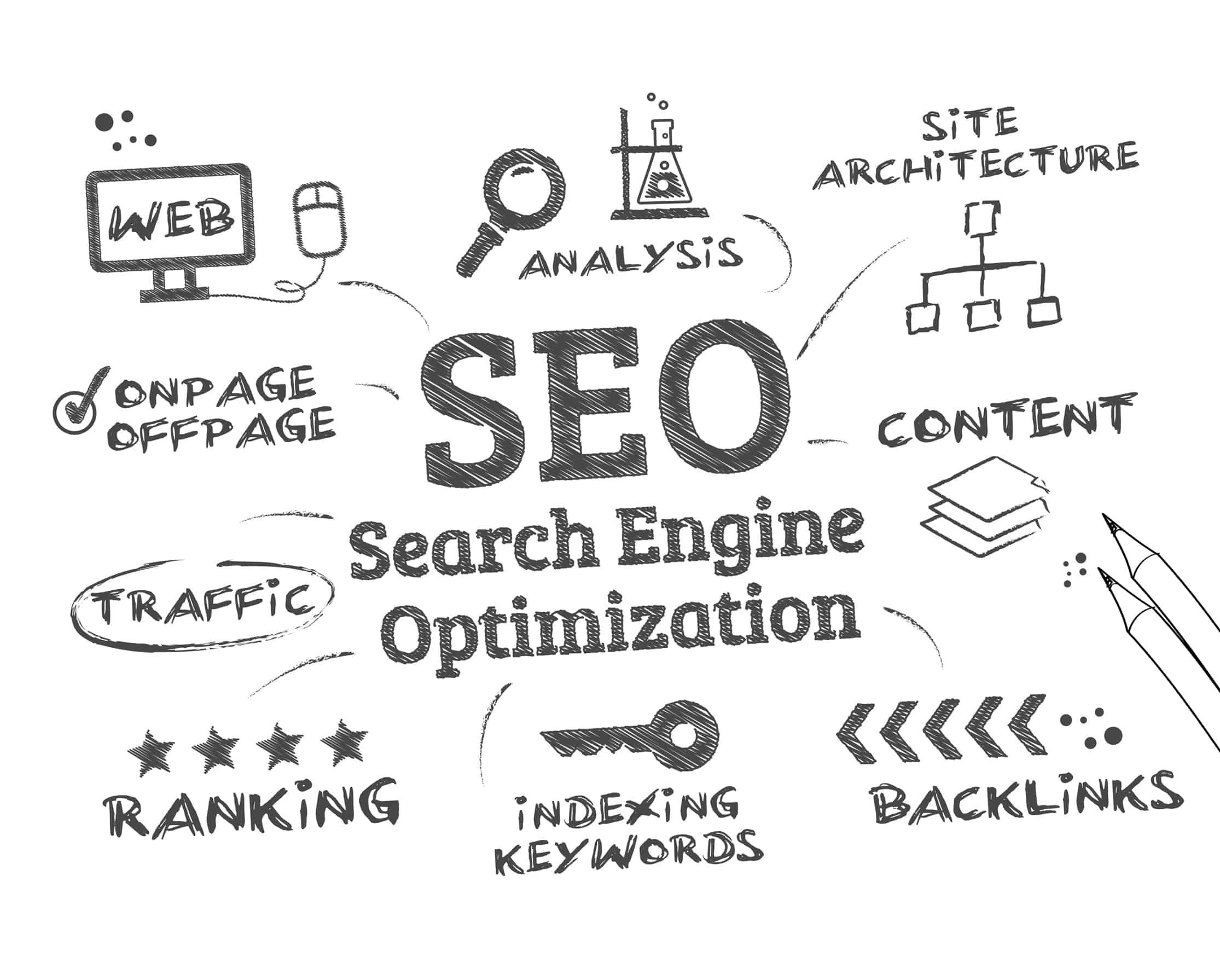
What Can an SEO Audit Reveal About Your Website
Share this post

What Can an SEO Audit Reveal About Your Website?

✨Key Points

  • An SEO audit reveals technical problems, ranking gaps, and content issues that may be limiting website traffic and conversions.
  • SEO competitor analysis shows where rival websites outperform yours and identifies realistic opportunities to gain search visibility.
  • A professional SEO site audit turns website data into a prioritized action plan focused on qualified traffic, leads, and business growth.

A website can look professional and still struggle to attract qualified visitors.

Pages may load slowly, target the wrong search intent, contain broken links, or remain invisible to search engines, all without creating an obvious problem for the website owner.

Whether you manage your own business website or oversee a large company’s digital strategy, an SEO audit should be the starting point.

You can conduct the initial review yourself or work with an experienced Essex SEO firm to examine the website more thoroughly.

A comprehensive SEO site audit can reveal:

  • Technical SEO issues affecting crawling and indexing.
  • Pages that attract traffic but fail to generate leads.
  • Content that no longer matches customer search intent.
  • Slow loading times and poor mobile usability.
  • Missing trust, authority, and E-E-A-T signals.
  • Internal-linking gaps and underperforming keywords.
  • Opportunities to improve visibility across traditional and AI-assisted search.

An audit will not improve rankings by itself.

However, it replaces assumptions with evidence, showing what already works, what limits performance, and which improvements deserve priority.

Search Visibility and Ranking Positions
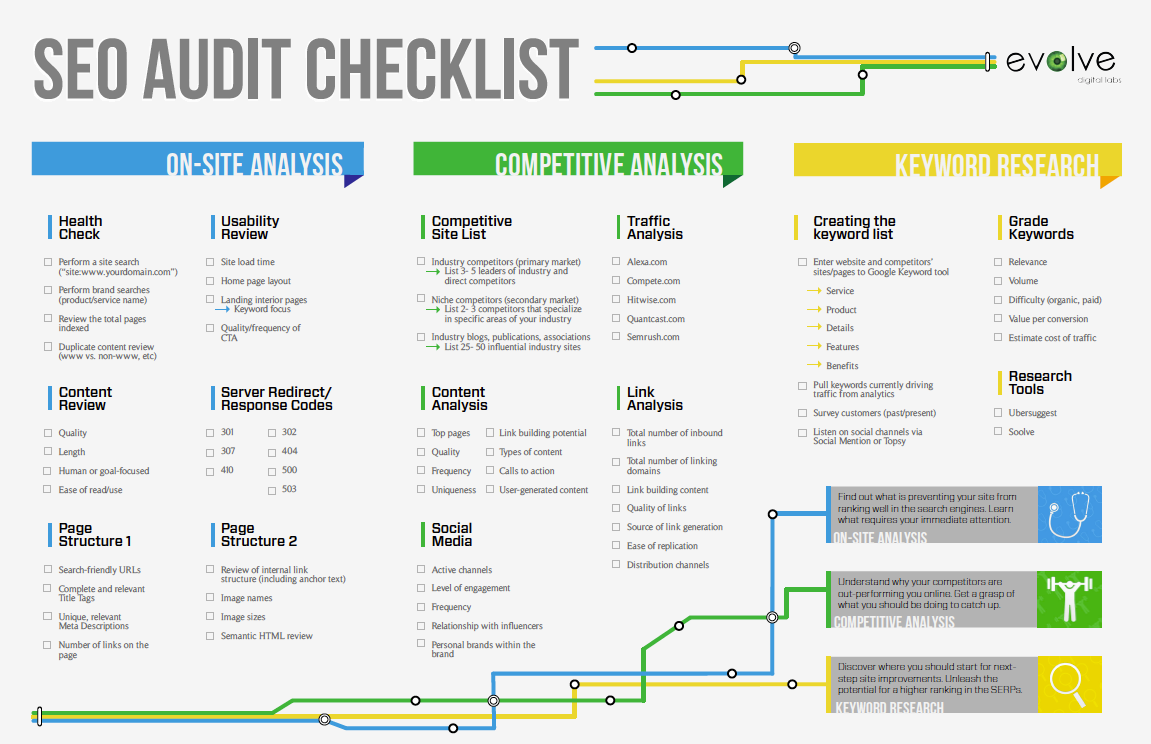
SEO-Audit-Checklist-2019

One of the first things an SEO audit reveals is where, and whether, your website appears when potential customers search for relevant products, services, or information.

It can also uncover technical and content-related SEO mistakes that may be limiting your visibility.

Using data from tools such as Google Search Console, an audit can identify:

  • The primary and secondary keywords generating impressions and clicks.
  • Pages that rank well but attract few visitors.
  • Keywords appearing just outside the leading results.
  • Irrelevant queries bringing the wrong audience to your website.
  • Important commercial searches where competitors outrank you.
  • Changes in rankings, impressions, clicks, and organic search traffic over time.
  • Opportunities to appear in local results, featured answers, and other search features.

Ranking positions alone do not provide the complete picture. A page could rank for many keywords yet generate few qualified visits, leads, or sales.

An effective SEO performance audit connects visibility data with engagement and conversion results, showing which rankings create real business value and which ones only look impressive in a report.

Benchmark Your Performance Against Competitors

Website performance means little without context.

An SEO audit compares your visibility with relevant competitors, showing where your business leads, where it falls behind, and which opportunities may be realistic to pursue.

Effective SEO competitor benchmarking can compare:

  • Rankings for commercially valuable search queries.
  • Organic traffic and estimated search visibility.
  • Content depth, freshness, and topical coverage.
  • Backlink quality and authoritative brand mentions.
  • Technical performance and Core Web Vitals.
  • Local search presence and customer reviews.
  • Visibility across featured results and AI-assisted search.
  • Competitor pages attracting qualified traffic and links.

This comparison can reveal a keyword gap where competitors appear for valuable searches your website has not addressed.

It can also prevent wasted effort by showing which highly competitive topics would require significant time and resources to challenge.

The initial benchmark gives an agency or in-house team a reliable baseline for monthly, quarterly, and annual reporting.

Instead of reporting rankings without context, the team can track changes in visibility, qualified traffic, leads, conversions, and SEO return on investment.

A complete audit is not necessarily required every month.

The appropriate schedule depends on the website’s size, competition, publishing activity, and technical complexity.

A trusted Sheffield SEO Agency can recommend a suitable review schedule and turn benchmarking data into prioritized, realistic actions.

Identify Technical SEO Problems

SEO is the technicalities

A website may contain useful content and still perform poorly if search engines cannot crawl, understand, or index its pages correctly.

A technical SEO audit examines the systems supporting the website and identifies problems that may be reducing visibility or frustrating visitors.

Important areas to review include:

  • Mobile usability and responsive design.
  • Page speed and Core Web Vitals.
  • Crawlability and indexation.
  • Broken links and incorrect redirects.
  • Duplicate pages and canonical tags.
  • Website architecture and internal linking.
  • XML sitemaps and robots.txt instructions.
  • Image size, format, and descriptive alt text.
  • HTTPS security and structured data.
  • JavaScript or rendering issues hiding important content.

Larger websites are particularly vulnerable to technical problems because every new product, category, article, plugin, or redesign can introduce broken links, duplicate URLs, redirect chains, and indexing conflicts.

An audit should not simply produce a long list of warnings. It should explain how each issue affects customers and search visibility, then prioritize fixes according to their potential impact and difficulty.

SEO practices also change as search technology and customer produce behavior evolve.

Older resources such as dominating SEO trends can illustrate how the industry has developed, but current decisions should be based on updated search documentation, website data, and modern technical standards.

Resolving the most important technical issues creates a stronger foundation for content, user experience, conversions, and long-term organic visibility.

What an SEO Audit Really Gives Your Business

An SEO audit is valuable because it replaces guesswork with priorities.

Instead of spending months publishing more content, redesigning pages, or paying for advertising without understanding the underlying problem, a business can see what is preventing its website from performing.

Imagine a local company receiving fewer inquiries and assuming demand has declined.

An audit may reveal that its most profitable service page disappeared from Google after a website update, mobile visitors abandon a slow booking form, or competitors answer important customer questions more clearly.

Fixing those problems can be more valuable than producing another ten generic articles.

A thorough audit can help a business:

  • Protect existing organic traffic during a redesign or migration.
  • Recover leads lost through broken pages, forms, or redirects.
  • Focus the marketing budget on improvements with genuine business potential.
  • Identify valuable services customers search for but cannot easily find.
  • Reduce dependence on paid advertising for every new inquiry.
  • Give sales teams better content for answering customer concerns.
  • Prevent small technical problems from becoming expensive emergencies.
  • Create a clearer, faster, and less frustrating experience for customers.

The practical benefit extends beyond rankings.

When a website works properly, business owners spend less time wondering why traffic has dropped, marketing teams stop arguing over assumptions, and customers can find the information they need without calling for basic answers.

An SEO site audit will not solve every problem automatically.

Its value comes from turning evidence into an organized action plan: fix what blocks customers, strengthen what already performs well, and invest in opportunities connected to leads, sales, and long-term growth.

Frequently Asked Questions About SEO Audits

Q: How much does a professional SEO audit cost?

A: The cost of an SEO audit depends on the website’s size, complexity, competition, and required level of analysis. A small local-business website may need a focused review, while an ecommerce or international website requires deeper technical, content, backlink, and competitor analysis. Be cautious of extremely cheap automated audits that provide hundreds of warnings without explaining which issues affect the business.

Q: How long does a complete SEO website audit take?

A: A basic automated scan may take minutes, but a meaningful SEO website audit can take several days or weeks. The specialist must review technical data, search performance, content quality, competitor visibility, backlinks, user behavior, and conversion paths. Larger websites generally require more time because findings must be verified and prioritized.

Q: Can I perform an SEO audit myself?

A: A business owner can conduct a basic DIY SEO audit using Google Search Console, Google Analytics, PageSpeed Insights, and crawling tools. However, interpreting the findings can be difficult. A professional review may be more appropriate when traffic has suddenly declined, the website has thousands of pages, a redesign is planned, or previous SEO work produced disappointing results.

Q: What should happen after an SEO audit is completed?

A: The audit should lead to a prioritized SEO action plan, not remain as an unread report. Each recommendation should explain the problem, its business impact, the responsible person, the expected effort, and the order of implementation. Critical crawling, indexing, security, and conversion problems should normally be addressed before minor content or formatting improvements.

Q: How can I tell whether an SEO audit is trustworthy?

A: A trustworthy audit uses real website data, explains findings in plain language, and distinguishes urgent problems from optional improvements. It should connect recommendations to customers and business goals rather than promising guaranteed rankings. Avoid reports that rely entirely on automated scores, recommend deleting large amounts of content without evidence, or pressure you into unnecessary services.

Article by

Alla Levin

Curiosity-led Seattle-based lifestyle and marketing blogger helping businesses reach the 90% of people who don’t yet realize they have the problem you solve. I help people recognize the problem and see your brand as the solution ✨

About Author

Explorialla

Hi, I’m Alla — a Seattle-based lifestyle and marketing content creator. I help businesses and bloggers get more clients through content funnels, strategic storytelling, and high-converting UGC. My content turns curiosity into action and builds lasting trust with your audience. Inspired by art, books, beauty, and everyday adventures!

Categories

movies for entrepreneurs

Luxury Brands Don’t Sell Products—They Sell Dreams

Trending Posts

I Recommend

All the information you need to understand the business world, your career, and marketing. All the information you need to understand the business world, your career, and marketing.

My favorite tools for creators

My favorite Tools for Content Creation

Books i recommend

Be Informed, Be Inspired - Join Today

Email

I do the research to understand your customer's journey, pain points, and what moves them to act

I create content funnels rooted in a deep understanding of where readers are in their journey—meeting them with the right message at the right time

I build content journeys that turn curiosity into conversion through storytelling, UGC, and smart funnels

I constantly run CustDev interviews and test what converts best—so every piece of content is backed by real audience insight