Before You Move to Seattle, Read This From Someone Who Already Did
✨Key Points
Seattle is a city where long-term success comes from understanding lifestyle, culture, and community—not just job opportunities.
Social connections in Seattle grow through shared interests and consistent participation in events, clubs, and outdoor activities.
Housing location and neighborhood choice have the biggest impact on daily life, costs, and overall experience in Seattle.
I moved to Seattle ten years ago because I was looking for a city that offered long-term career opportunities, cultural depth, and a lifestyle that felt balanced rather than rushed.
Over time, I learned that Seattle is not a place you simply move to and figure out later.
It works best when you understand how the city functions before you arrive.
Seattle continues to grow because it brings together technology, creativity, and culture in a way that feels practical, not flashy.
The city is shaped by people from different backgrounds, industries, and countries, and that diversity shows up in daily life from neighborhoods and food to art, music, and local events.
If you are considering moving to Seattle or the surrounding suburbs, these moving to Seattle pros and cons are what actually shape day-to-day life here.
What living in Seattle really looks like day to day

Work and opportunity: When weighing the moving to Seattle pros and cons, the city’s strong job market in tech, healthcare, logistics, and creative fields stands out, even with real competition.
Housing and neighborhoods: The cost of living is high, and where you live matters more than most people expect. Neighborhood choice affects commute time, social life, and daily rhythm.
Culture and community: Seattle’s culture is built around interests and values rather than surface-level interaction. Art walks, local markets, independent cafés, and creative spaces are part of everyday life.
Social life and the “Seattle Freeze”: The idea that people are closed off is misleading. Social connections form through activities. I met people through Seattle art walks, baking clubs, comedy clubs, hiking groups, and travel-focused communities. There are always events happening, but you have to participate.
Nature as a lifestyle: Hiking, weekend trips, and outdoor activities are not occasional hobbies here. They are how many people recharge and connect.
Weather and routine: Seattle has long gray seasons. The climate is mild, but structure, hobbies, and community matter more here than in sunnier cities.
Transportation: Public transit works well in the city. Many suburbs still require a car, which is important to factor into housing decisions.
Seattle rewards people who understand that culture, community, lifestyle choices, and the everyday economics of living in Seattle matter just as much as career opportunities.
People who take the time to understand the moving to Seattle pros and cons are the ones who usually settle in and stay long term.
Evergreen Point Floating Bridge
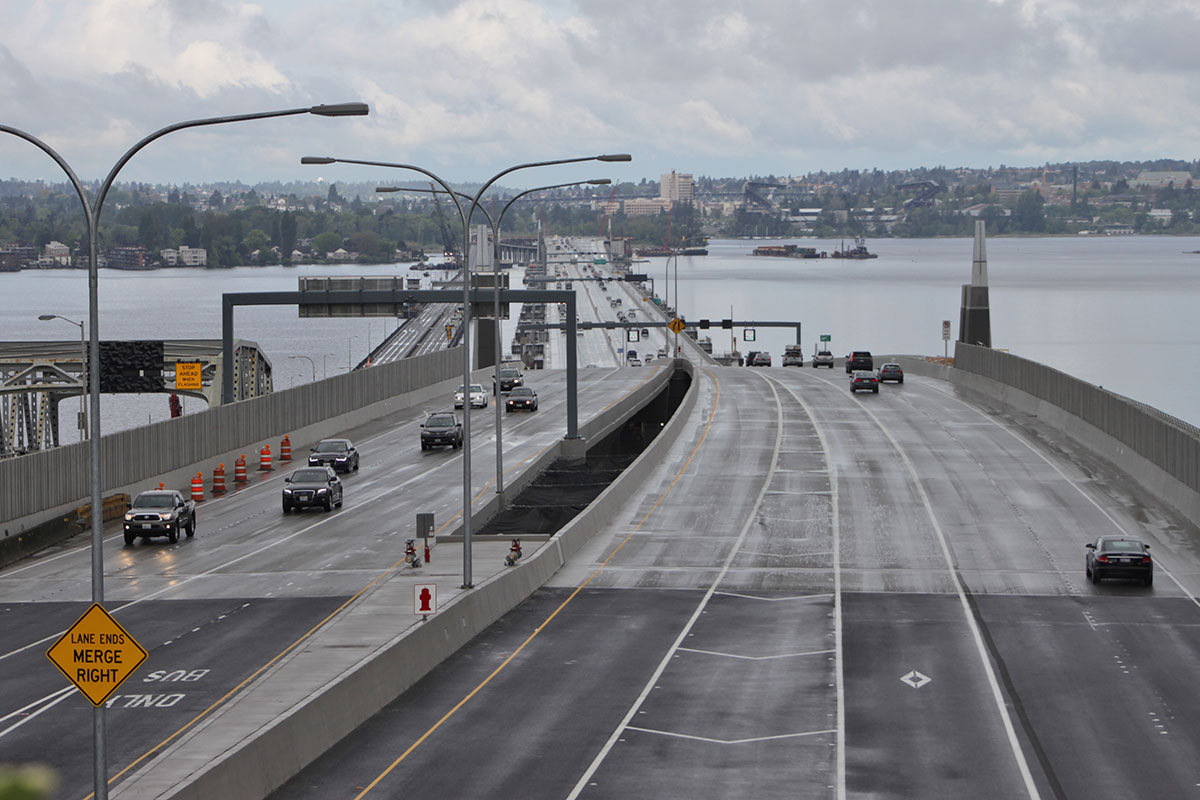
One of the details that stood out to me after moving to Seattle—and a key part of the moving to Seattle pros and cons is how closely connected the city is to the Eastside, especially Bellevue and Redmond.
That connection is shaped not just by roads, but by some of the most unique transportation infrastructure in the world.
Seattle is home to the Evergreen Point Floating Bridge, the longest floating bridge on the planet.
It stretches 15,580 feet, with 7,710 feet floating on Lake Washington, supported by 77 concrete pontoons anchored to the lakebed.
The current bridge opened in April 2016 and was built to serve the region for decades.
This corridor does more than move cars.
It is also where the Link light rail system connects Seattle to the Eastside.
The 2 Line crosses Lake Washington on the I-90 floating bridge, making it the only light rail system in the world operating on a floating bridge.
The full Seattle🔗Bellevue🔗Redmond connection is scheduled to open in March 2026, with frequent peak service that offers a real alternative to driving.
For me, this changes everything.
I live in Kirkland, and being able to park in Bellevue and take light rail into Seattle makes it easy to spend a full day in the city.
Art walks, games, concerts, and even large events like the World Cup become simple plans instead of logistical challenges.
This level of connectivity matters.
It shapes where people choose to live and makes Seattle feel accessible rather than exhausting.
For anyone considering a move, these transportation links are just as important as housing or job opportunities.
Starbucks Coffee
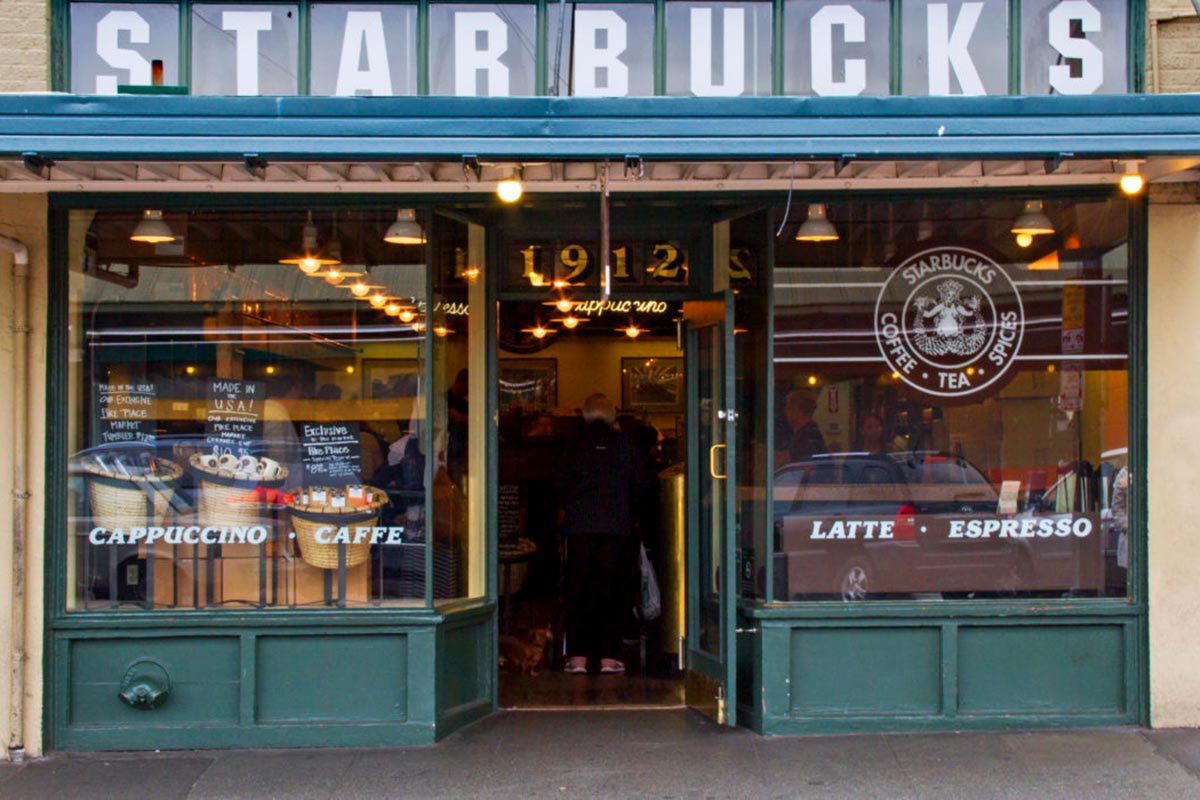
Seattle is often linked to Starbucks, but living here quickly shows you that the city’s coffee culture goes far beyond one global brand.
Coffee is part of daily life in Seattle, and the city is home to some of the most respected independent coffee roasters in the country.
What stands out after relocating to Seattle is not just the number of coffee shops, but how well they support modern work styles.
Many cafés are designed with remote workers, freelancers, and content creators in mind, offering reliable Wi-Fi, comfortable seating, and an atmosphere that makes it easy to stay productive for hours.
Seattle’s coffee scene has continued to evolve in recent years.
Local roasters focus on quality sourcing, thoughtful roasting, and creating spaces that work equally well for quick coffee breaks or longer work sessions. For people working remotely, this means it is easy to turn a coffee shop into a temporary workspace without feeling rushed or out of place.
Some of the most well-known and consistently popular coffee roasters in Seattle include:
Caffè Vita – Known for ethical sourcing, bold blends, and cafés that welcome longer stays
Herkimer Coffee – Popular for single-origin coffees and neighborhood-friendly work spots
Caffè Ladro – A reliable choice for espresso, Wi-Fi, and classic café seating
Lighthouse Roasters – Small-batch roasting with a loyal local community
Seattle Coffee Works – Well known for education, training, and high-quality beans
Victrola Coffee Roasters – A blend of traditional café culture and modern roasting
Stumptown Coffee Roasters – Deeply embedded in Seattle’s specialty coffee scene
For remote workers and content creators, Seattle’s café culture offers more than good coffee.
It provides flexible work environments, creative energy, and a steady change of scenery without sacrificing productivity.
Whether you are editing content, joining video calls, or writing for hours at a time, it is easy to find a coffee shop that fits your workflow.
Living in Seattle means high-quality coffee is not a luxury or an occasional treat.
It is an everyday part of life, built into the city’s rhythm and especially valuable for anyone working remotely or creating content on their own schedule.
An Interesting Piece of Seattle’s Gasoline History
Seattle has a lesser-known place in early automotive history that often surprises people.
In the early 1900s, as cars were just beginning to appear on city streets, Seattle became home to one of the world’s first purpose-built gasoline stations.
Historical records show that in 1907, John McLean, who worked for Standard Oil of California, constructed an early refueling station in Seattle.
At the time, gasoline was often sold from cans or barrels at general stores, making dedicated fueling stations a new and important idea.
The station was located near what is now Pier 32, along Seattle’s working waterfront.
While historians still debate whether it was the first gas station in the world, it is widely recognized as one of the earliest examples of a modern refueling station built specifically for automobiles.
This small detail reflects how Seattle has long been connected to transportation innovation and industrial growth.
Living in a city with this kind of history adds another layer to everyday experiences, even something as routine as driving.
Today, that early experiment in fueling cars is part of Seattle’s broader story—a city that has consistently adapted to new technology long before it became mainstream.
Seattle and the Video Game Industry
If you are a fan of video games or work in game development, Seattle is one of the most relevant cities in the world to consider.
One of the often-overlooked moving to Seattle pros and cons is that this region helps create many of the games and platforms people use worldwide.
Seattle’s connection to gaming comes largely from the concentration of major technology and game development companies in and around the city.
This has created a strong ecosystem for developers, designers, engineers, and creatives working in games.
One of the biggest forces in the industry is Microsoft, whose gaming division is headquartered in the Seattle area.
Through Xbox Game Studios, Microsoft develops and publishes games and hardware used by millions of players worldwide.
Seattle is not just a place where games are sold—it is where many of the decisions, tools, and platforms shaping modern gaming are built.
Seattle is also home to several well-known game development studios that have produced globally recognized titles:
Monolith Productions – Known for F.E.A.R. and Middle-earth: Shadow of Mordor;
PopCap Games – Creators of Bejeweled and Plants vs. Zombies;
Valve Corporation – Developers of Half-Life, Portal, Left 4 Dead, and the Steam platform;
- 343 Industries – The studio behind the Halo franchise, one of the most influential video game series in history.
Beyond these studios, the Seattle area supports a wide network of indie developers, esports organizations, publishers, and gaming-focused startups.
Industry events, meetups, and conferences make it easier for professionals and fans to stay connected and involved.
For gamers, Seattle offers more than just entertainment.
It offers access to the industry itself whether that means working in game development, connecting with other creators, or simply living in a city where gaming culture is deeply embedded in everyday life.
Seattle’s influence on video games is not accidental.
It is the result of decades of innovation, investment, and creative talent coming together in one place.
Microsoft game studios sell millions of gadgets for video games and software units.
Why Bellevue Sits at the Center of Seattle’s Tech Economy—and What That Means for Business Today
When people evaluate the moving to Seattle pros and cons, one reality becomes clear very quickly: the region’s tech and business gravity has shifted east.
Bellevue has emerged as a central hub for technology, enterprise operations, and professional services, complementing and, in many cases, outperforming Seattle for business growth.
Bellevue attracts companies because it combines proximity to Seattle’s talent pool with modern infrastructure, lower congestion, and a business-first environment.
Major tech employers, fast-growing startups, and professional services firms operate here, making Bellevue a strategic base for organizations that rely heavily on technology to function.
This concentration of tech-driven businesses also explains why Bellevue Managed IT Services have become increasingly important.
As companies scale, adopt cloud platforms, support hybrid teams, and manage rising cybersecurity risks, technology can no longer be treated as a background function.
Reliable IT operations directly affect productivity, security, and customer trust.
For businesses relocating to the region—or entrepreneurs weighing the moving to Seattle pros and cons—Bellevue often represents a practical middle ground.
It offers access to innovation without many of the operational challenges found in denser urban cores.
In today’s economy, where digital resilience and operational stability matter more than ever, Bellevue’s role as a tech and business center is not accidental.
It reflects where the region is heading—and where businesses are choosing to build for the future.
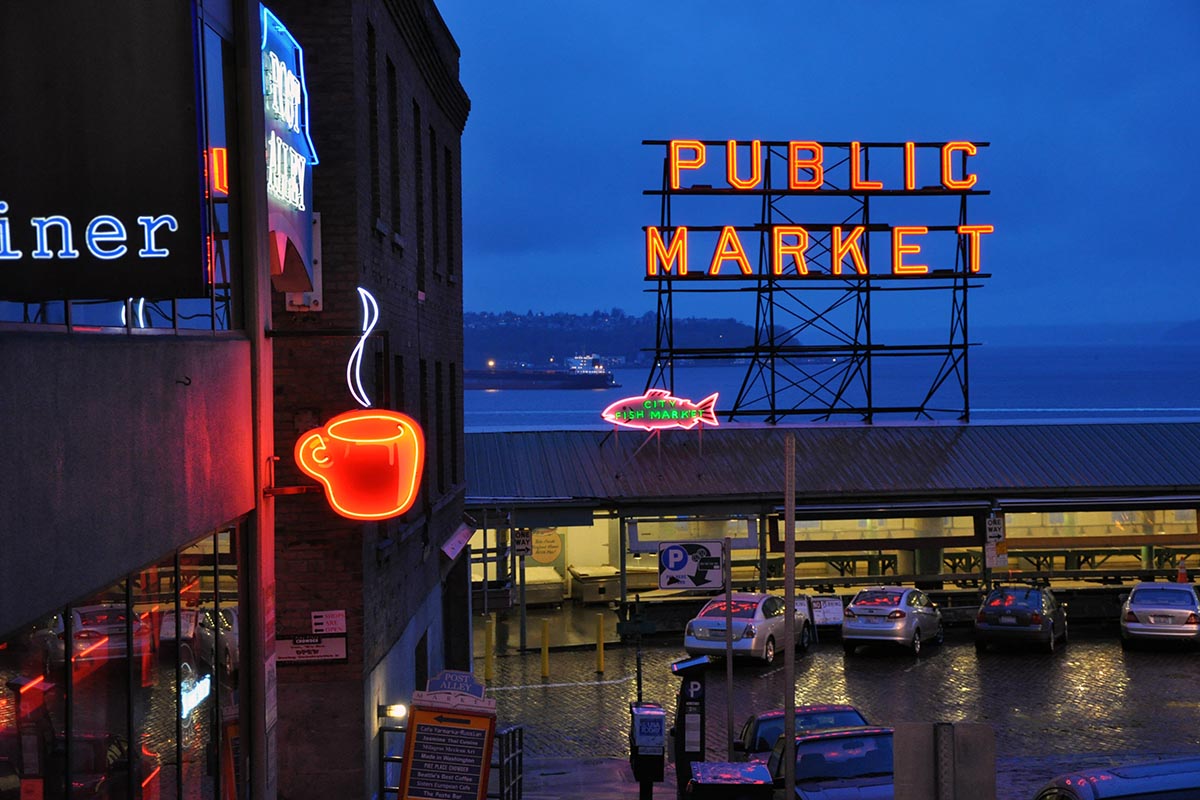
The Famous Onion Market and the Birth of Pike Place
Seattle’s Geography and Glacial History
City of Sunglasses
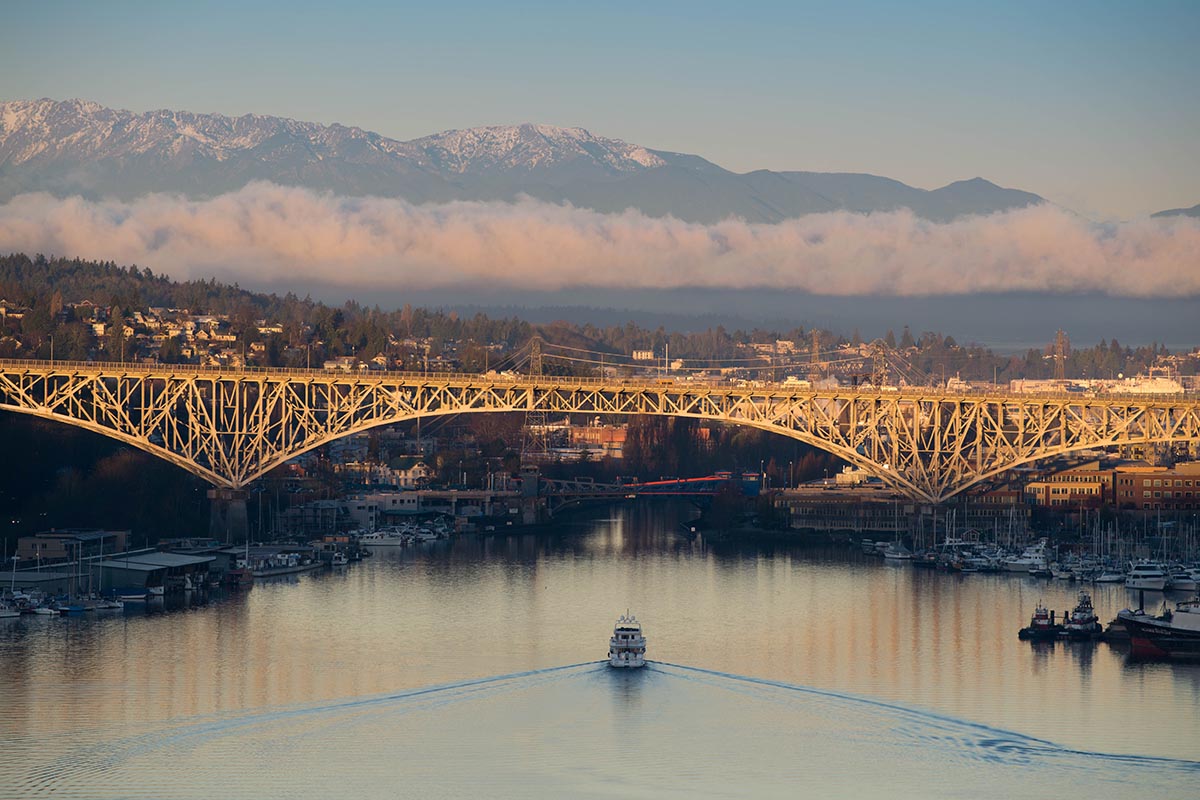
Seattle is often associated with rain and gray skies, but one surprising detail many newcomers notice is how often sunglasses are needed here.
In fact, Seattle consistently ranks among the top U.S. cities for sunglasses purchases.
The reason comes down to how the city’s weather and environment interact.
After rainfall, wet roads and sidewalks reflect light intensely, amplifying glare even on days that are not fully sunny.
This makes sunglasses useful far beyond the summer months.
The Pacific Northwest is also known for a distinctive type of light often referred to as the “PNW glow.”
Even on overcast days, the sky can appear bright and washed out rather than dark.
This diffuse light increases eye strain, especially during long periods outdoors, making eye protection important year-round.
For people who spend time outside whether walking near Lake Union, commuting, boating, paddleboarding, or simply navigating the city sunglasses quickly become a daily necessity rather than a seasonal accessory.
Seattle’s climate creates lifestyle quirks that are not always obvious at first.
Just as excess rain can lead to drainage and infrastructure challenges, the city’s unique lighting conditions shape how residents adapt to everyday life.
In Seattle, sunglasses are not about fashion alone—they are a practical response to the environment.
The Old Seattle Underground — My Favorite Way to Learn the City

One of my favorite ways to understand Seattle’s history is through the Seattle Underground.
It tells the city’s story in a way no museum or guidebook ever could.
Seattle today was built on top of an earlier version of the city.
In 1889, the Great Seattle Fire destroyed much of downtown.
Instead of clearing everything away, the city rebuilt at a higher street level, leaving behind the original storefronts, sidewalks, and passageways below.
Those buried streets still exist. Walking through the underground feels like stepping into a preserved moment in time, where you can see how early Seattle functioned before modern infrastructure reshaped it.
The tours take you through old corridors, former businesses, and forgotten spaces that once made up everyday life.
What makes the Seattle Underground special is that it is not just a tourist attraction—it is a physical reminder of how the city adapted, rebuilt, and moved forward.
For anyone who enjoys history, architecture, or exploring places with layers of meaning, this is one of the most fascinating experiences Seattle offers.
Living near something like this is part of what makes Seattle unique. The city’s past is not hidden in books; it is built directly beneath your feet, waiting to be explored.
The Emerald City
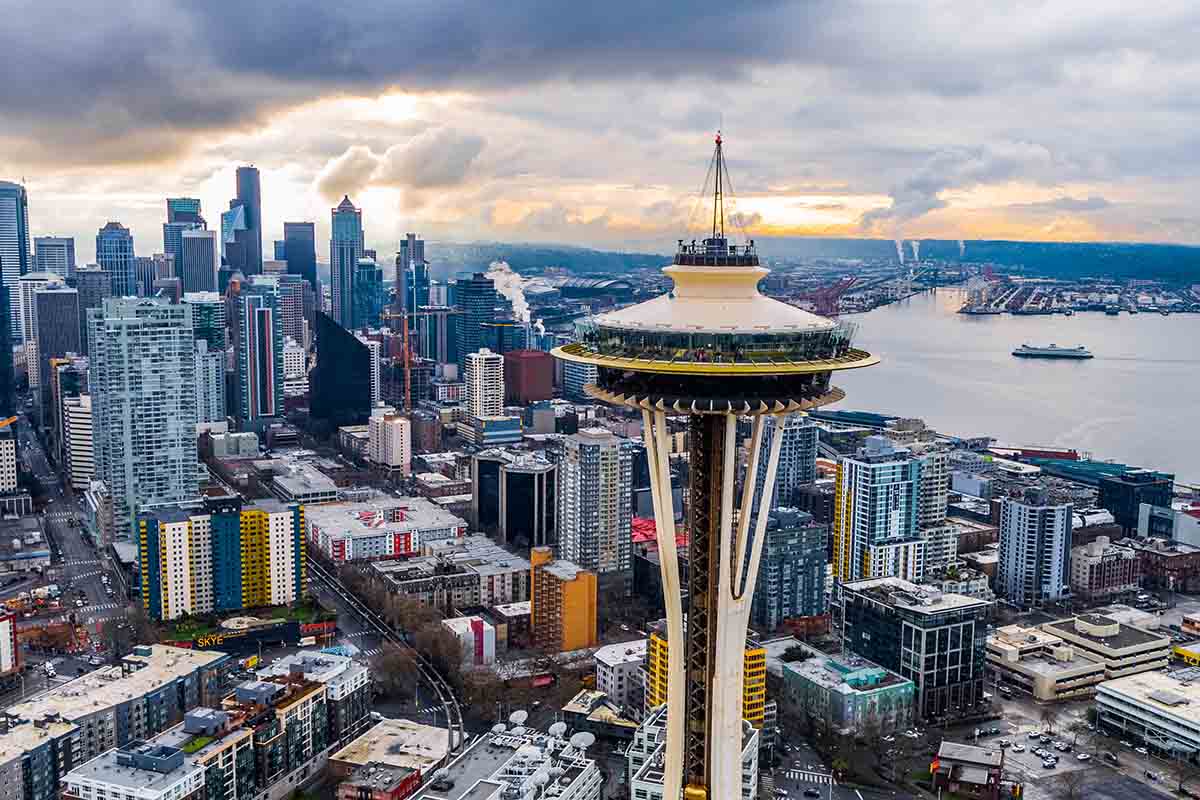
Seattle is widely known as the Emerald City, a nickname that reflects its lush greenery and evergreen surroundings.
The name gained popularity through a regional tourism campaign in the late 20th century and quickly stuck, capturing how green the city stays year-round thanks to its mild, rainy climate.
Long before “Emerald City” became common, Seattle was often referred to as the Queen City, a nickname found in early historical references that highlighted its growing importance in the Pacific Northwest.
Over time, as the city expanded and its natural beauty became more central to its identity, new names followed.
Many people still describe Seattle as the jewel of the Northwest. Surrounded by water, forests, and mountains, the city blends urban life with nature in a way that few places do.
Parks, tree-lined streets, and green spaces are woven into everyday neighborhoods, not set apart from them.
Living in the Emerald City means being part of a place that has managed to grow while holding onto its natural character.
When weighing the moving to Seattle pros and cons, it stands out as a city that has remained visually striking and livable over time, appealing to individuals and families seeking balance.
Moving to Seattle: Glaciated Mount Rainier
One of the most defining features of living in Seattle is the constant presence of Mount Rainier.
On clear days, it dominates the skyline and serves as a reminder of just how close nature is to the city.
Mount Rainier is the tallest peak in the Cascade Range, standing at 14,411 feet.
It is an active stratovolcano and one of the most glaciated mountains in the continental United States, with more than two dozen named glaciers flowing down its slopes.
The mountain is also home to unique natural features, including rare ice worms that survive in glacial environments—something found in very few places on Earth.
These details make Mount Rainier not just visually impressive, but scientifically fascinating as well.
For Seattle residents, Mount Rainier is more than a landmark. It shapes outdoor culture, weekend travel, photography, and everyday appreciation for the region’s natural beauty.
When weighing the moving to Seattle pros and cons, access to hiking, snow sports, and scenic views often becomes part of daily life.
Seattle is full of moments like this—where urban living and natural wonder overlap.
As you plan your move, understanding these defining features helps explain why so many people choose to build long-term lives in the Emerald City.
If you are relocating, it is also worth exploring the best areas to live in Seattle, since neighborhoods vary widely in lifestyle, access to nature, and proximity to views like Mount Rainier.
Whether you are moving in or out of Seattle, check out Seattle’s best moving companies by MovingAstute.com.
Final Thoughts: Moving to Seattle Pros and Cons — Is It the Right Move for You?
After living in Seattle for years, one thing has become clear to me: understanding the real moving to Seattle pros and cons is what determines whether people settle in successfully or move on.
Seattle is not just about job opportunities or postcard views.
The true pros and cons show up in everyday life—how you commute, where you spend your time, how connected you feel to the city, and whether the lifestyle fits the way you actually live.
From historic neighborhoods and glacial landscapes to world-class coffee, creative communities, and evolving transportation, Seattle offers layers that reveal themselves over time.
For some, these layers become long-term advantages. For others, they highlight trade-offs that matter just as much.
The people who thrive here are the ones who take time to weigh the moving to Seattle pros and cons honestly before making the move.
If you are seriously considering relocating, the next steps are practical and intentional:
Narrow down neighborhoods that match your daily routine;
Decide whether Seattle proper or the Eastside fits your lifestyle better;
Visit with purpose—walk the streets, use public transit, spend time in local cafés;
Picture your everyday life, not just the highlights.
Seattle is a city you choose deliberately.
When you take the time to understand the real moving to Seattle pros and cons, it becomes much easier to decide whether this is a place you simply try or a place you stay.