Growing Plants Indoors With an AeroGarden: Is It Worth the Cost?
✨ Key Points
- It offers convenience, not necessarily immediate savings: The purchase price, electricity, nutrients, and replacement pods should be considered.
- Start with suitable plants: Basil, chives, lettuce, and other compact greens are generally more manageable than large fruiting plants.
- Choose the model carefully: Compare pod capacity, plant height, counter space, noise, replacement supplies, and cleaning requirements.
When my brother Shane told me he was spending nearly $300 on an AeroGarden, I thought he had lost perspective.
Why pay hundreds of dollars to grow tomatoes when a bag from the grocery store costs only a few dollars?
He patiently described it as a “coffee machine for plants”: insert the seed pods, add water and nutrients, turn on the light, and let the system manage much of the growing process.
I remained skeptical until I watched him harvest fresh lettuce indoors.
Then my mother, who initially rejected his offer of a free unit, started imagining salads made with greens growing in her own kitchen.
Eventually, I added jalapeños, basil, and chives to my first AeroGarden.
An AeroGarden is a hydroponic growing system, meaning plants grow primarily in water and nutrient solution instead of ordinary soil.
According to the official AeroGarden setup guidance, its built-in light follows an automatic schedule, while users must add water and the recommended amount of plant food.
An indoor garden may be useful if you:
- Live in an apartment without outdoor growing space;
- Want fresh herbs during cold or rainy seasons;
- Regularly buy herbs but use only part of each package;
- Enjoy gardening but need a cleaner, compact setup;
- Want children to observe how food grows;
- Can consistently refill the water and maintain the system.
Before buying, read independent AeroGarden reviews and compare the ongoing costs with how often you would realistically use the harvest.
For me, the value became clearer once the system stopped looking like a costly gadget and started producing ingredients I could reach for while cooking.
How AeroGarden Has Evolved
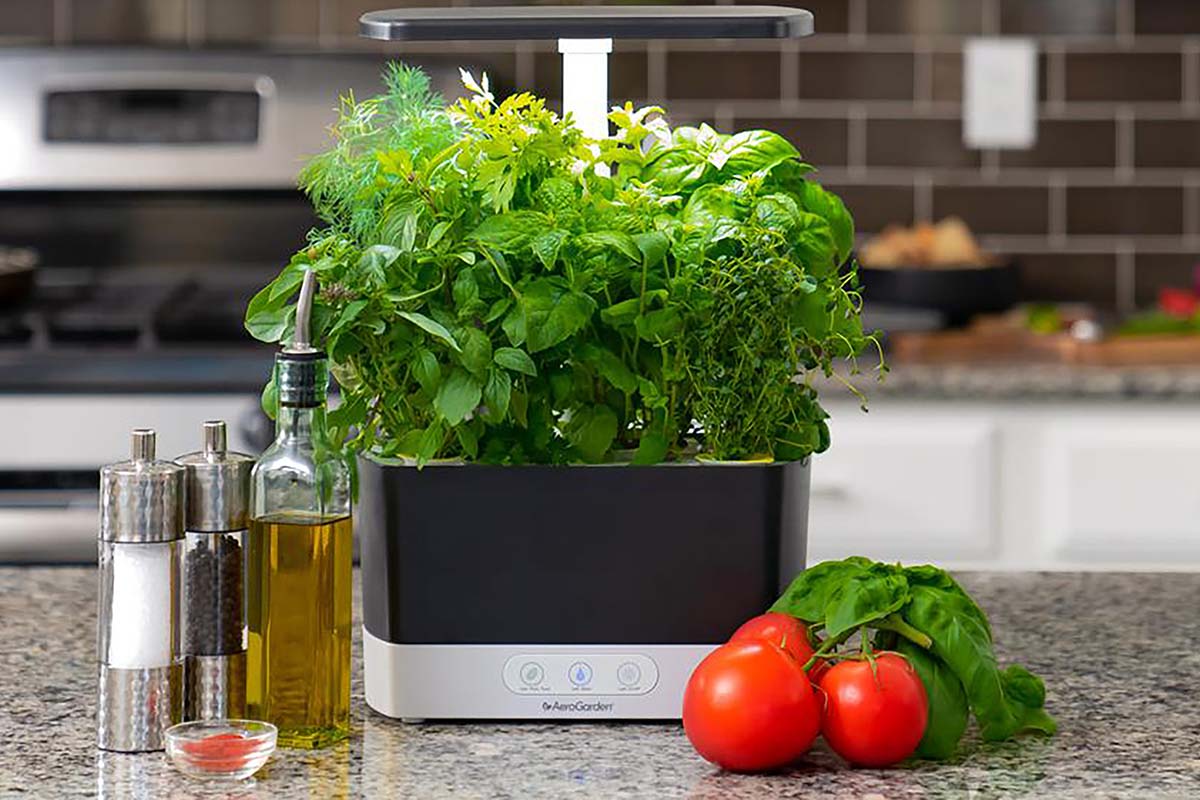
AeroGarden is not new technology. The brand has been introducing countertop growing systems since the mid-2000s, combining seed pods, water, liquid nutrients, a pump, and automated LED lighting.
Although AeroGarden is sometimes described as aeroponic, its manufacturer identifies it as a hydroponic system because the roots grow in nutrient-rich water.
You can learn how the methods differ in this overview of aeroponics.
AeroGarden announced plans to close in 2024, but the brand returned in 2025 and remains part of ScottsMiracleGro.
Today, people may choose an indoor garden because they:
- Live in an apartment without a yard;
- Want fresh herbs throughout the year;
- Prefer a low-mess alternative to indoor soil;
- Enjoy watching food grow with their children;
- Regularly waste partially used packages of store-bought herbs;
- Want a manageable introduction to gardening;
Capacity depends on the model; some compact units hold only a few pods, while larger models accommodate nine or more.
According to AeroGarden’s official guidance, many plants germinate within 7–14 days and may be ready for an initial harvest in approximately four to six weeks.
An AeroGarden is not intended to replace grocery shopping. It is better understood as a convenient way to grow modest amounts of herbs, lettuce, and selected compact vegetables at home.
Before purchasing, compare the unit’s capacity, mature plant height, lighting schedule, ongoing supply costs, and required counter space.
What My Family Is Growing
When Shane sent me photos of tiny sprouts turning into bowls of fresh greens, I wanted to recreate the experience without spending hundreds of dollars.
I started with approximately $30 worth of seed trays, multicolor grow lights, potting soil, and seeds.
I do not have a natural green thumb, but every morning I checked the trays, hoping to discover a new sprout.
The experiment did not go as planned. Several tomato seedlings died within weeks, the green beans eventually withered, and many trays remained nearly empty.
The inexpensive setup required more consistency and knowledge than I expected.
Common beginner problems can include:
- Insufficient or inconsistent lighting;
- Overwatering or allowing the soil to dry out;
- Poor drainage and limited airflow;
- Planting large crops in containers that are too small;
- Failing to adjust the light as seedlings grow;
- Choosing plants with different growing requirements;
After that experience, I found a basic six-pod AeroGarden Harvest for about $40.
It did not offer app connectivity or advanced smart features, but it used the same type of water-and-nutrient growing process as the more expensive models.
The simpler system addressed my biggest challenges by providing a dedicated water reservoir, timed lighting, and designated spaces for each pod.
It still required refilling, feeding, pruning, and cleaning, but it removed much of the guesswork that had caused problems with my seed trays.
For a beginner, that structure proved more valuable than owning the most advanced model.
How the AeroGarden Works
Setting up the AeroGarden was straightforward.
I filled the reservoir with water, added the recommended amount of liquid plant food, inserted the seed pods, placed a humidity dome over each one, and connected the unit.
The system then circulated nutrient-rich water around the roots while the built-in LED light followed a programmed schedule.
Within about two weeks, I could see:
- Small shoots emerging from the pods;
- White roots growing through the sponges;
- Faster growth from mint and other vigorous herbs;
- Different germination rates among plant varieties;
- Water levels beginning to fall more quickly;
The humidity domes should be removed once the seedlings approach or touch them.
As the plants grow, they also need regular pruning and enough distance from the light.
I learned this after my mint reached nearly a foot tall and developed brown leaves where it grew too close to the LEDs. The mint recovered after trimming, but the dill did not.
To prevent similar problems:
- Keep the light positioned a few inches above the tallest plants;
- Prune fast-growing herbs before they shade smaller seedlings;
- Avoid combining aggressive growers with delicate plants;
- Refill the water before the reservoir runs dry;
- Add nutrients according to the model’s schedule;
- Trim long roots carefully if they crowd the pump;
- Clean the reservoir between growing cycles.
A larger nine-pod model can provide more growing capacity, a taller adjustable light, and additional controls.
Some models also include connected features, although availability varies. However, upgrading is not automatically necessary.
A compact six-pod garden may be sufficient for basil, chives, mint, and lettuce if the plants are pruned regularly.
The experience changed how I viewed the higher price. I was not simply paying for seed pods;
I was paying for more growing space, automated lighting, reminders, and fewer opportunities to make the beginner mistakes that affected my first plants.
Growing Plants Indoors: Tips to Know Before Starting
An AeroGarden can simplify indoor gardening, but it cannot accommodate every crop equally well.
Herbs and leafy greens generally fit compact systems better than carrots, turnips, garlic, watermelon, or other plants requiring deep soil, extensive roots, vines, or substantial growing space.
If you want to grow root vegetables or large outdoor crops, use the AeroGarden as a seed-starting system and transplant the seedlings into suitable containers or an outdoor bed.
AeroGarden recommends moving seedlings once they are approximately two to three inches tall and have developed strong roots.
Before planting, remember to:
- Match mature plant size to the height of your model
- Leave empty pod spaces around large fruiting plants
- Grow plants with similar heights and growth rates together
- Prune basil, dill, and mint before they shade smaller plants
- Remove no more than one-third of a plant at one time
- Refill the reservoir before the water level becomes too low
- Rinse and refill the reservoir approximately every four to six weeks
- Pollinate indoor tomatoes and peppers by gently shaking their branches
Tap water is acceptable for most AeroGarden systems, so filtered or distilled water is not automatically required.
Water quality varies, however, and owners experiencing mineral buildup should consult their model manual before changing water sources or nutrient amounts.
Starting new pods beside mature plants can also be difficult because established herbs may block the light.
For better results, prune the larger plants, lower the light toward the seedlings when possible, and avoid placing slow-growing varieties beside aggressive herbs.
Most importantly, treat indoor gardening as an experiment.
Try your own seeds, observe what performs well in your space, and move suitable seedlings into containers or prepare your outdoor garden for summer.
Not every pod will thrive, but learning why one plant succeeds while another struggles is part of what makes the experience rewarding.