
Top 10 WordPress Benefits for SEO
✨Key Points
Starting a business today means building an online presence so potential customers can actually find you. And for that, you need a website.
The challenge is that many business owners do not know where to start or which platform to choose.
There are many CMS (Content Management System) options available, but not all of them offer the same flexibility, performance, or SEO potential.
That is why WordPress remains one of the most popular choices.
According to many SEO professionals, WordPress is the best CMS for businesses because it is flexible, scalable, user-friendly, and secure.
Around 40% of websites worldwide are built on WordPress, which shows just how widely trusted it is.
WordPress first started as a blogging platform, but over time it evolved into a powerful website solution used by businesses of all sizes.
Today, it supports everything from simple service websites to large e-commerce stores and content-heavy brands, especially when paired with the right plugins to add to your WordPress eCommerce website.
One of the biggest reasons businesses choose WordPress is its SEO potential.
In this article, we’ll look at 10 WordPress benefits for SEO and why it remains such a strong choice for businesses that want better online visibility.
Website Loading Speed
Website loading speed plays a major role in both user experience and SEO.
If a site loads too slowly, visitors often leave before the page fully opens, which increases bounce rates and signals poor performance to search engines.
That means even strong SEO work can be undermined by a slow website.
One of the WordPress benefits for SEO is that it gives you many ways to improve site speed.
With the right specific hosting for WordPress, lightweight themes, caching plugins, and image optimization, WordPress websites can perform much better.
You can improve speed even further by using online tools like Google PageSpeed Insights to identify issues and find ways to optimize your site.
SEO Plugins Compatibility
One of the biggest WordPress benefits for SEO is how easily it works with SEO plugins.
WordPress is compatible with many popular SEO tools, including Yoast SEO, Rank Math, and other plugins designed to help improve on-page optimization, metadata, sitemaps, readability, and technical SEO settings.
These plugins are especially useful because they are beginner-friendly.
You do not need advanced technical knowledge to start using them, and most come with simple setup wizards that guide you through the process step by step.
For businesses and content creators, this makes WordPress much easier to optimize, even without a full developer or SEO team.
Easy Content Updates and Revisions
With WordPress, publishing and updating content is simple, which is important because SEO depends on regular content creation and ongoing improvements.
You not only need to add new content, but also update existing pages so they stay relevant, accurate, and competitive in search results.
WordPress makes this easy and allows you to make changes in just a few clicks.
In practical terms, you can quickly handle core content tasks like creating, editing, updating, and deleting pages or posts without needing advanced technical skills.
This flexibility makes WordPress especially useful for businesses that want to keep their websites active and SEO-friendly.
Multiple Theme and Layout Options
Website structure plays an important role in SEO because search engines evaluate how your pages are organized, displayed, and experienced by users.
If your current theme is outdated, poorly coded, or does not support modern SEO and usability standards, WordPress makes it easier to switch to a better theme or layout.
With many theme options and simple setup tools, you can upgrade your website design without rebuilding everything from scratch.
This gives businesses more flexibility to improve site structure, user experience, and overall performance as their needs grow.
Customizable Permalinks
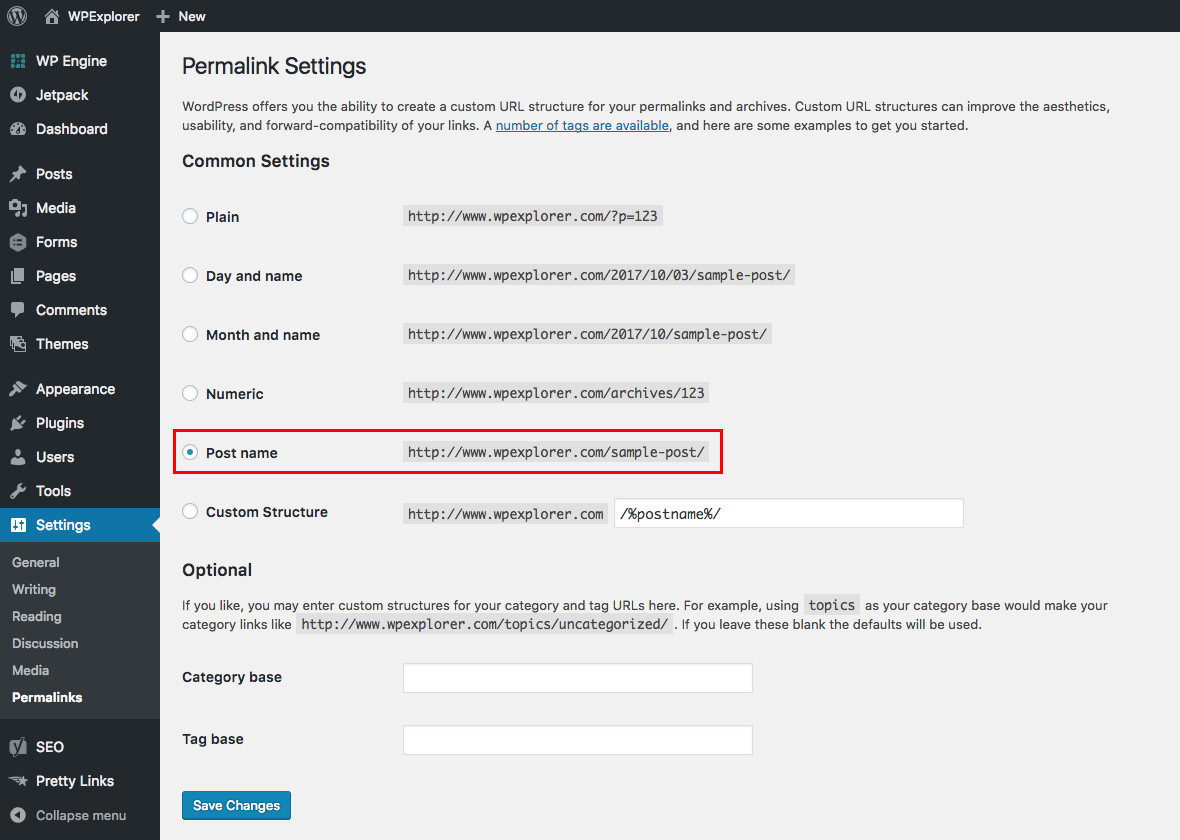
Clean, readable URLs are important for both users and search engines.
If you look at high-ranking pages, their URLs are usually simple, clear, and easy to understand.
That is because URL structure plays a role in SEO and helps search engines better interpret the page content.
With WordPress, you can customize your permalinks and create URLs in the format you want.
This makes it easier to remove unnecessary characters, keep links organized, and use clear keyword-focused structures.
For better SEO, URLs should stay short, simple, and easy to read.
Images Optimizations
When talking about SEO, images matter too.
They can bring in additional traffic through Google Images and also affect how fast your website loads.
When people search on Google and click the Images tab, they often find visuals that match their query and then land on the website behind that image.
This makes image optimization an important part of content strategy.
With WordPress, it is easy to optimize images by:
- adding descriptive file names;
- using alt text;
- compressing large files;
- reducing image size for faster loading;
This helps your pages load more quickly, improves user experience, and increases the chances of your images appearing in search results.
Analytical Code Implementation
Without measurement, it is hard to know whether your marketing is actually working.
To track performance, businesses often need to install code from third-party tools such as Google Analytics, Google Tag Manager, or Meta Pixel.
These tools help measure traffic, conversions, audience behavior, and campaign results.
One of the practical WordPress benefits for SEO and marketing is that it makes this process much easier.
You can add tracking codes directly through the WordPress dashboard, a plugin, or your theme settings without needing complex development work.
This allows businesses to monitor campaigns more accurately and make better decisions based on real data.
Easier Metadata Implementation

Strong SEO also depends on well-optimized metadata, especially your meta title, meta description, and URL slug.
With WordPress, this becomes much easier.
Once you install a quality SEO plugin like Rank Math or Yoast SEO, you can edit metadata for each page or post directly while creating or updating content.
These plugins also let you control how your content appears when shared on social media, which helps improve both search visibility and click-through appeal.
For businesses and content teams, this makes on-page SEO easier to manage and much more efficient.
WordPress Benefits for SEO: Mobile Responsive
One of the biggest business benefits of WordPress is that it makes it easier to build a mobile-responsive website, which directly affects visibility, user experience, and conversions, especially when combined with powerful WordPress SEO tools.
Today, most visitors come from mobile devices first.
If your website is hard to read, slow to navigate, or poorly structured on a phone, people leave quickly, and that means lost leads, lower engagement, and fewer sales.
With WordPress, a well-built theme usually handles responsiveness for you.
Many modern themes, including default options, are already designed with mobile-first performance in mind.
From a business perspective, this matters because a mobile-friendly website can help you:
- keep visitors on the page longer;
- improve search rankings;
- reduce bounce rates;
- create a smoother path to inquiries, sign-ups, or purchases.
These are some of the top WordPress benefits for SEO. That does not mean WordPress is the only option.
Other CMS platforms like Joomla or Magento are also available, especially for specific use cases like e-commerce.
Still, WordPress remains the preferred choice for many businesses because it is flexible, secure, and easier to optimize for both SEO and growth.
Many SEO agencies use WordPress as their primary CMS because it supports better performance, simpler updates, and a stronger foundation for long-term online visibility.