
Murphy Bed vs. Regular Bed: Which Is Better for Your Space?
✨ Key Points
- Choose according to room use. Murphy beds offer the greatest value when the room needs to perform two functions.
- Measure the complete opening area. Check wall width, ceiling height, floor clearance, baseboards, outlets, windows, and nearby furniture.
- Prioritize safe installation. The cabinet and lifting system must be assembled and anchored correctly, especially in homes with children or pets.
A regular bed can consume most of a small bedroom, even when nobody sleeps there for weeks.
This creates a familiar problem in apartments, guest rooms, and home offices: valuable floor space remains permanently occupied for occasional use.
A Murphy bed folds into a wall-mounted cabinet, allowing one room to serve more than one purpose. It can help you:
- Turn a home office into a guest room;
- Create more daytime floor space;
- Avoid an expensive room addition;
- Make a studio apartment feel less crowded;
- Add sleeping space without using a sofa bed;
- Keep a multipurpose room organized.
However, a wall bed is not automatically the better choice.
It usually costs more than a standard bed, requires adequate wall and floor clearance, and must be securely installed according to the manufacturer’s instructions.
Mattress size, comfort, lifting mechanism, daily effort, and available storage should also influence the decision.
A Murphy bed will not physically expand your home, but it can help you reclaim space you already have.
The following advantages and limitations will help you decide whether it offers more practical value than a regular bed.
What Is a Murphy Bed?
A Murphy bed is a practical response to a room that needs to do more than one job.
Instead of sacrificing an entire guest room for occasional visitors, or working beside a permanent bed every day, the mattress folds into a wall-mounted cabinet when it is not needed.
This makes it possible to use the same room for:
- Focused work during the week;
- Exercise or creative projects;
- Children’s playtime;
- Comfortable overnight guests;
- Quiet reading or relaxation;
- Additional everyday living space;
Modern Murphy beds can include shelving, cabinets, desks, lighting, or integrated seating.
The deeper benefit is flexibility: you do not need a larger home to gain a room that adapts to changing routines.
Choose a model based on how frequently it will be used for sleeping and what the room must become after the bed is folded away.
How Is a Murphy Bed Different From a Regular Bed?
A regular bed remains open and occupies the same floor area day and night.
A Murphy bed uses a lifting mechanism to store the mattress vertically or horizontally inside a cabinet, freeing the room for other activities.
The main differences include:
- Floor space: A Murphy bed releases usable space when closed;
- Installation: It usually requires secure wall or floor anchoring;
- Cost: The frame and mechanism often cost more than a standard bed;
- Daily use: It must be opened and closed whenever the room changes purpose;
- Mattress choice: Size, thickness, and weight may be restricted;
- Storage: Some models integrate desks, shelves, cabinets, or seating;
- Portability: A regular bed is generally easier to move or replace;
A Murphy bed can feel similar to a conventional bed when it has a supportive frame and suitable mattress, but comfort varies by model.
Its real advantage is not better sleep, it is allowing one room to serve several purposes without permanently sacrificing a proper sleeping surface.
10 Reasons to Choose a Murphy Bed Over a Regular Bed

Murphy beds can be stored vertically or horizontally inside a wall-mounted cabinet.
Unlike a regular bed that occupies permanent floor space, a wall bed allows the room to change according to your daily needs.
The main advantages include:
- Easier opening and closing;
- Multipurpose room use;
- More available floor space;
- Customizable storage and finishes;
- Durable construction;
- Faster room transformation;
- Reduced visual clutter;
- A proper mattress for guests;
- Vertical and horizontal configurations;
- Better use of an existing home;
1. Easy to Use
Modern Murphy beds use spring, piston, or counterbalance mechanisms to make lifting and lowering more controlled. Quality and effort vary, so test the mechanism when possible and check whether the manufacturer recommends professional installation.
2. Multifunctional
A room does not need to remain empty while waiting for guests. Fold the bed away and use the same space as a home office, workout area, playroom, craft room, or reading retreat.
3. Saves Floor Space
A conventional bed permanently occupies valuable square footage. A Murphy bed releases that area during the day, which is especially useful in studios, condos, tiny homes, and compact guest rooms.
4. Easy to Customize
A wall-bed system can include:
- Shelves and closed cabinets;
- A fold-down desk;
- Integrated lighting;
- Nightstands and charging outlets;
- Display areas or a media unit;
- Finishes that match existing décor;
Customization can improve both storage and appearance, but every added feature increases the required wall space and total cost.
5. Designed for Repeated Use
A well-made Murphy bed should tolerate regular opening and closing while remaining stable in both positions. Durability depends on the frame, lifting mechanism, fasteners, installation, and adherence to the manufacturer’s weight limits.
6. Transforms a Room Quickly
A spare room, basement, or home office can become a comfortable sleeping area within minutes. However, installing a Murphy bed does not legally convert an unfinished attic, basement, or office into a bedroom; local safety and building requirements may still apply.
7. Helps Reduce Clutter
Integrated cabinetry can provide organized storage for linens, books, office supplies, and guest essentials. This keeps the room visually calmer and prevents temporary belongings from collecting on chairs or floors.
8. Offers Better Guest Comfort Than Many Sofa Beds
Many Murphy beds accommodate a conventional-style mattress within specific thickness and weight limits. This can provide a flatter, more supportive sleeping surface than some pull-out sofas, although comfort still depends on the mattress selected.
9. Fits Different Room Layouts
Vertical models suit rooms with adequate ceiling height, while horizontal Murphy beds can work better under sloped ceilings or along wider, lower walls. Measuring the room in both closed and open positions prevents expensive layout mistakes.
10. Uses the Home You Already Have
A Murphy bed cannot expand the physical size of your home, but it can reduce the need for an addition or a permanently dedicated guest room. It helps existing space support more activities, which may deliver greater everyday value than simply adding another piece of furniture.
The best reason to choose a Murphy bed is flexibility. Instead of designing an entire room around occasional sleep, you can create a space that supports your real routine every day.
Choose a Murphy Bed Without Sacrificing Comfort
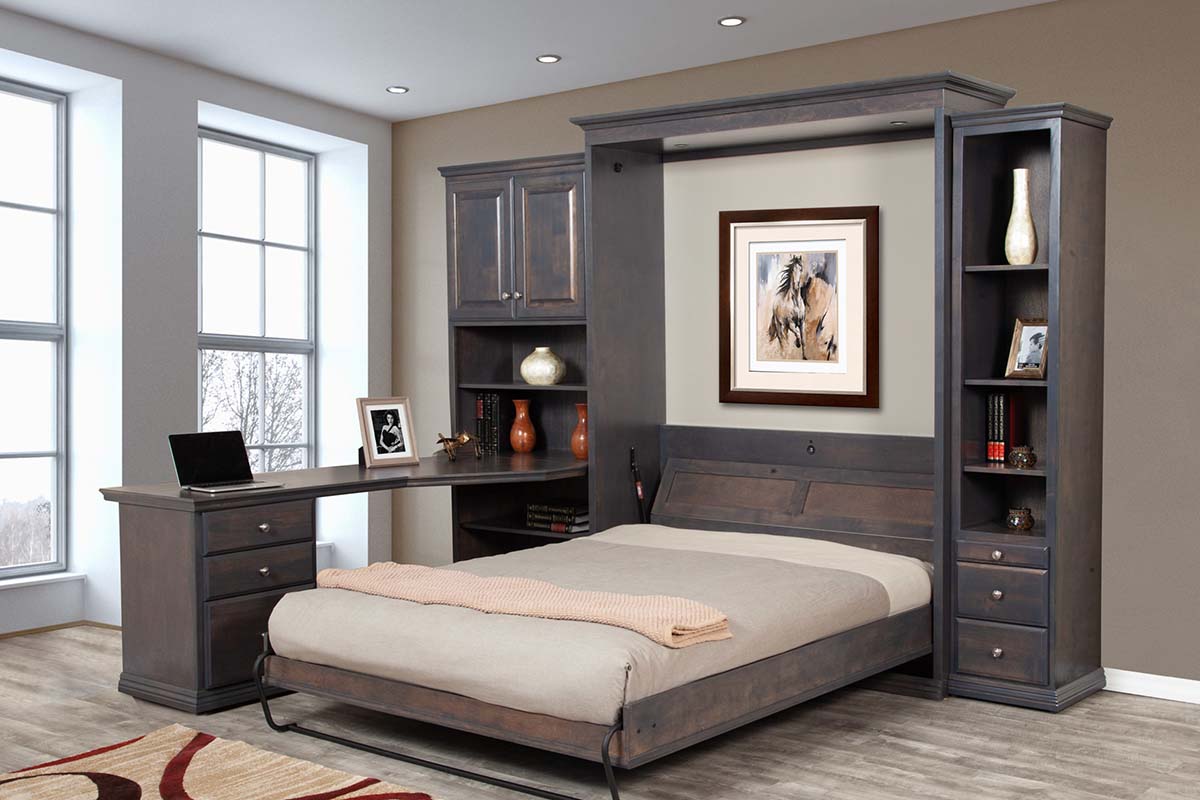
Choose a Murphy Bed Without Sacrificing Comfort
A Murphy bed can feel as comfortable as a regular bed when it has a stable frame and the right mattress. Unlike many sofa beds, it does not need a folding mattress with bars or cushions underneath.
Before selecting a high-quality mattress, check:
- Maximum mattress thickness
- Required mattress weight
- Compatible mattress dimensions
- Support platform or slat design
- Straps that hold the mattress in place
- Warranty conditions
- Whether the bed will be used occasionally or every night
Do not assume every mattress will work with every wall bed.
A mattress that is too heavy can interfere with the lifting mechanism, while one that is too thick may prevent the cabinet from closing correctly.
Is a Murphy Bed Worth the Investment?
A Murphy bed is worth considering when reclaiming the floor space will meaningfully improve how you use the room.
It offers the strongest value in a home office, studio apartment, condo, or guest room that would otherwise sit unused.
Before investing, compare:
- Bed frame and mattress costs;
- Delivery and professional installation;
- Custom cabinetry or integrated features;
- Wall or floor modifications;
- Frequency of use;
- Warranty and replacement parts;
- The value of the space recovered;
A Murphy bed often costs more than a basic conventional bed, especially when cabinetry and installation are included.
Its value comes from gaining more function from the same room, not necessarily from saving money on furniture.
Choose one when flexibility will improve your daily life.
If the bed will remain open most of the time, a regular bed may be simpler, less expensive, and equally comfortable.