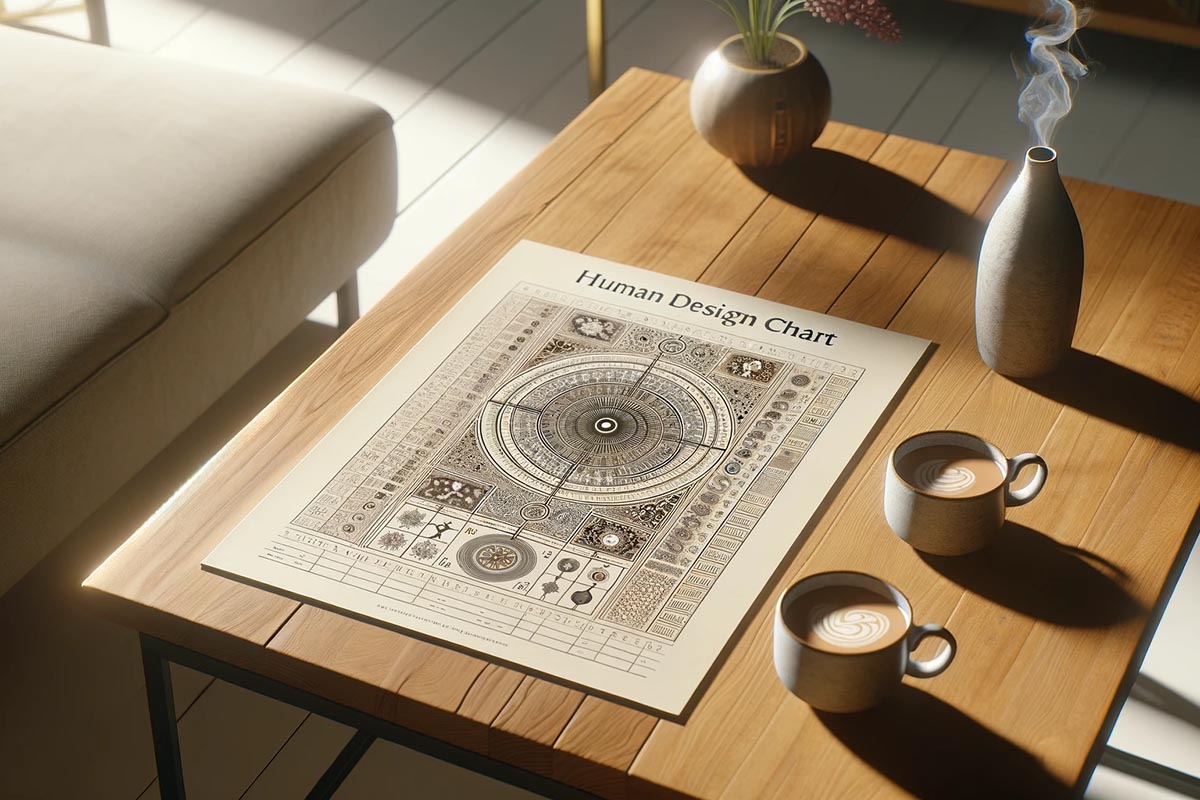
How To Read a Human Design Chart
✨ Key Points
- Personalized from birth information, Human Design Charts act as a “genetic blueprint” for individual traits and potentials, incorporating ancient traditions with modern science to reveal deep insights into personality and life paths.
- The nine centers in a human design chart signify life areas like communication and emotions, whereas defined centers show consistent traits and undefined centers indicate influence potential and growth areas, guiding personal development.
- Channels and Gates in the chart outline the flow of energy and characteristics within, highlighting stable energies and potential challenges, offering profound guidance on utilizing personal traits and energies in career and relationships for a fulfilling life.
Many people spend years trying to better understand their personality, emotional patterns, relationships, strengths, and decision-making habits.
That is one reason systems focused on self-awareness and personal development, including Human Design, have become increasingly popular in recent years.
Human Design combines ideas from astrology, energy systems, psychology, and personality analysis to create a personalized chart based on your birth date, time, and location.
Supporters of the system believe it can help people better understand how they naturally process emotions, make decisions, manage energy, communicate with others, and navigate different areas of life.
For many individuals, Human Design is not about strict rules or predicting the future.
Instead, it is often used as a self-reflection tool that encourages deeper awareness of personal tendencies, strengths, challenges, and behavioral patterns.
People commonly explore Human Design to better understand:
- Decision-making and intuition;
- Communication and relationship dynamics;
- Energy levels and burnout patterns;
- Career alignment and creativity;
- Emotional triggers and stress responses;
- Personal growth and self-development.
One reason many people find Human Design interesting is because modern life often leaves people feeling disconnected from themselves.
Constant digital noise, burnout, comparison culture, and pressure to follow traditional success paths can make it difficult to recognize personal needs, values, and natural strengths.
Exploring your chart can sometimes help create a stronger sense of clarity, direction, and self-understanding, especially during periods of uncertainty, transition, or personal growth.
Whether someone approaches Human Design from a spiritual, psychological, or purely curious perspective, learning how to interpret a chart can become a valuable way to reflect on behavior, relationships, life patterns, and personal direction.
Similar to the growing interest in topics like lucky numbers according to astrology, many people are exploring systems that help them better understand themselves and find a deeper sense of meaning, alignment, and purpose in everyday life.
Understanding the Basics of a Human Design Chart
A Human Design chart, often called a BodyGraph, is a personalized visual map created using your birth date, time, and location.
Supporters of Human Design describe it as a framework that combines elements of astrology, energy systems, personality theory, and self-reflection into a single chart designed to help people better understand themselves.
For many beginners, the chart can feel confusing at first.
The symbols, lines, shapes, numbers, and connections may look highly technical or overwhelming without guidance.
However, learning the basics step-by-step makes the system far easier to understand.
A Human Design chart typically includes:
- Types;
- Centers;
- Channels;
- Gates;
- Profiles.
Each section is believed to reveal different insights related to personality, communication, emotional processing, energy patterns, relationships, and decision-making styles.
One of the best places to start is by looking at the Centers, the geometric shapes within the chart.
Some centers appear colored in (defined), while others remain white (undefined).
In Human Design, these patterns are thought to represent where people naturally express stable energy and where they may be more influenced by external environments or relationships.
Many people explore Human Design because it can help them:
- Understand emotional and behavioral patterns;
- Recognize burnout triggers and energy cycles;
- Improve communication and relationships;
- Make decisions with greater self-awareness;
- Feel more aligned with their natural strengths.
Because the system contains many layers, beginners often use guides, professional readers, or online chart tools to better understand what their chart may reveal.
Starting with a free Human Design chart generator can be a helpful first step toward exploring your personality, decision-making habits, and the ways you naturally interact with the world around you.
The Significance of Centers in Your Human Design Chart
The nine Centers in a Human Design chart represent different areas of life, including communication, emotions, identity, intuition, motivation, and energy management. Each Center appears either colored in (defined) or white (undefined), and this distinction is believed to reveal how you naturally process energy, interact with others, and respond to the world around you.
Defined Centers are thought to represent more consistent personality traits, behaviors, and energy patterns. For example, a defined Throat Center is often associated with stable communication and self-expression, while a defined Emotional Center may reflect more predictable emotional processing.
Undefined Centers, on the other hand, are considered areas where people are more open to outside influence and environmental energy. An undefined Throat Center may create a more flexible communication style and stronger listening abilities, while an undefined Emotional Center can make someone more sensitive to the emotions of others.
In Human Design, neither defined nor undefined Centers are considered “better” or “worse.” Instead, they are believed to offer different strengths, challenges, and opportunities for growth.
Understanding your Centers can help you better recognize:
- Emotional triggers and stress patterns;
- Communication habits and relationship dynamics;
- Areas where you may absorb outside pressure or conditioning;
- Personal strengths and recurring behavioral tendencies.
For many people, exploring these patterns creates greater self-awareness, emotional understanding, and clarity about how they naturally move through life and interact with the people around them.
Interpreting the Channels and Gates: Understanding Your Natural Energy
In Human Design, Channels and Gates are believed to show how energy, behavior patterns, talents, and emotional tendencies flow throughout your chart.
Together, they help explain how you communicate, make decisions, process emotions, and interact with others.
Channels connect two Centers and are associated with specific strengths or recurring life themes.
The system also includes 64 Gates, inspired by the I Ching, which are linked to different traits, challenges, and growth opportunities.
For example:
- Some Channels relate to creativity and communication;
- Others connect to intuition, emotions, or leadership;
- Certain Gates may highlight recurring motivations or fears.
Defined Channels are often viewed as more stable energy patterns, while undefined ones may represent adaptability and openness to outside influence.
Many people explore Human Design to better understand:
- Career strengths and purpose;
- Relationship and communication patterns;
- Emotional triggers and stress;
- Natural talents and decision-making habits.
That is why many people are interested in how a free Human Design Chart can help to understand your purpose and create more alignment in their personal and professional lives.
For many individuals, Human Design becomes less about prediction and more about self-awareness, personal growth, and learning how to live more authentically.