What Are the Biggest Challenges of Wastewater Disposal on Construction Sites?
✨ Key Points
- Strict rules make wastewater disposal on sites complex and high-risk.
- Limited infrastructure means storing and moving waste is a constant challenge.
- Poor handling can cause pollution, fines, and major project delays.
Construction sites generate multiple wastewater streams as a result of daily operations, workforce activity, and temporary welfare provisions.
These include grey water from washing facilities, black water from toilets or temporary holding tanks.
Managing these outputs requires structured processes, particularly where permanent drainage infrastructure is not available.
Construction wastewater services are designed to address these conditions by supporting the safe removal, transport, and disposal of site-generated waste, and keep construction sites safe, operational and compliant.
In this guide, we outline the biggest challenges construction site management faces, including how to manage wastewater on construction projects, and how they can be addressed through reliable waste management services.
Compliance With Wastewater Regulations
Wastewater generated on construction sites is subject to strict environmental and public health regulations.
Under legislation such as the Environmental Protection Act 1990 and the Water Industry Act 1991, businesses have a duty of care to manage waste in a controlled and traceable manner.
This includes using licensed waste carriers, maintaining accurate documentation such as waste transfer notes to provide clear records and accountability for waste movements, and correctly classifying waste streams in line with WM3 Technical Guidance.
In addition, under regulations such as The Environmental Permitting (England and Wales) Regulations 2016 any discharge or release of water into the surrounding environment must meet defined water quality standards to prevent pollution and protect public health.
This includes controlling how wastewater is stored, transported, and, where applicable, discharged into sewer systems in accordance with regulatory requirements.
Poorly managed wastewater presents a risk of contaminating soil, groundwater, and nearby watercourses such as rivers and streams.
Failure to comply with these requirements can lead to enforcement action, financial penalties, and environmental damage.
Limited On-Site Infrastructure
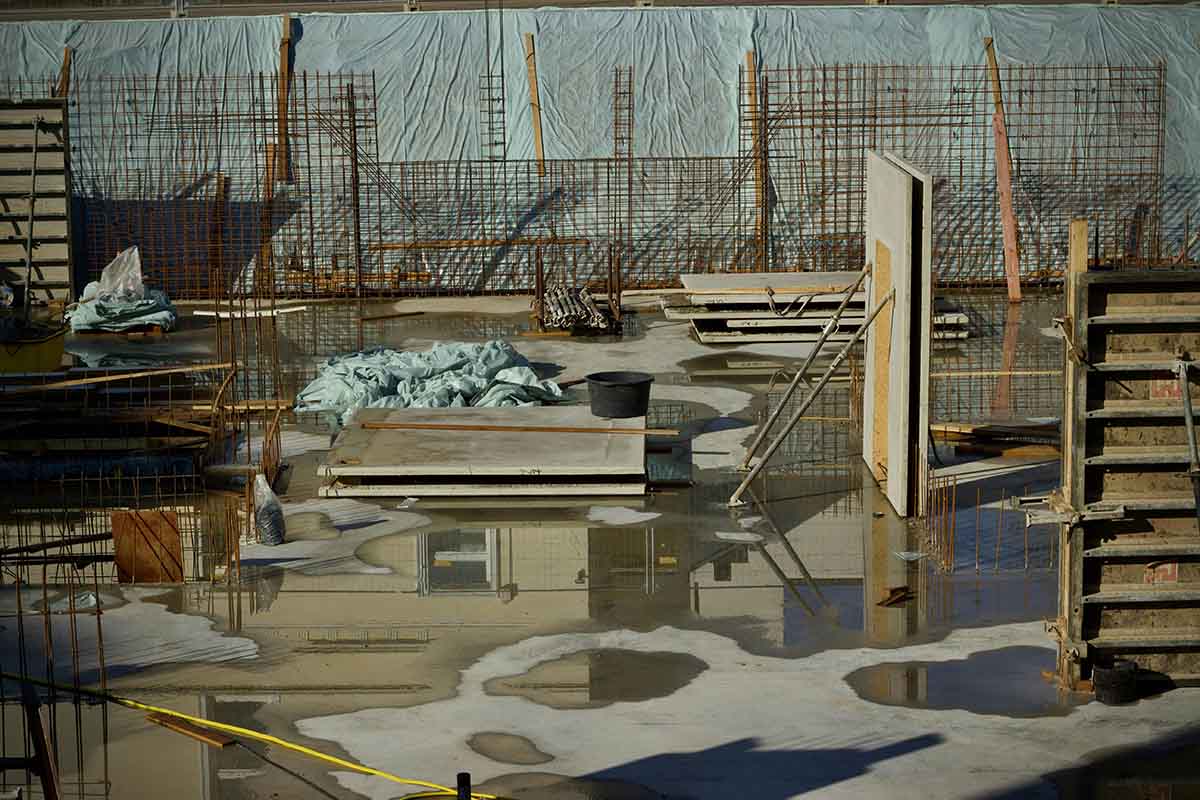
Many construction sites operate without access to mains sewer connections, particularly in early project phases or remote locations, making it essential to understand how to manage wastewater on construction projects effectively.
In these cases, wastewater is stored in temporary systems such as welfare units, portable toilets, septic tanks, or holding tanks, all of which are designed with limited capacity and rely entirely on routine emptying to remain operational.
As wastewater accumulates, any delay in servicing increases the risk of overflow, equipment downtime, and disruption to site activities.
High usage levels, especially on larger or labour-intensive projects, can accelerate fill rates and place additional pressure on these temporary systems.
This makes consistent wastewater management a logistical requirement rather than an optional process and places greater emphasis on the need for forward planning, accurate capacity assessment, and coordinated removal schedules.
Access and Site Constraints
Site layout, ground conditions, and ongoing construction activity can restrict access to wastewater storage points.
Narrow access routes, uneven terrain, changing ground stability, and confined working areas can all limit the ability of vacuum tankers to reach tanks, septic systems, and welfare units.
These challenges are often more pronounced in remote locations where infrastructure is limited, as well as during adverse weather conditions such as heavy rain, which can further affect ground conditions and vehicle access.
These constraints are often compounded by moving equipment, temporary structures, and restricted working zones, which can change throughout the project lifecycle.
Reliable servicing requires vehicles built to handle varied terrain and restricted access, alongside planned collection schedules that align with site operations to maintain safe and controlled wastewater removal.
Preventing Contamination
Improper storage of wastewater presents a direct risk of cross-contamination between potable and non-potable water sources.
Where containment systems are not adequately segregated or maintained, there is the potential for contaminated wastewater to come into contact with clean water supplies, creating health and compliance risks.
Leaks, overflows, or poorly managed storage systems can also result in wastewater entering surrounding land, groundwater, or nearby watercourses.
These risks are heightened during periods of heavy rainfall, where increased volumes can overwhelm containment measures and lead to uncontrolled discharge.
Wastewater disposal services must therefore operate with controlled storage and removal processes that maintain separation of water types and reduce the risk of contamination when delivering water and removing wastewater.
Emergency Response and Unplanned Issues
Unexpected issues such as tank overflows, equipment failure, or rapid increases in wastewater volume can occur at any stage of a project, particularly during peak activity periods or following changes in site usage.
These situations require immediate response to prevent disruption, maintain site conditions, and avoid environmental or compliance risks.
This can be addressed through the use of tanker services capable of rapid mobilisation to remove wastewater quickly and safely.
Prompt intervention reduces the likelihood of overflow, contamination, or downtime affecting wider site operations.
Access to responsive collection services supports continuity by resolving issues before they escalate into more complex operational or environmental problems.
Reducing Costs and Keeping Operations Efficient
Using potable and non-potable water for their intended applications supports operational continuity while controlling expenditure.
Readily available potable water allows sites to supply drinking water and maintain hygiene standards through sinks, showers, and washing facilities for the workforce.
In parallel, non-potable water provides a more cost-effective option for operational activities such as dust suppression, equipment washing, and other processes where water is not intended for human consumption.
Scheduling regular deliveries of potable and non-potable water in line with site demand allows supply levels to be maintained without interruption.
Aligning delivery frequency and volume with operational requirements supports consistent site performance while avoiding the unnecessary cost of over-supplying treated water where it is not required.
Wastewater disposal on construction sites involves a range of operational, environmental, and regulatory challenges, making it essential to understand how to manage wastewater on construction projects effectively.
From managing temporary storage systems to maintaining compliance and responding to unplanned issues, each stage requires coordinated planning and controlled processes.
By using licensed wastewater carriers, construction site managers can implement a consistent and compliant approach to handling these demands.
This supports the safe and controlled removal of waste, maintains site functionality, and provides clear documentation for audit and regulatory purposes.
It also reduces the risk of disruption across all phases of a project by aligning wastewater management with operational requirements and legal obligations.