

Choosing the Right Hotel Room Size for a Family Vacation
✨ Key Points
- A family of four needs usable space, not just a room advertised to “sleep four.” Check the actual bed configuration, floor space remaining when sofa beds or rollaways are open, storage, and bathroom layout.
- Longer stays and older children usually make separate space more valuable. A family suite, connecting hotel rooms, or separate bedroom can provide privacy and allow younger children to sleep while everyone else remains awake.
- Room layout can matter more than total square footage. A smaller, well-designed family hotel room with proper beds, storage, and separate sleeping areas may work better than a larger open-plan room.
A hotel room that says “sleeps four” doesn’t necessarily work comfortably for a family of four.
Two adults and two young children staying for a weekend may be perfectly comfortable in one well-designed room.
The same room can feel cramped during a 10-day holiday with teenagers, four suitcases, wet swimwear, extra shoes, snacks, and everyone trying to get ready at the same time.
So, how much hotel space does a family really need on holiday?
There isn’t one ideal number of square feet or meters.
A more useful way to choose is to look at how your family will actually use the room.
Before booking, check:
- Where everyone will sleep. “Sleeps four” could mean two proper beds, a king bed plus sofa bed, bunk beds, or a rollaway squeezed into the remaining floor space.
- How much usable space remains once the beds are open. A large sofa bed can turn a comfortable-looking room into an obstacle course every night.
- Your children’s ages. Sharing one room with a toddler is very different from sharing it with two teenagers who want privacy and stay awake at different times.
- The length of the trip. Space that feels fine for two nights can become frustrating after a week.
- Storage. Four people living out of open suitcases can consume surprisingly more floor space than the room photos suggest.
- Bathroom setup. For families, one bathroom can become a bigger bottleneck than the bedroom itself, especially in the morning.
- Separate living space. If younger children go to bed at 8 p.m., a bedroom with a door may be more valuable than several extra square meters in one open room.
- How much time you’ll actually spend there. Families using the hotel mainly for sleeping have different needs from those planning resort days, afternoon naps, room-service meals, or downtime between activities.
This is why choosing a family hotel (commonly referred to as โรงแรมแบบครอบครัว in Thai) should involve more than comparing the advertised room size.
Look at the floor plan, bed configuration, storage, bathroom arrangement, connecting-room options, and whether sleeping and living areas can actually be separated.
For families, the best hotel room isn’t necessarily the biggest one.
It’s the one that still works when everyone is awake, the suitcases are open, the extra bed is unfolded, and one child is already asleep.
Start With How Your Family Actually Travels
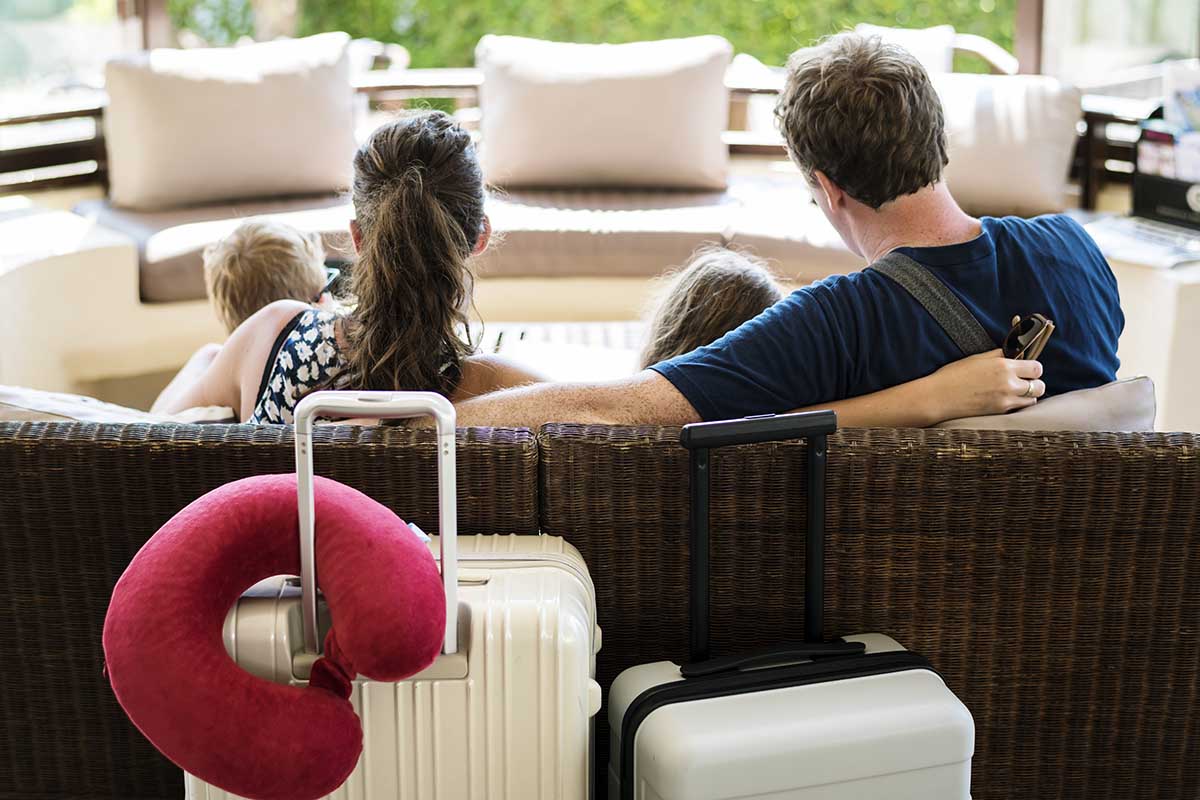
Two parents traveling with a toddler have completely different needs from a family vacationing with two teenagers.
Before comparing room sizes, think about what happens after everyone returns to the hotel.
Does a young child need to sleep at 8 p.m.?
Do your teenagers stay awake later?
Does one parent wake early while everyone else enjoys sleeping in?
These everyday habits determine whether an open-plan room will feel comfortable or restrictive.
Families following similar schedules may be perfectly happy sharing one space.
Those with different routines may benefit from separate living and sleeping areas.
The goal is not necessarily to have more space. It is to have usable space.
One Room May Be Plenty for a Short Stay
For a weekend getaway, one generously sized room can work perfectly well.
Families often spend most of a short trip swimming, sightseeing, eating out, and exploring the destination.
If your accommodation is mainly somewhere to sleep, shower, and change clothes, several separate rooms may be unnecessary.
However, remember that people are not the only things taking up space.
Suitcases, shoes, shopping bags, strollers, swimming gear, and children’s belongings can quickly turn an otherwise comfortable room into an obstacle course.
Storage, wardrobes, seating, and clever furniture placement can therefore be just as important as the advertised room size.
Longer Holidays Need More Breathing Room
A room that feels cozy when you arrive can feel considerably smaller after several days.
Longer stays usually involve more belongings and more downtime at the hotel.
Someone might want an afternoon nap while another person wants to read, watch television, or decide where to have dinner.
This is where suites and accommodations with separate areas become especially useful.
A living area can provide somewhere for parents to enjoy coffee while children sleep.
Later, it can become a comfortable place for everyone to regroup before heading out.
Extra space is particularly valuable when it serves a purpose rather than simply making the room larger.
Children’s Ages Make a Difference
Young children often prefer being close to their parents while traveling.
Teenagers may have a very different idea of the perfect arrangement.
As children grow older, privacy becomes increasingly valuable.
A teenager might want somewhere to listen to music, message friends, or simply have a little quiet time after spending the entire day with the family.
Parents may appreciate exactly the same thing.
Families with older children can consider suites, connecting rooms, or accommodations with distinct sleeping and living areas. These layouts allow everyone to spend time together while still having opportunities to recharge individually.
A little separation can sometimes make family time more enjoyable.
Do Not Forget About the Bathroom
Travelers often compare beds, balconies, views, and room sizes while overlooking one surprisingly important feature: the bathroom.
One small bathroom may be manageable for two people.
Add several family members trying to shower, brush their teeth, change clothes, and get ready for dinner, and suddenly it becomes the busiest place in the hotel room.
Think about your family’s normal morning routine.
If everyone typically gets ready around the same time, bathroom access deserves consideration when choosing accommodation.
It may seem like a minor booking detail, but it can have a noticeable effect on how smoothly each day begins.
Hotel Facilities Can Reduce the Space You Need
Interestingly, families staying at hotels with plenty of shared facilities may not need enormous rooms.
When children have activities to enjoy, parents can relax beside the pool, and restaurants and outdoor areas are readily available, the bedroom does not need to function as the family’s entire vacation environment.
Instead, everyone can naturally move between different parts of the property throughout the day.
This is particularly useful at resort-style hotels. Your room becomes a comfortable home base rather than somewhere the whole family needs to eat, play, relax, and entertain themselves for hours.
Bigger Is Not Automatically Better
A larger room sounds appealing, but layout and convenience can be more important.
A huge room located far from the places your family visits several times each day may be less practical than a well-designed suite close to restaurants, pools, and children’s activities.
Before booking, consider:
- how many proper beds are provided;
- whether living and sleeping areas are separate;
- how much storage is available;
- whether the bathroom arrangement suits everyone;
- proximity to family facilities;
- how much time you expect to spend inside;
Think about how the room will function at 7 a.m., after an afternoon swim, and while everyone is getting ready for dinner.
Those everyday moments reveal far more about whether an accommodation will work than square footage alone.
Find the Space That Fits Your Family
The best family hotel room isn’t necessarily the largest or most expensive.
It’s the one that removes the small frustrations that can become surprisingly exhausting after several days away.
Before booking, picture an ordinary evening rather than the perfect hotel photo:
- Where will everyone sleep once every bed is unfolded?
- Can you still walk around with the luggage open?
- Can a younger child go to sleep while everyone else stays awake?
- Is there enough storage for a week rather than one night?
- Will one bathroom work when the whole family needs to get ready?
- Would connecting rooms or a family suite solve more problems than simply booking a larger room?
These details matter whether you’re choosing a city hotel, a perfect holiday destination, or a Phuket resort for a family vacation.
Resort facilities, pools, beaches, and children’s activities may influence where you stay, but the room determines how comfortably your family starts and ends every day.
For a short trip with young children, one thoughtfully designed room may be enough.
For a longer holiday, teenagers, different bedtimes, or several large suitcases, paying for separate sleeping space or an additional bathroom may provide more value than upgrading for a better view.
Book for how your family actually lives on vacation, not simply for the maximum occupancy printed beside the room.
That’s the difference between a room that technically fits everyone and one that genuinely makes the holiday easier.