
Things You Need to Know About Content Marketing in 2027
✨Key Takeaways
- Build a recognizable content universe around real customer pain points, shared values, expert knowledge, and authentic human experiences—not disconnected AI-generated posts.
- Create clear, well-structured E-E-A-T content that answers conversational searches and can be discovered through Google, social platforms, and AI-powered tools.
- Turn one original insight into articles, videos, podcasts, social posts, and lead magnets, then use meaningful analytics to improve trust, engagement, and conversions.
In 2027, effective content marketing will not be about publishing disconnected articles and social posts.
It will be about creating a recognizable brand universe people want to explore, trust, and eventually join.
Consider how Coachella became more than a music festival.
Its fashion, visual identity, creator culture, brand collaborations, and shared experiences turned it into a world that people recognize instantly.
Brands can apply the same principle through recurring content series, communities, private clubs, live events, customer rituals, and a distinctive point of view.
However, an attractive brand universe will fail if it does not understand the real person entering it. Before creating content, brands must identify:
- What problem is the customer trying to solve?
- What situation triggered their search?
- What decision are they afraid of getting wrong?
- What would make their work or daily life easier?
- Who do they hope to become after choosing the product?
This is also why user-generated content (UGC) has become so important.
In Bazaarvoice’s global study of more than 8,000 shoppers, 86% said they engage with creator content before purchasing.
Its 2026 research also found that 65% of consumers rely on customer reviews, photos, and videos when making buying decisions, and that figure rises to 80% among Gen Z.
UGC works because customers can see a product inside a believable situation: how clothing fits a real body, how furniture looks in an ordinary home, or how software solves a genuine work problem.
It replaces polished promises with visible evidence.
As generic AI content fills every platform, authentic human experiences will carry greater value.
The strongest strategy will combine brand-created expertise, employee perspectives, creator partnerships, and honest customer content.
Successful brands will not simply build an audience.
They will build a club around shared interests, values, problems, and aspirations—giving people both a practical reason to buy and an emotional reason to belong.
Establish a Flexible, E-E-A-T-Driven Content Plan
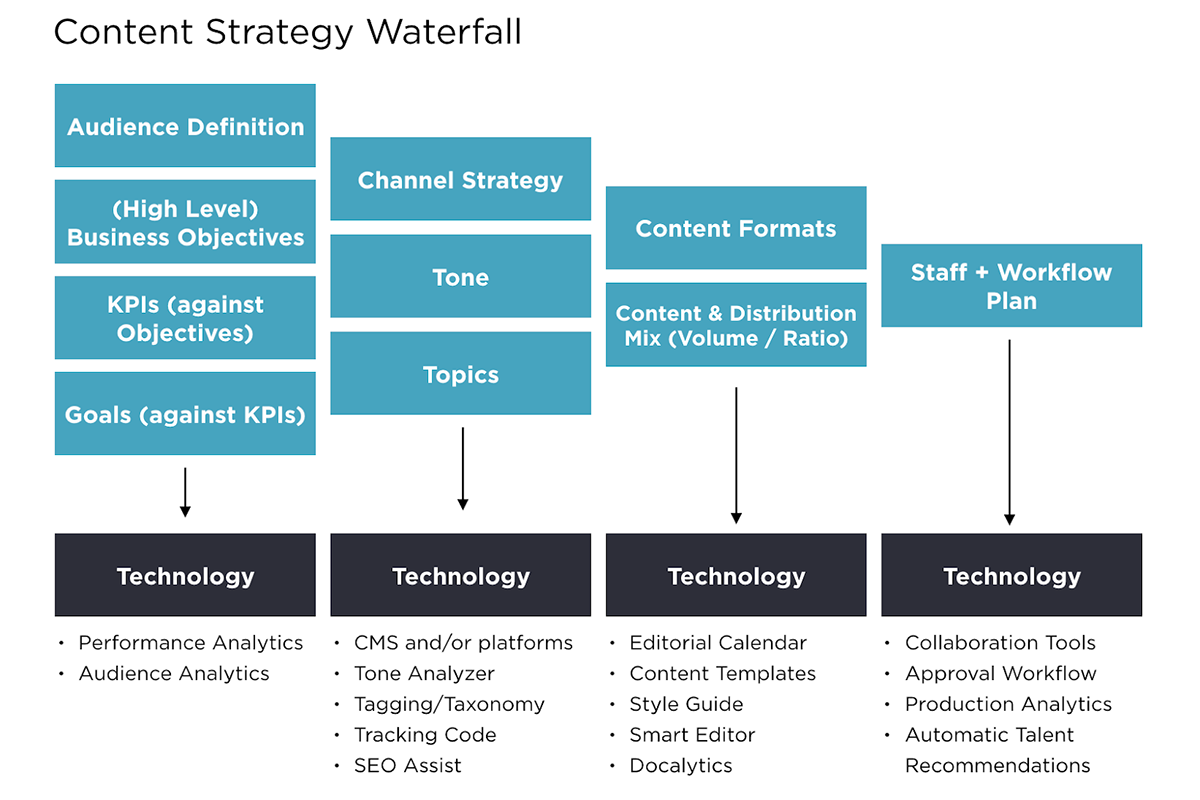
Before publishing anything, create a content marketing plan that connects every piece of content to a real customer need and a measurable business objective.
Planning three months ahead can provide direction, but avoid locking every idea into a rigid calendar.
Search behavior, customer questions, cultural conversations, and platform trends can change quickly.
A flexible six-to-twelve-week plan leaves space for timely opportunities.
For every planned topic, document:
- The audience and real-life situation behind the search.
- The question, pain point, or decision the content addresses.
- Its purpose: discovery, trust, consideration, conversion, or retention.
- The best format, such as an article, Reel, podcast, email, or customer story.
- The first-hand experience or expert knowledge required.
- The evidence, original examples, statistics, or customer insights you can add.
- The action readers should take after consuming it.
- The metrics that will indicate whether it succeeded.
Large language models can make planning, research organization, and writing more efficient. Use an LLM to:
- Group customer questions into topic clusters.
- Turn sales calls and support conversations into content ideas.
- Identify gaps in an existing article.
- Repurpose one interview into a blog outline, email, and social posts.
- Suggest objections that the content has not addressed.
- Create production briefs and preliminary editorial calendars.
However, an LLM should support your expertise, not invent it.
Review every factual claim, link to reliable sources, involve qualified experts when necessary, and add original experiences, examples, photographs, research, or customer feedback.
This is how the plan supports E-E-A-T: experience provides proof, expertise creates useful guidance, authority develops through consistent coverage, and trust comes from accuracy, transparency, and responsible sourcing.
Earn Thought Leadership Through Original Experience

Becoming a thought leader is not about publishing the highest number of articles or repeatedly calling yourself an expert.
It means developing a clear point of view, supporting it with evidence, and helping people understand their problems differently.
In an online environment filled with AI-generated summaries, repeating information that already exists provides little reason for readers, or search engines, to choose your content. Your strongest advantage is the knowledge competitors and language models cannot automatically reproduce.
Build authority by contributing:
- First-hand experiences, lessons, and mistakes.
- Original research, surveys, experiments, or customer data.
- Expert interviews and informed professional opinions.
- Detailed case studies showing what worked, what failed, and why.
- Predictions supported by observable industry changes.
- Practical frameworks people can apply to real situations.
- Respectful challenges to outdated industry assumptions.
For example, a marketing consultant should not publish another generic article about “the importance of social media.”
They could analyze anonymized campaign results, explain why a popular tactic failed, and show what they changed to improve the outcome.
Use an LLM to organize research, uncover opposing arguments, identify unanswered questions, or turn an original idea into different formats.
However, the central insight should come from your experience, investigation, or access to knowledgeable people.
Strong E-E-A-T content also requires transparency. Explain your qualifications, disclose commercial relationships, cite reliable sources, and distinguish proven facts from personal opinions or predictions.
Useful insight may earn citations in AI-generated answers, mentions in industry newsletters, podcast invitations, backlinks, branded searches, and direct recommendations.
These signals are often more valuable than collecting empty clicks and shares.
You do not become a thought leader by repeating the conversation. You earn that position by contributing something the conversation did not have before.
Create content for your marketing personas
#Content structuring is becoming important & may affect your site’s visibility in search & further interaction with it (through voice or a mobile device) @seosmarty explains how (and why!) to create an effective content structure for better ranking https://t.co/KaWQT1TdmM pic.twitter.com/v2ZbuskOnT
— SEMrush (@semrush) March 26, 2019
When outlining your content plan, you should also think about who you are targeting. If you are a SEO company who wants to offer your services to SMEs, for example, then you will also need to create personas based on your audience.
- Who is going to require your services?
- Why should they choose you?
- What are their pain points?
You may have a few different personas based on what your brand is – and once you flesh these out it will inform the content that you create because you will be creating it for them, the lifeblood of your business.
Write for People, Search Engines, Social Platforms, and LLMs

Optimizing your content for SEO remains important, but traditional search rankings are only one part of content discovery in 2027.
People may find your brand through Google, AI-generated answers, Instagram, TikTok, YouTube, Reddit, newsletters, or recommendations from creators they trust.
Start with the user’s real situation—not a keyword.
Ask what happened immediately before the search, what the person needs to understand, and what doubt might prevent them from acting.
Make every article work across several discovery channels:
- Answer the primary question clearly near the beginning.
- Use descriptive headings that reflect natural, conversational searches.
- Define important terms, companies, products, and people precisely.
- Include first-hand examples, expert commentary, and verifiable sources.
- Add concise summaries, comparison tables, steps, or FAQs when genuinely helpful.
- Create original visuals, statistics, or frameworks people will want to reference.
- Turn the strongest insight into Reels, carousels, emails, and short videos.
- Write a social hook that creates curiosity without misleading the reader.
This structure also makes content easier for large language models to understand and potentially reference.
However, LLM optimization should not mean writing robotic answers for machines.
Clear structure may improve discoverability, but original expertise and credible evidence make the content worth citing.
Social media requires a different presentation of the same central idea.
An article might explain the complete solution, while a Reel demonstrates one result, a carousel summarizes the process, and a Story shows the experience behind it.
Relevant micro-creators can also help introduce the content to established communities.
Choose partners based on subject knowledge, audience alignment, credibility, and content quality, not follower count alone.
The best content is searchable, shareable, understandable, and genuinely useful.
Search engines and AI systems may introduce people to it, but human value is what earns their trust.
Diversify Content Without Multiplying the Work

Content diversification does not mean forcing your team to create something new for every platform.
It means developing one valuable idea and adapting it to different audience preferences, search behaviors, and stages of the customer journey.
For example, one expert interview could become:
- A detailed, search-optimized article.
- A video answering the most important question.
- Several short Reels or TikToks built around individual insights.
- A podcast episode for people who prefer listening.
- A carousel summarizing the practical steps.
- A comparison table or original infographic.
- A newsletter offering a more personal perspective.
- A downloadable checklist used as a lead magnet.
- A live Q&A addressing questions the original content generated.
This approach creates multiple entry points into your brand universe.
Someone may discover a short video, read the complete article, download the checklist, and later attend a webinar before becoming a customer.
Interactive formats can provide even more value.
Quizzes, polls, assessments, calculators, live discussions, and community challenges invite people to participate instead of passively consuming another post.
Their responses can also reveal pain points, language, and objections that should influence future content.
Large language models can help transcribe interviews, summarize long recordings, suggest format adaptations, and prepare initial scripts.
Human review remains essential to preserve the speaker’s meaning, personality, and expertise.
Every format should also be accessible. Add video captions, podcast transcripts, descriptive image text, readable typography, and mobile-friendly layouts.
Do not diversify simply to appear active everywhere.
Select formats according to audience behavior and business purpose, then measure completion rates, saves, qualified leads, returning visitors, and conversions.
The objective is not to produce more content, it is to make each original insight useful in more places.
Turn Analytics Into Better Content Decisions
What you believe is working may differ from what customers actually do, and discovering that difference is valuable.
Modern content analytics tools can show how people discover your content, where they lose interest, what they return to, and whether that attention produces meaningful business results.
Do not judge success by page views or likes alone. Match each content objective to the right indicators:
- Discovery: impressions, search visibility, non-follower reach, and new users.
- Engagement: watch time, reading depth, saves, shares, replies, and return visits.
- Trust: branded searches, newsletter subscriptions, direct traffic, reviews, and repeat engagement.
- Conversion: qualified leads, product views, purchases, booked calls, and assisted conversions.
- Retention: repeat purchases, community participation, email engagement, and customer lifetime value.
Look beyond the winning headline.
Examine the underlying situation: which problem was addressed, what format was used, where the audience came from, and what they did next.
A post with fewer views may be more valuable if it attracts the right prospects and generates qualified enquiries.
AI can help organize large datasets, identify recurring patterns, group search queries by intent, summarize customer feedback, and suggest questions for further investigation.
It should not make strategic decisions without human oversight. Incomplete tracking, attribution gaps, bot traffic, and misleading correlations can produce confident but inaccurate recommendations.
Some influence is also difficult to measure.
Customers may discover a brand through an AI answer, private message, podcast, or offline conversation before returning directly to the website.
Combine analytics with sales calls, support tickets, surveys, reviews, and customer interviews to understand the complete journey.
Most importantly, turn insights into controlled experiments:
- Identify one pattern or problem.
- Form a clear hypothesis.
- Change one meaningful variable.
- Measure the outcome.
- Document what you learned.
Content marketing is not an exact science, but it should not be guesswork.
The purpose of analytics is not to produce attractive reports—it is to help you understand people more accurately and create content that serves them better.
Frequently Asked Questions About Content Marketing in 2027
Will AI-generated content hurt my website’s search rankings?
Using AI does not automatically harm rankings. Problems arise when content is inaccurate, repetitive, unhelpful, or created primarily to manipulate search results. Use AI for research organization, outlining, and repurposing, but add expert review, original experience, reliable sources, and meaningful information.
How can a small business build a brand universe without a large budget?
Begin with a clear point of view, recognizable visual identity, recurring content series, and shared customer values. A newsletter, private community, monthly live discussion, or customer challenge can create belonging without expensive events or production.
Does repurposing the same idea across platforms count as duplicate content?
Not when each version is adapted to its platform and audience. A detailed article, educational Reel, podcast discussion, and email summary can share one central idea while offering different context, depth, and presentation.
How can content appear in AI-generated search answers?
Provide direct answers, descriptive headings, clearly defined entities, original evidence, expert credentials, and reliable citations. No method guarantees an AI citation, but well-structured, trustworthy content makes information easier to understand and reference.
How do you prove that content marketing is generating revenue?
Connect content performance with newsletter registrations, qualified leads, booked calls, product views, assisted conversions, purchases, and customer retention. Ask customers how they discovered you because podcasts, private shares, AI answers, and offline recommendations may not appear clearly in analytics.