Examples of Business Intelligence: Real-World Applications That Drive Smarter Decisions
Business intelligence (BI) software has become essential, but for many businesses, the real challenge isn’t having data. It’s knowing what to do with it.
Teams often find themselves overwhelmed by scattered reports, inconsistent numbers, and slow decision-making. You might recognize some of these common frustrations:
- You have data in multiple tools, but no single source of truth;
- Reports take too long to generate, so decisions are delayed;
- Different departments interpret the same data differently;
- You’re reacting to problems instead of anticipating them;
- Key insights are buried in spreadsheets no one fully understands.
This is exactly where business intelligence steps in.
BI transforms raw, disconnected data into clear, actionable insights.
It helps businesses define the right metrics, consolidate information, and visualize performance in a way that actually supports faster, smarter decisions.
Instead of guessing what’s happening in your business, you can see it, clearly and in real time.
As a result, more companies are turning to BI platforms not just to analyze data, but to solve these everyday operational bottlenecks and make better strategic choices.
If you’re considering a BI solution or trying to understand its practical value, the best way to cut through the noise is to look at real-world use cases.
Below are five examples of how business intelligence is actually being used to solve problems and drive results.
Examples of Business Intelligence

HelloFresh centralized digital marketing reporting to increase conversions
Developed by HelloFresh, this BI-driven solution transformed a digital marketing process that was previously slow, manual, and difficult to scale.
Before implementation, reporting required significant manual effort, making it hard for teams to access timely insights or respond quickly to campaign performance.
With centralized business intelligence and automated reporting, the company was able to:
- Eliminate time-consuming manual data aggregation;
- Save an estimated 10–20 hours of work per day for the marketing analytics team;
- Provide real-time visibility into campaign performance across regions;
- Enable teams to launch more targeted, region-specific campaigns.
The platform also allowed teams to build detailed buyer personas and track customer behavior more effectively.
This made it easier to adjust campaigns based on real-time insights rather than assumptions.
As a result, HelloFresh achieved higher conversion rates and improved customer retention, demonstrating how centralized BI can directly impact marketing performance and business growth.
Des Moines Public Schools identifies and helps at-risk students
Des Moines Public Schools set out to tackle a critical challenge: identifying students at risk of dropping out early enough to intervene effectively.
To address this, the district’s Research and Data Management team developed a “dropout coefficient”—a multiple linear regression model designed to predict which students were most likely to leave school before graduating.
By integrating this model into their business intelligence system, they turned complex data into practical, actionable insight.
The solution enabled staff to:
- Identify at-risk students earlier and with greater accuracy;
- Access clear, data-driven indicators instead of relying on assumptions;
- Monitor student risk levels through intuitive dashboards;
A centralized BI dashboard delivered real-time analytics to over 7,000 teachers and staff, ensuring that insights weren’t limited to analysts but accessible to those working directly with students.
This immediate visibility allowed educators to step in sooner, tailor interventions, and provide targeted support where it mattered most.
The result was a significant improvement in intervention success rates,bshowing how business intelligence, when applied thoughtfully, can drive meaningful outcomes beyond business and into real-world social impact.
Coca-Cola Bottling Company maximized operational efficiency

Coca-Cola Bottling Company faced a common but costly challenge: manual reporting processes that limited real-time visibility into sales and operations.
These outdated workflows made it difficult for teams to access timely insights, slowing down decision-making and reducing responsiveness in the field.
By implementing a business intelligence platform, the company transformed how data was collected, shared, and used across the organization.
The solution delivered several key improvements:
- Automated reporting processes, saving over 260 hours annually;
- Real-time access to sales and operational data;
- Integration of CRM data directly into sales workflows;
- Improved data accessibility for field sales teams.
With CRM insights now in the hands of sales personnel, teams could act on up-to-date, actionable information, giving them a clear competitive advantage in customer interactions.
The platform also introduced a self-service BI model, enabling both IT and business users to collaborate more effectively.
This not only reduced dependency on technical teams but also improved overall data literacy across the organization.
The result was faster decision-making, stronger collaboration, and a more agile, data-driven sales operation.
Chipotle created a unified view of restaurant operations
Chipotle Mexican Grill faced a major data challenge: critical information was spread across multiple systems, making it difficult to get a consistent, real-time view of restaurant performance.
With more than 2,400 locations to manage, this lack of data integration limited visibility and slowed operational decision-making.
To solve this, Chipotle implemented a modern, self-service business intelligence platform designed to unify data and make insights accessible across the organization.
The platform enabled the company to:
- Consolidate disparate data sources into a single, unified view;
- Monitor performance across all restaurant locations in real time;
- Deliver faster, more reliable reporting to decision-makers;
- Give teams direct access to the data they need without IT bottlenecks.
By removing data silos, teams across the business gained quicker access to insights and significantly reduced the time spent generating reports, saving thousands of hours in the process.
The shift to self-service BI also empowered non-technical users to explore data independently, improving both speed and confidence in decision-making.
As noted by Zach Sippl, Director of Business Intelligence, the platform elevated how the company understood and used its metrics, bringing a new level of clarity to operations across the entire organization.
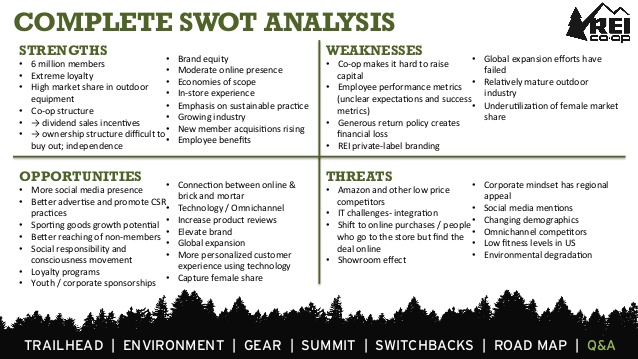
REI increased membership rates for co-op retailer