
Automating Repetitive Tasks for Creative Minds
✨ Key Points
Automation Protects Creative Energy. By eliminating repetitive tasks, automation reduces mental fatigue and allows creatives to focus on high-impact, imaginative work.
Automation Enhances—Not Replaces—Creativity. Current trends show automation improves output quality by removing friction, not originality, enabling better creative decisions.
Automation Reduces Burnout and Increases Focus. Fewer interruptions and smoother workflows help creatives sustain deep work and long-term motivation.
In a world increasingly dominated by technology, the creative mind seeks solace in imagination and innovation.
However, the creative process often contends with the struggle of repetitive tasks, which can impede the flow of inspiration.
Enter automation—the ally of creative minds—offering liberation from the mundane and allowing artists, writers, designers, and other creatives to channel their energy into what matters.
For many polyworkers who balance multiple roles or are gradually turning personal passions into income-generating work, automation helps create the structure and consistency needed to grow without losing creative momentum.
Automation supports creative work by helping to:
Reduce time spent on repetitive, low-value tasks;
Preserve focus and creative momentum;
Minimize burnout caused by constant task switching.
By removing these everyday friction points, automation creates space for deeper thinking and more intentional creativity.
Rather than disrupting the creative process, it strengthens it.
When routine work is handled in the background through automating repetitive tasks, creative professionals can fully immerse themselves in ideation, experimentation, and innovation.
Often exploring smartphone hobbies to try that can evolve into meaningful creative projects or even new income streams, where their best work truly begins.
The Creative Struggle

Creativity is a delicate dance between inspiration and execution, especially for those exploring business ideas you can start at home.
Unfortunately, this balance is often disrupted by the monotony of repetitive tasks that accompany nearly every creative endeavor.
While these tasks are necessary, they frequently consume the very time and mental energy creativity depends on—time that could otherwise be preserved through automating repetitive tasks.
For graphic designers, this may mean repeatedly resizing images for different platforms, exporting assets in multiple formats, or making minor color adjustments across dozens of files.
Writers often spend hours formatting documents, applying style guidelines, organizing drafts, or performing repetitive editing passes that pull them out of their creative flow.
Musicians and filmmakers face similar challenges, from naming and sorting files to managing versions, backups, and project assets across multiple tools.
These repetitive duties don’t require imagination—but they demand attention.
Over time, they interrupt focus, slow momentum, and quietly contribute to creative fatigue.
When too much energy is spent managing processes instead of ideas, creativity begins to feel like work rather than expression, increasing the risk of burnout.
By identifying and reducing these friction points, creatives can protect their mental space and sustain the focus needed to do their most meaningful work.
The Role of Automation in Creative Workflows
Automation in creative workflows alleviates the burden of routine tasks, providing artists and creators the time and mental space to focus on their craft.
From simple macros to sophisticated scripting, automation tools have become invaluable assets in the arsenal of creative professionals.
Imagine a graphic designer who utilizes automation to batch process the task instead of manually resizing dozens of images for various platforms.
This saves time and ensures a more consistent and error-free outcome.
Writers can employ text-expanding tools to streamline repetitive writing tasks, allowing them to concentrate on crafting compelling narratives.
Musicians and filmmakers can spend more time composing music or editing footage by automating file organization.
The Creative Benefits of Automation
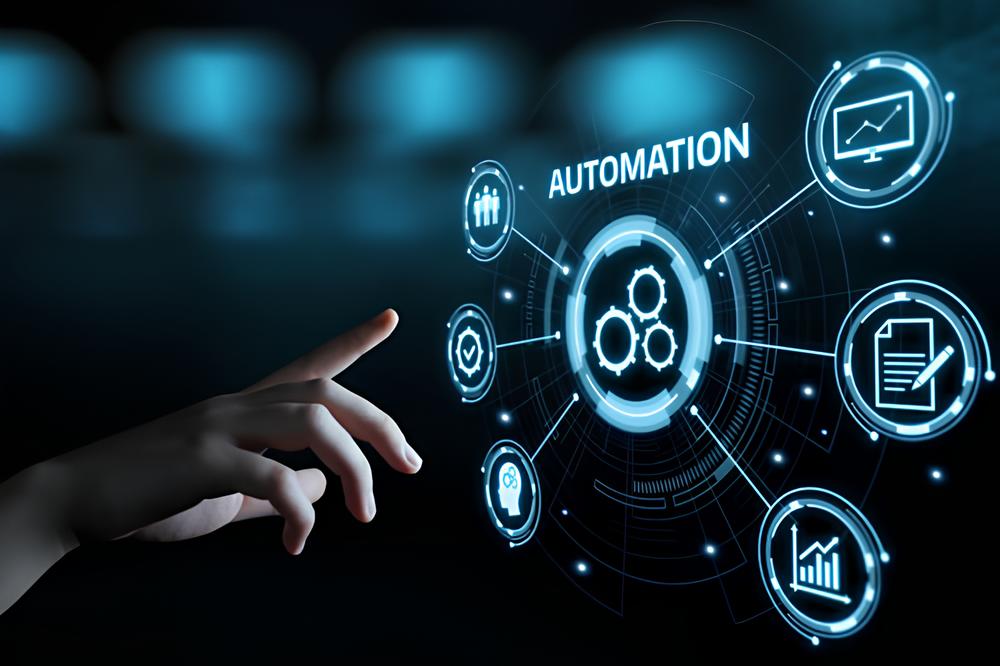
One of the primary advantages of incorporating automation into creative workflows is the freedom it provides.
By removing repetitive execution work, automation allows creatives to focus on exploration, experimentation, and higher-level thinking rather than routine tasks.
Automation helps creative professionals by:
Eliminating repetitive, low-value tasks that interrupt creative flow;
Freeing mental energy for ideation and refinement;
Allowing more time to push creative boundaries;
For example:
A graphic designer working on a multi-platform campaign can automate asset resizing, file naming, and export settings.
Instead of manually adapting the same design for social media, web, and print formats, the designer can focus on improving layout, typography, and visual storytelling.
Automation also strengthens consistency and quality across creative work:
Designers maintain uniform colors, fonts, and spacing across platforms;
Writers ensure consistent formatting, tone, and style through templates and rules;
Multimedia creators streamline post-production, file management, and rendering processes.
By handling structure and repetition in the background, automation enables creatives to work with greater confidence, efficiency, and creative freedom—without compromising originality or quality.
Success Stories in Creative Automation
Numerous creative professionals have embraced automation and witnessed transformative results.
Consider the case of a photographer who automated sorting and labeling images based on metadata.
This reduced the time spent on file management and enabled the photographer to spend more time behind the lens, capturing moments that truly mattered.
Similarly, a content creator on social media automated the scheduling of posts, freeing up time to engage with their audience and brainstorm new and innovative content ideas.
Writers have employed automation to generate topic ideas, conduct research, and even assist in the editing process.
In this context, tools such as the Mac Auto Clicker have gained popularity for their ability to streamline repetitive clicking tasks, providing creators with an efficient means to handle tedious processes and focus on the more creative aspects of their work.
Challenges and Considerations

While the benefits of automation in creative workflows are clear, it’s important to address the concerns that often make creatives hesitant to adopt it.
One common fear is the loss of personal touch.
Many creatives worry that automation could make their work feel generic or mechanical.
In reality, automation does not replace creative judgment, emotion, or originality.
It handles structure and repetition, leaving creative decisions firmly in human hands.
When used intentionally, automation actually preserves the artist’s voice by protecting the time and focus needed to refine it.
Another consideration is the learning curve. New tools can feel intimidating, especially when creatives are already managing tight deadlines and multiple projects.
However, modern automation platforms are increasingly designed with creatives in mind.
Drag-and-drop interfaces, templates, and guided workflows make adoption far less complex than it once was.
Creatives can overcome this challenge by:
Starting with small, low-risk automations;
Automating one repetitive task at a time;
Using tutorials, community forums, and built-in help resources.
Rather than requiring technical expertise, today’s automation tools reward curiosity and experimentation.
With gradual adoption, automation becomes a natural extension of the creative process rather than an obstacle.
Looking to the Future
The trajectory of automation in the creative realm points towards even more sophisticated and intuitive tools.
Artificial intelligence is increasingly integrated into innovative software, offering predictive suggestions and automating complex tasks.
This evolution saves time and opens new possibilities for collaboration and cross-disciplinary creativity.
In the future, we envision a seamless integration of automation into the creative process with tools that understand and anticipate the unique needs of individual artists.
This shift will enable creatives to spend less time on routine tasks and more time on the aspects of their work that require a human touch.
Automating Repetitive Tasks for Creative Minds: Conclusion
For many creatives, the real challenge isn’t a lack of ideas—it’s the constant pull of small, repetitive tasks that slowly chip away at focus and motivation.
Automation offers a practical way to reduce that friction.
Not by changing how creative work is done, but by making space for it to happen more naturally.
Using automation doesn’t mean giving up control or diluting creative intent.
It simply means choosing to spend less time on work that doesn’t require creativity and more time on work that does.
Over time, that shift can make creative practice feel more sustainable and less draining.
As tools continue to improve, automation will likely become a part of everyday creative workflows—supportive, unobtrusive, and easy to adapt.
For creatives who value focus, consistency, and long-term energy, it’s not about doing more.
It’s about working in a way that feels more aligned with how creativity actually works.