The Mermaids of Juan Cabana: Art, Myth & the Dark Waters of the Unconscious
There are creatures that live in the spaces we cannot fully map — not quite here, not quite gone, hovering somewhere between the physical and the imagined.
Mermaids are one of those beings.
They exist in the “psychological intertidal zone”… the place between what we know and what we fear, what we touch and what we dream.
Ask anyone who has gazed too long into the ocean — there is something down there that feels ancient, seductive, and entirely uninterested in whether we survive the encounter.
Most of us grew up with the polished image of mermaids: delicate figures from pre-Raphaelite paintings, reclining on smooth rocks, combing their hair as if posing for a Victorian postcard. But those images are only the sanitized version — a myth defanged for polite society.
The mermaids of old were nothing like that. And neither are the mermaids of Juan Cabana.
Where Beauty Turns Uneasy: The Art of Juan Cabana
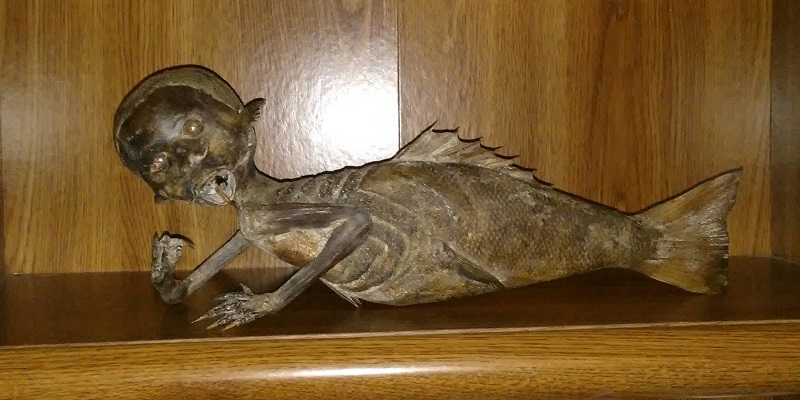
Cabana’s mermaids are not designed to soothe. They stir something much older and far more primal — a mix of fascination, dread, longing, and the sense that you are looking at something you were not meant to see.
His works feel like evidence pulled from a forbidden archive:
• Bones fused with scales;
• Faces that resemble both human and fish;
• Bodies that look freshly recovered from silent depths;
• A beauty so uncanny it borders on dangerous.
Cabana doesn’t just paint mermaids — he constructs them, often creating lifelike sculptures that blur the line between taxidermy, mythology, and conspiracy.
People who encounter his work often ask the same unsettling questions:
What if these aren’t solely works of art? What if they point to something deliberately erased, hidden, or misunderstood?
And that’s the power of the mermaid myth itself.
Mermaids as Psyche: The Pull Toward the Unknown
Every culture with a coastline has some version of the mermaid — a sign that these stories are rooted in something deeper than fantasy.
They represent:
• The danger behind desire;
• The unknown beneath beauty;
• The forbidden knowledge of the deep;
• The feminine divine in both its nurturing and destructive aspects.
Mermaids promise mystery but offer a warning: some truths drown those who chase them.
In folklore, they lure sailors with tenderness and song, only to pull them beneath the waves.
Not out of cruelty — but because the ocean does not share human morality. It takes what it wants.
Why These Images Resurface Today
There’s a reason mermaids — especially eerie, primal versions like Cabana’s — have reentered modern culture.
We live in a time obsessed with revelations, hidden worlds, and suppressed truths.
People ask questions that were once unthinkable:
- What’s at the bottom of the ocean we’ve never mapped?
- Why do certain myths appear in every ancient civilization?
- What have governments photographed, classified, or quietly explained away as “sea debris”?
- Why do so many historical sightings resemble one another centuries apart?
Cabana’s mermaids tap directly into that collective curiosity — and collective fear.
They remind us that the ocean guards its secrets well… and that the human mind is naturally drawn to what it’s forbidden to know.
The Seduction of the Deep
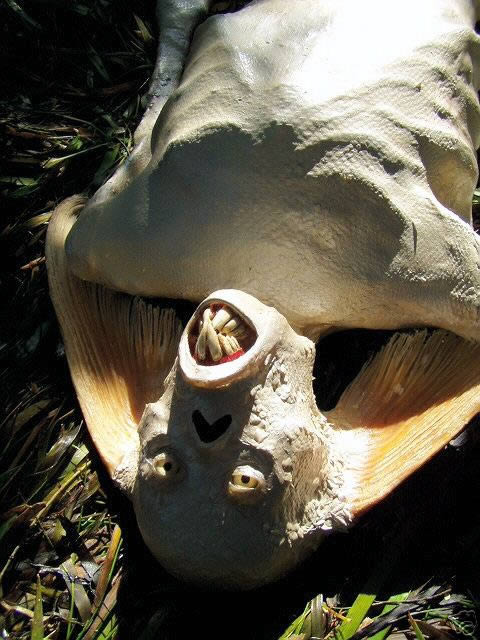
Mermaids symbolize the tension we all feel between safety and surrender.
They are the embodiment of:
• The desire to escape;
• The fear of losing control;
• The hunger for something bigger, older, wilder than ourselves.
They are the voice that whispers, “Come closer,” even as instinct tells us to step back.
Cabana captures that paradox perfectly.
His mermaids aren’t meant to reassure us.
They’re meant to remind us that some parts of the world — and the psyche — are best approached with caution.
5 Books to Dive Deeper Into Mermaids, Mythology & Mystical Conspiracies
If this topic pulls you in (as it does for so many), these books extend the journey:
⭐ 1. The Mermaid and the Minotaur by Dorothy Dinnerstein
A psychological exploration of myth, gender, and the unconscious.
⭐ 2. Strange Tales from the Ocean Deep by The Folklore Society
Real historical accounts of sea creatures, sightings, and maritime mysteries.
⭐ 3. The Secret Teachings of the Waves by J. Godwin
A blend of esoteric ocean mythology and conspiracy theories about deep-sea civilizations.
⭐ 4. The Deep by Rivers Solomon
A haunting reimagining of mermaids descended from enslaved African women thrown overboard — myth meets trauma, beautifully written.
⭐ 5. The Book of Imaginary Beings by Jorge Luis Borges
A catalog of mythical creatures (including mermaids), written with philosophical insight and eerie clarity.