Budget-Friendly Ways Of Soundproofing Your Room
✨ Key Points
- Identify the noise path first: Sealing the wrong wall or surface wastes time and money.
- Understand the limits of inexpensive solutions: Soft furnishings reduce echoes, but blocking external sound usually requires airtightness, mass, and vibration isolation.
- Focus on daily wellbeing: Even partial noise reduction may improve sleep, concentration, privacy, and the ability to relax at home.
Traffic, neighbours, construction, aircraft, entertainment systems, and street activity can make it difficult to sleep, work, study, or relax at home.
For apartment residents and people working remotely, unwanted noise may affect daily wellbeing rather than being a minor inconvenience.
The World Health Organization reports that excessive environmental noise is associated with sleep disturbance, annoyance, cognitive impairment, hypertension, and other health concerns.
Before choosing a solution, identify:
- Where the noise enters the room;
- Whether it travels through air, walls, floors, or building structures;
- Whether the problem is voices, traffic, footsteps, or low-frequency bass;
- Whether you own or rent the property;
- Which changes your lease or building rules permit;
- How much noise reduction you realistically need;
It is also important to distinguish soundproofing from acoustic treatment.
Soundproofing limits sound travelling into or out of a room, while rugs, curtains, and acoustic panels primarily reduce echoes inside it.
Low-cost changes may make noise less disruptive, but they rarely create a completely silent room.
Useful starting points include sealing gaps, adding door weatherstripping, using a door sweep, hanging dense curtains, placing rugs with underlay, and moving beds or desks away from shared walls.
This guide explains which budget-friendly soundproofing ideas can provide meaningful improvement and when structural work or professional advice may be necessary.
Soundproof Your Door Using Household Items
If you don’t know where to start with your soundproofing project, a good start would be your doors and windows.
It can get tricky to block sounds with doors, though.
Most of them are hollow and because noise can get inside easily through the gaps between the door and the frame.
Don’t worry if you can’t afford to change to a thick, high-quality, and soundproof door.
You can tactically use your household items to block the noise.
You can place objects such as shoe cabinets and bookshelves in front of the door’s edges.
This is effective in filtering the incoming sound waves.
You can also put a thick rug or similar fabric on the floor next to your door.
Bear in mind that the floor can also transmit noise.
Placing a rug on the floor will take care of the gap at the bottom of the doorframe.
Do Egg Cartons Absorb Sound?
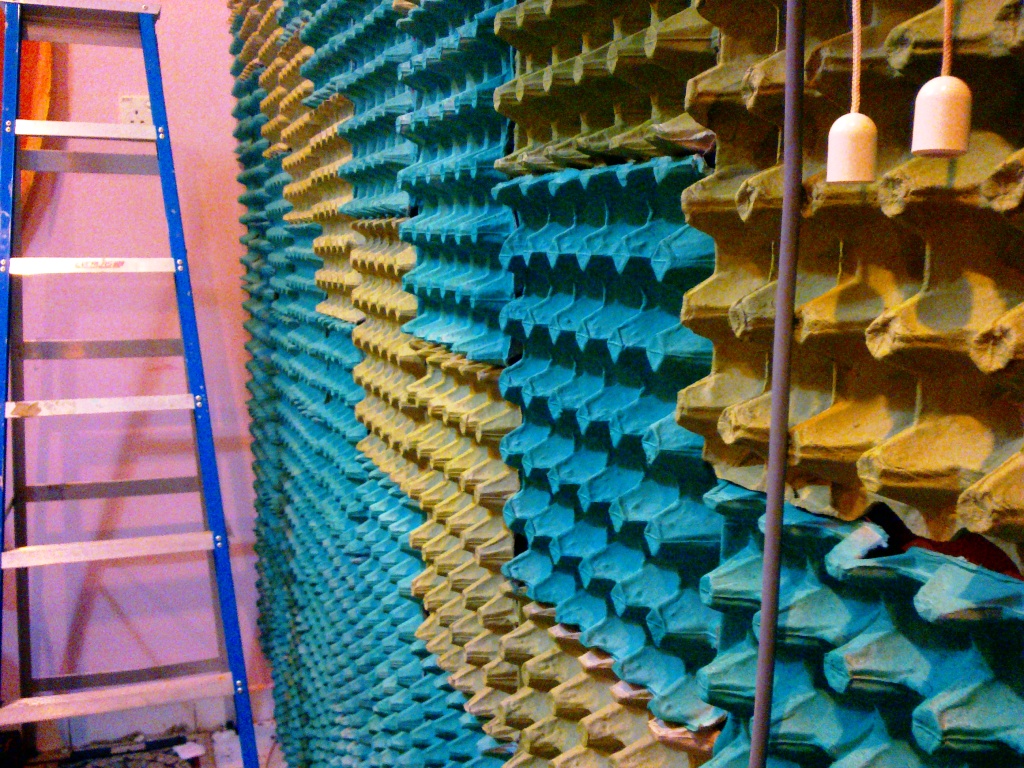
Egg cartons are frequently recommended as a DIY soundproofing material, but they cannot meaningfully block noise.
Their thin, lightweight construction lacks the mass and airtightness required to prevent sound from passing through a wall.
Their uneven shape may scatter a small amount of high-frequency sound, but the effect on room echo is limited and inconsistent.
They will not stop traffic, conversations, music, footsteps, or bass from entering or leaving the room.
Egg cartons also create practical concerns:
- Cardboard can ignite easily near heaters, candles, or electrical equipment.
- The material collects dust and can be difficult to clean.
- Used cartons may introduce food residue or pests.
- Covering walls with them may violate rental or fire-safety rules.
- They are less effective than purpose-made acoustic products.
Instead, use affordable materials that address the actual problem:
- Seal gaps around doors, windows, and utility openings.
- Add weatherstripping and a door sweep.
- Hang dense, floor-length curtains.
- Place rugs with thick underlay on hard floors.
- Use filled bookcases against shared walls.
- Choose tested acoustic panels to reduce echo.
Egg cartons are better placed in recycling or reused for safe craft projects.
They are not a dependable soundproofing solution.
Make DIY Acoustic Panels
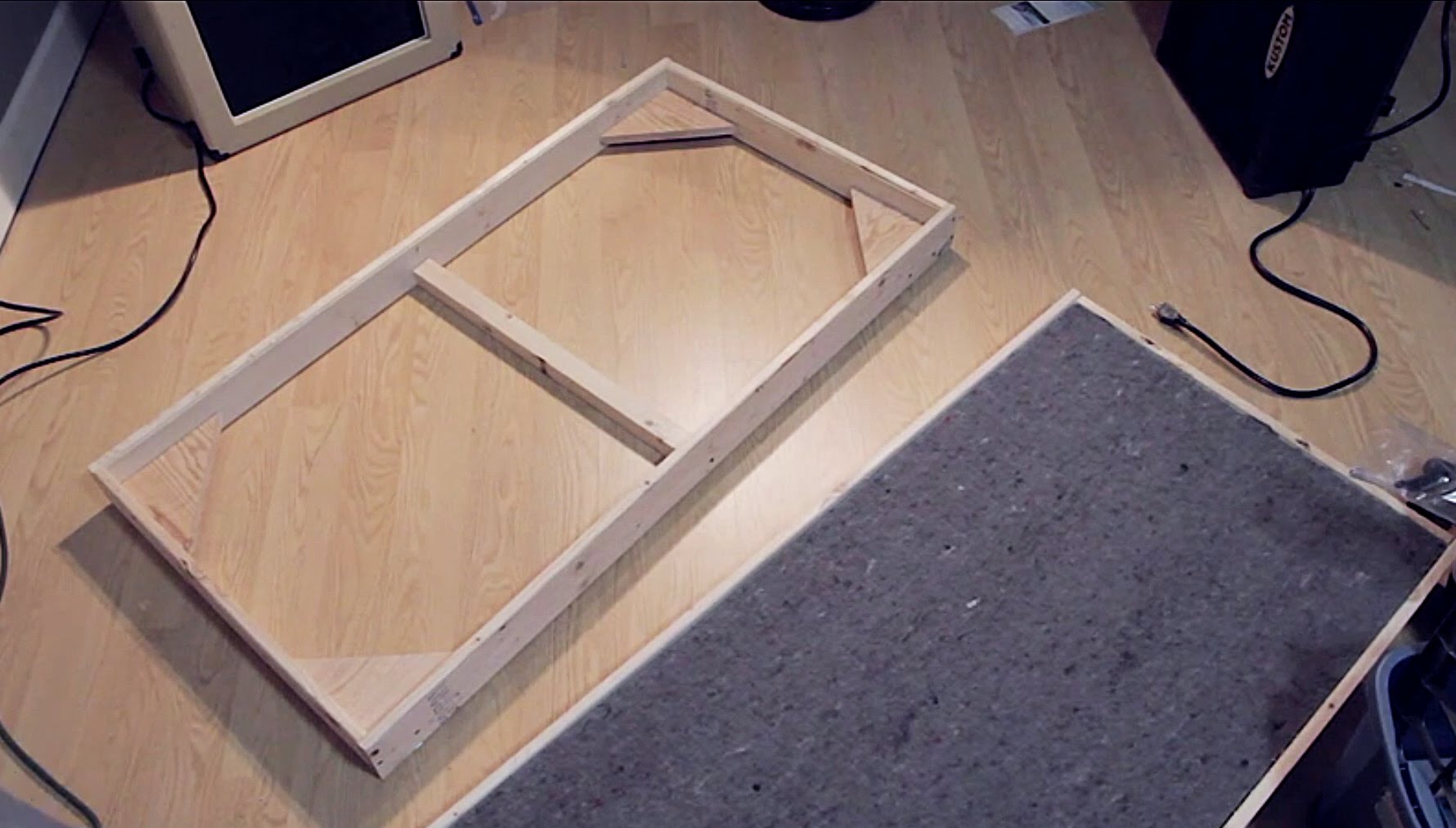
Reducing echo does not always require an expensive renovation.
DIY acoustic panels can make conversations, music, recordings, and video calls sound clearer, particularly in rooms with hard floors and bare walls.
However, acoustic panels are not the same as soundproofing.
They absorb reflections inside a room but do little to stop traffic, neighbours, footsteps, or bass travelling through walls and floors.
Before making or buying panels, consider:
- The type and source of the noise;
- Panel thickness, density, and placement;
- Tested sound-absorption performance;
- Fire safety and local building requirements;
- Safe containment of fibrous insulation;
- Secure mounting suitable for the panel’s weight;
- Rental restrictions and potential wall damage;
Use purpose-made acoustic insulation, breathable fabric, and materials with appropriate fire-performance information.
Avoid flammable foam, untreated cardboard, or exposed fibres.
Wear the recommended protective equipment when cutting insulation and follow the manufacturer’s handling instructions.
Place panels at major sound-reflection points rather than covering every wall.
If the real problem is sound entering from outdoors or adjoining rooms, prioritise sealing gaps and adding mass or isolation.
DIY panels can improve room acoustics affordably, but they should not be presented as a complete soundproofing solution.
Here’s how you can do it:
- Look for an affordable and accessible soundproof material that you can stash inside the panel. Mineral wool or acoustic foam is a great option.
- Construct a wooden frame that will hold the soundproof material. Remember that you should match the panel’s size to the size of the surface you’re covering. You can use standard wood glue and apply spray adhesive over the whole perimeter of the insulation.
- Wrap the construction with a piece of fabric once the soundproof material is already inside the frame. Use fabrics that are pleasing to the eyes.
DIY Soundproof Window Plugs
Windows are common paths for traffic, voices, and other outdoor noise because sound can pass through glass, frames, seals, and small gaps. A removable window plug may reduce some noise without the cost of replacing the entire window, but it will not perform exactly like a professionally installed acoustic window.
An effective plug generally combines:
- A rigid, dense backing layer
- Sound-absorbing insulation
- A soft perimeter seal
- Durable fabric or another safe covering
- Secure handles for easy removal
- A close fit without damaging the window frame
Measure the complete window recess carefully and check for gaps around the existing frame before building anything.
Weatherstripping or acoustic sealant may solve part of the problem at a much lower cost.
Safety must remain the priority. Never install a plug that:
- Blocks a required emergency exit;
- Cannot be removed quickly from inside;
- Covers necessary ventilation;
- Presses against hot equipment or wiring;
- Traps moisture and causes condensation or mould;
- Violates rental, fire-safety, or building requirements;
Use materials with appropriate fire and indoor-use information, securely contain any fibrous insulation, and follow manufacturers’ cutting and handling instructions.
A removable plug may be useful in a bedroom, recording space, or home office when installed safely
For severe noise, persistent condensation, or windows required for emergency escape, consult a qualified acoustic or building professional.
Reduce Noise With Heavy Curtains
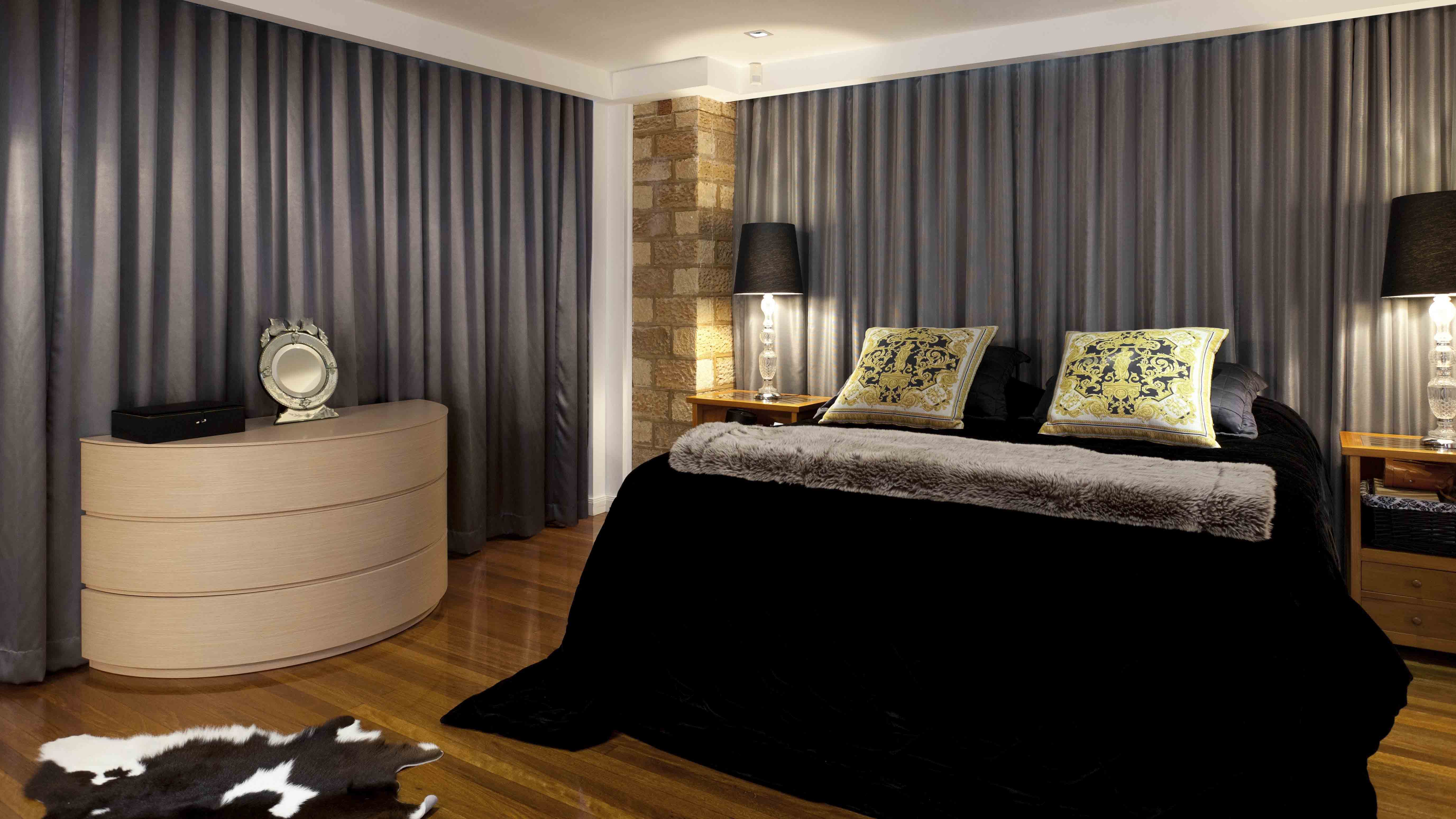
Curtains can improve privacy, soften echoes, and slightly reduce outdoor noise entering through windows.
However, they do not fully soundproof a room, especially against traffic vibration, aircraft, or low-frequency bass.
For better results, choose curtains that are:
- Heavy, dense, and tightly woven;
- Wide enough to extend beyond both sides of the window;
- Long enough to reach from above the frame to the floor;
- Hung with generous folds rather than stretched flat;
- Combined with sealed window gaps and weatherstripping;
- Safely mounted on a rail that can support their weight;
Motorised blinds can add convenience by opening in the morning and closing automatically for evening privacy or sleep.
They may also help older adults and people with limited mobility operate heavy window coverings more easily.
Before installing a motorised system, check the rail’s weight capacity, power source, noise level, smart-home compatibility, manual override, and child-safety features.
The curtain motor improves accessibility and automation, but it does not increase the material’s sound-reduction performance.
Heavy curtains are an affordable first step in soundproofing your room, but expectations should remain realistic. Combine them with sealed gaps, rugs, door sweeps, and thoughtful furniture placement for a more noticeable improvement.
A quieter room can support better sleep, stronger concentration, greater privacy, and a calmer transition away from work and daily stress.
Even partial noise reduction can make home feel more restorative.