

Key Components of Website Search Engine Optimization
✨ Key Takeaways
- Visibility comes from alignment, not effort. If your pages don’t match search intent, rankings will stay inconsistent no matter how much you publish.
- Trust determines position. Strong backlinks, brand authority, and clear expertise often outweigh volume of content.
- SEO is a system, not a tactic. Technical health, relevance, and user experience must work together to produce stable growth.
Google processes billions of searches every day, and businesses that appear at the top are there because their websites send clear signals of relevance, authority, and performance.
Website search engine optimization (SEO) helps improve rankings, attract qualified visitors, and generate consistent growth through organic visibility.
Yet many companies invest in content, redesign pages, and even use modern AI tools, but still struggle to see movement.
After months of effort, they face the same frustrating reality and keep asking: Why is my website not ranking? What am I missing? Why are competitors above me?
Research consistently shows that most clicks go to the first few results, while pages outside the top positions receive only a small fraction of the traffic.
This makes every optimization decision critical, because small gaps can lead to large losses in opportunity.
When progress stalls, the problem usually comes down to three essential pillars:
Relevance – your pages must align with what people truly search for and fully satisfy their intent, not simply repeat keywords.
Authority – search engines look for trust signals such as high-quality backlinks, brand mentions, and demonstrated expertise within your industry.
Performance – your website needs to load fast, function smoothly on mobile devices, and keep users engaged once they arrive.
Consider a local example. If a real estate company wants to rank for successful real estate agents in California, search engines must see consistent proof that the business is knowledgeable, trusted, and genuinely helpful for buyers and sellers in that region.
Publishing content alone is rarely enough. Every element must reinforce credibility.
This is why some organizations build in-house SEO processes, while others decide to work with an experienced SEO firm to uncover missed opportunities and create a structured strategy.
In this guide, we will break down the key components of website search engine optimization so you can understand what may be limiting your rankings and how stronger visibility is achieved.
On-page Website Search Engine Optimization

Content: The Engine Behind Modern SEO
For Google, content is no longer just words filling a page. It is proof of expertise, usefulness, and trust, and it often determines whether your website earns visibility or disappears under competitors.
Many businesses publish consistently, experiment with AI writing, and expand their blogs, yet rankings remain stuck.
The issue usually isn’t effort. It’s whether the material truly helps the reader move closer to a decision.
Today, effective website search engine optimization requires paying attention to several realities at once:
how to humanize AI content so it reflects real experience and not generic summaries
how deeper keyword research uncovers the questions, fears, and comparisons people actually have
what Google defines as helpful content, meaning information created for people rather than algorithms
how to compete in an era of content saturation, where publishing more does not guarantee visibility
why building smarter content funnels leads users from discovery to trust instead of leaving them uncertain
Search engines can now measure satisfaction signals with surprising accuracy.
If a visitor lands on your page and still needs to keep searching, rankings become difficult to maintain.
This is why modern SEO content must educate, reassure, and guide at the same time.
In the past, marketers believed longer articles automatically performed better.
Today, relevance and clarity win. A shorter, focused page that answers intent can outperform thousands of extra words.
Businesses that understand this shift build authority faster, while others continue producing content without understanding why results feel inconsistent.
Strong content does more than rank.
It builds credibility, reduces hesitation, and makes choosing your company easier.
In the following sections, we’ll break down how to create material that satisfies search engines, supports real users, and turns visibility into measurable growth.
Deeper Keyword Research: Understanding What People Truly Want
A strong website search engine optimization strategy starts with understanding how people actually search in Google.
Keywords are not just phrases placed into paragraphs. They are signals of intent, urgency, confusion, and readiness to make a decision.
Businesses that win with SEO are usually the ones that look beyond traffic numbers and focus on what the searcher expects to find after clicking.
Many websites struggle because they target broad, attractive terms but fail to deliver meaningful answers.
Visitors arrive, scan the page, and return to the results, which tells search engines the experience did not fully satisfy the need.
Visibility then becomes harder to build, no matter how much content is produced.
Smarter keyword research means evaluating several dimensions at once:
what problem the person is trying to solve at that moment;
whether they want information, comparison, or a provider;
how competitors structure their pages around similar queries;
where confusion or missing explanations create opportunity;
which phrases signal stronger buying or contacting intent;
Keyword tools can generate ideas and estimate competition, but numbers alone cannot replace understanding human behavior.
Real progress happens when search terms are translated into practical guidance, reassurance, and next steps.
Longer and more specific phrases often help because they reflect clearer expectations.
Someone using detailed wording usually knows what they want, which means the page that answers them precisely has a better chance to rank and convert.
Instead of chasing the biggest keyword, effective strategies focus on the most meaningful one.
When deeper keyword research is done correctly, content becomes easier to plan, messaging becomes sharper, and traffic becomes more qualified.
Rather than guessing what might work, you build pages around proven demand and real user motivation, which is where sustainable SEO growth begins.
Meta Titles and Descriptions: Your First Chance to Win the Click
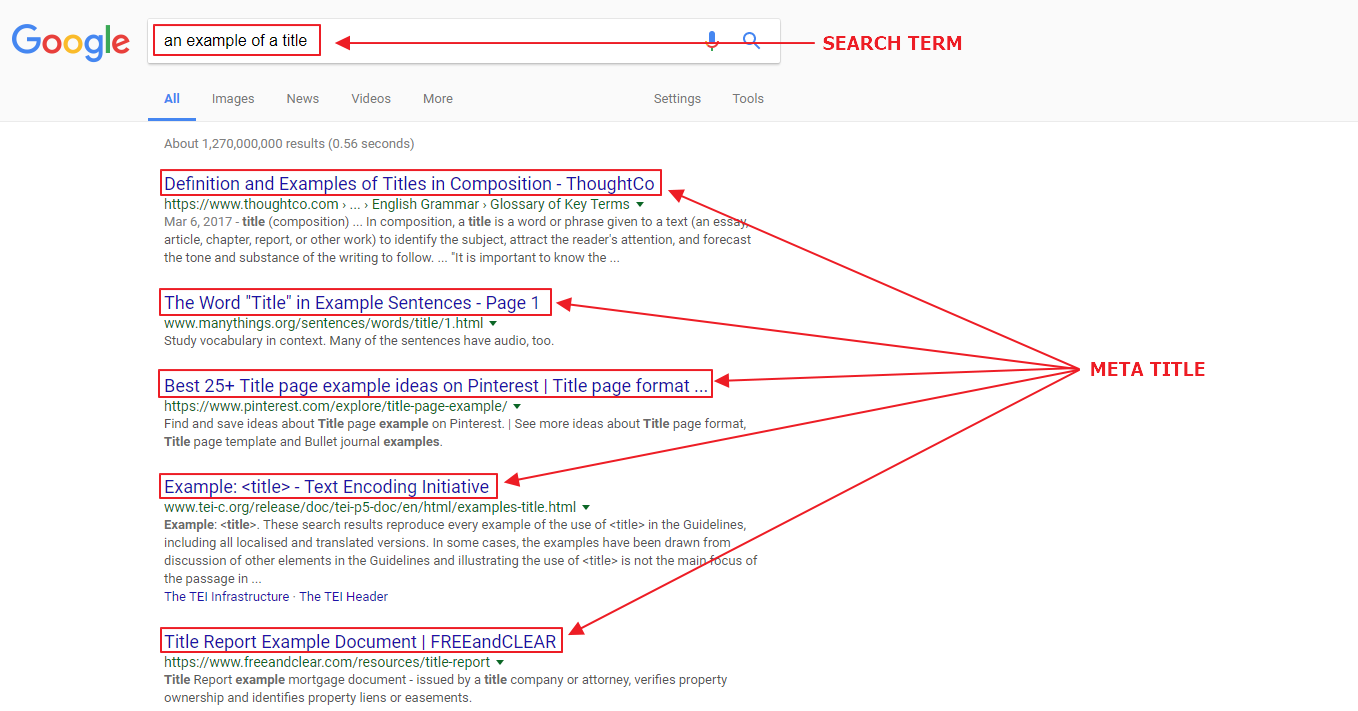
When your page appears in Google, users make a decision in seconds.
They don’t see your design, your testimonials, or your expertise yet. They see a headline and a short summary.
Your meta title and meta description therefore act as advertising copy inside the search results, influencing whether someone chooses you or scrolls past.
There is no perfect character count because search engines measure by pixel width and rewrite snippets when they believe another version answers the query better.
Still, most titles display roughly 50–60 characters, and descriptions often appear within about 150–160.
The goal is not to hit a number. The goal is to communicate value clearly and match intent.
Strong snippets usually succeed because they focus on several essentials:
placing the primary keyword naturally so users instantly recognize relevance;
showing a benefit or outcome instead of only naming a service;
reducing uncertainty by hinting at expertise or proof;
matching what the searcher hopes to achieve after clicking;
standing out from competitors who write generic phrases;
Repeating keywords multiple times is rarely necessary.
What matters more is clarity, credibility, and usefulness. If someone searches for help, they want to feel that your page understands their situation better than the others.
Well-written meta information improves more than rankings.
It improves click-through rate, attracts more qualified visitors, and sets expectations for what comes next.
When the promise in the snippet matches the experience on the page, trust begins before the visitor even arrives.
Product Images
If you think images don’t matter, you’re wrong.
When many people use search engines to hunt for items, they don’t just look at website search engine optimization results. They also look at the “images” results.
Get great images or a logo designed using some easy-to-use tools.
It will not only help you with business branding but also will improve your search optimization ranking.
These photos will rank highly in search engines.
Only if you have high-quality images of that product on your website and the file names contain relevant keywords.
Potential clients will click on that image to locate your business.
This will bring a lot of traffic to your site.
Off-page Website Search Engine Optimization
Backlinks
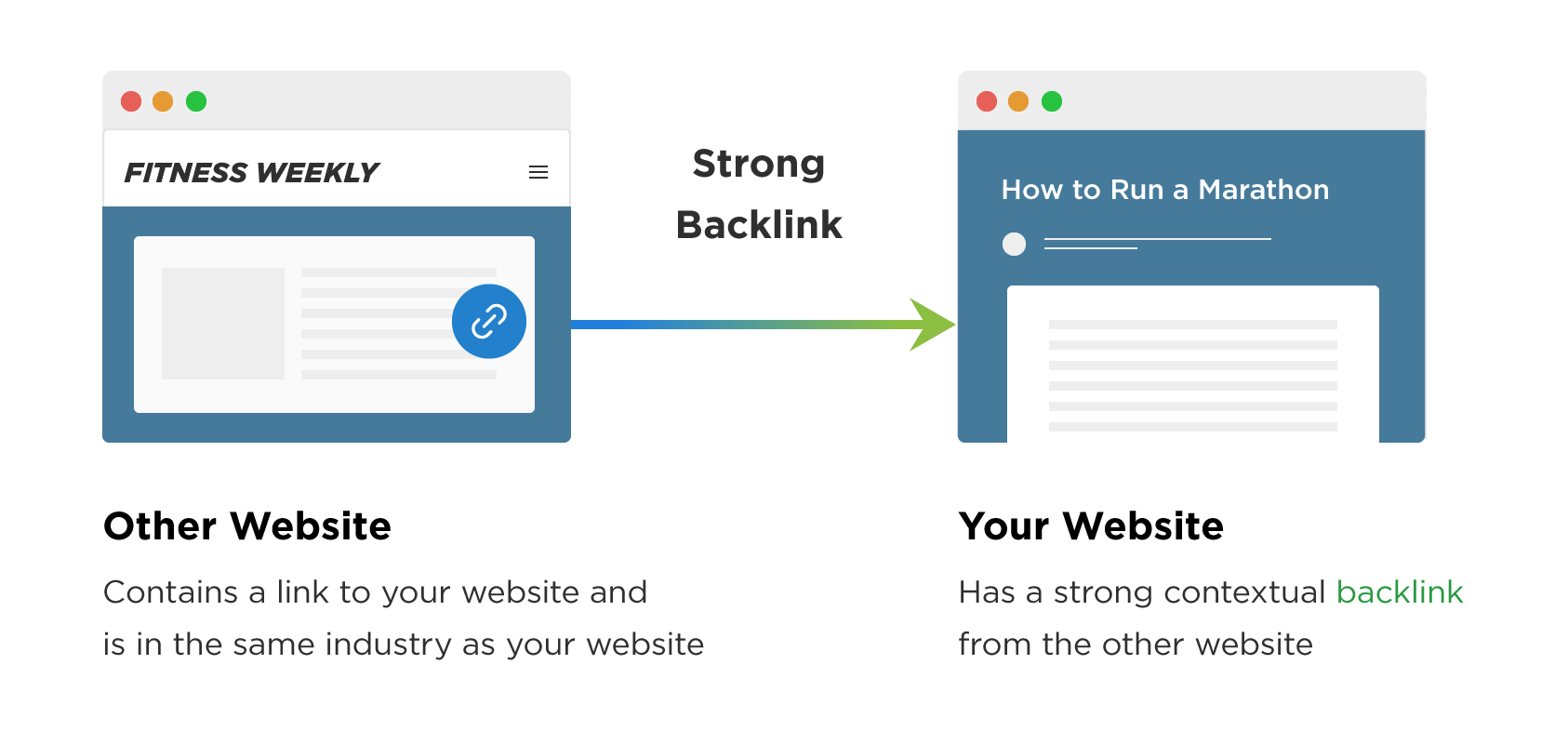
Remember, it’s not about who has the most links referring back to their site, but who has the highest quality links.
Submit monthly or bi-monthly news releases about any intriguing company.
Then, contact famous bloggers in your niche to see if you may collaborate to acquire a backlink from their site.
Create the greatest possible product website search engine optimization.
Thus, people discussing the items you sell will link back to you.
Create visuals or noteworthy material that will entice bloggers and news organizations to connect to your stuff.
Social Media
Since the beginning of social media, website search engine optimization algorithms have evolved significantly.
Many content websites are community-oriented.
Find Facebook influencers and collaborate with them for a higher reach; you have to get healthy backlinks for your website to increase organic reach.
Since influencer marketing is a very competitive niche and they are not quite responsive, you might have to use follow-up emails or reach out to them via phone to get great results.
As a result, e-commerce businesses must build a solid social media presence on platforms such as Facebook, Pinterest, and Twitter.
These social media sites convey indications of authority and impact to search engines.
Again, make sure you create great copy for all your social media channels.
Facebook ads must be appealing, and engaging, and they should drive value to your target audience.
Otherwise, your target audience will scroll past your ad if they find it invaluable.
Components of search engine optimization: URL structure
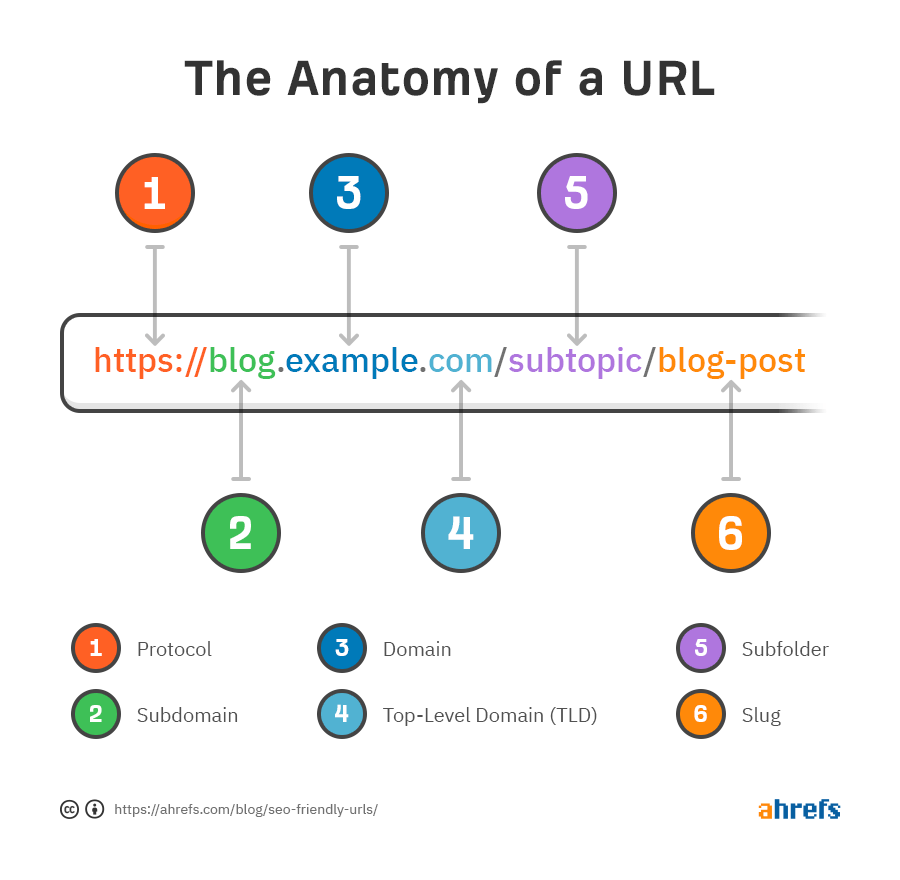
The URL is the actual internet address of your website. It’s the section that starts with “https://www.” Each URL is connected with a certain web page on the internet.
Every URL should adhere to particular website search engine optimization standards in order to rank higher in search engine results.
Your URL should be precise and short. Don’t make it appear like a tiny paragraph by cramming too many words in there.
You should also avoid using digits and hyphens, as Google does not encourage them.
You may easily delete some phrases while retaining the crucial ones to shorten your URL.
Let’s assume you have a page dedicated to car insurance in Texas. “https://www.yoursite.com/car-insurance-in-texas” is an example of a bad URL structure for website search engine optimization.
Whereas, “https://www.yoursite.com/dog-food-puppies” can be abbreviated.
The new URL essentially says the same thing, but it’s shorter and easier to read.
Online Directories
Online directories allow you to be found on a number of website search engine optimization.
While also allowing you to collect feedback from your customers. Many new customers might be attracted to your business if you have a strong internet directory presence and great customer ratings.
Negative reviews about your business should also be reviewed and responded to because these negative reviews will undoubtedly impact your brand image and drive people away from your website or services.
Alternatively, you can use a tool like Perk to improve and automate your conversions.
Components of search engine optimization: conclusion
Evaluate your rivals’ on-page website search engine optimization and off-page website search engine optimization.
Also, keep a check on their social media strategies in addition to optimizing these above-mentioned areas of your site.
Try to implement these key points in your website search engine optimization, and watch your business grow by leaps and bounds.
Do you have any other strategies that we have missed in our article? Let us know in the comment section below.