Got a Seattle Bus Lane Ticket? Here’s Exactly What to Check Before You Pay or Fight It
✨Key Points
- Don’t rush, compare the ticket details, images, and location before deciding what to do.
- Small details like faded markings or missing signs can make a big difference in your case.
- Build a simple, fact-based response so you can choose to pay, reduce, or fight the ticket.
Seattle drivers who open a bus lane camera ticket often lose valuable response time by taking the notice at face value instead of verifying what actually happened on the road.
A typical mailed citation includes only a few still images, one location, a timestamp, and a deadline.
What it often doesn’t show clearly, especially in cases caught on a Seattle bus lane camera, is just as important: where signs were placed, how the lane approached the intersection, or whether pavement markings were visible at the time.
That gap matters more than most people realize.
According to traffic enforcement data across U.S. cities, automated camera tickets generate millions of citations annually, and a portion of them are dismissed due to insufficient evidence, unclear signage, or technical inconsistencies.
Missing those details, or missing your deadline, can cost you both time and money.
Before you decide what to do next, take a step back and review the basics carefully:
- Compare the images with the actual street layout (not just the label on the notice;)
- Check if signage and lane markings were clearly visible at that location;
- Look at your vehicle’s position—fully in the lane or briefly crossing near a turn;
- Confirm that the time, location, and visuals all match consistently.
Each response option, paying, requesting mitigation, contesting the ticket, or speaking with a traffic lawyer —comes with different costs, deadlines, and risks.
A focused review gives you something most drivers skip: clarity before action.
Start With the Notice
A reliable starting record depends on the listed details matching the vehicle, the location, and the time the city is relying on.
Check the plate number, vehicle description, street location, date, time, and response deadline line by line.
What it often doesn’t show clearly is just as important, especially if you were caught on a Seattle bus lane camera.
Details like where signs were placed, how the lane approached the intersection, and whether pavement markings were visible can change how the situation is interpreted.
Corridors like 2nd Avenue and 3rd Avenue can be close together while enforcement is tied to specific blocks, so even a small location mismatch matters if the image appears to show a different stretch of street.
If the record shows a strong mismatch between the notice and the posted control, that can work in your favor.
A traffic lawyer may be able to present that gap more effectively during a Seattle hearing.
The mailed notice is not always the only version of the record.
Compare it to any online case page, payment screen, or portal summary and save copies of each before relying on them.
If one version lists different details, shows a different cutoff time, or loads incompletely, keep screenshots or PDFs so your response is based on the same record the city is using.
Review the Camera Images

Still frames can show if your tires are fully inside the bus lane for more than a moment or just cutting across it near a right turn, driveway, or curb cut.
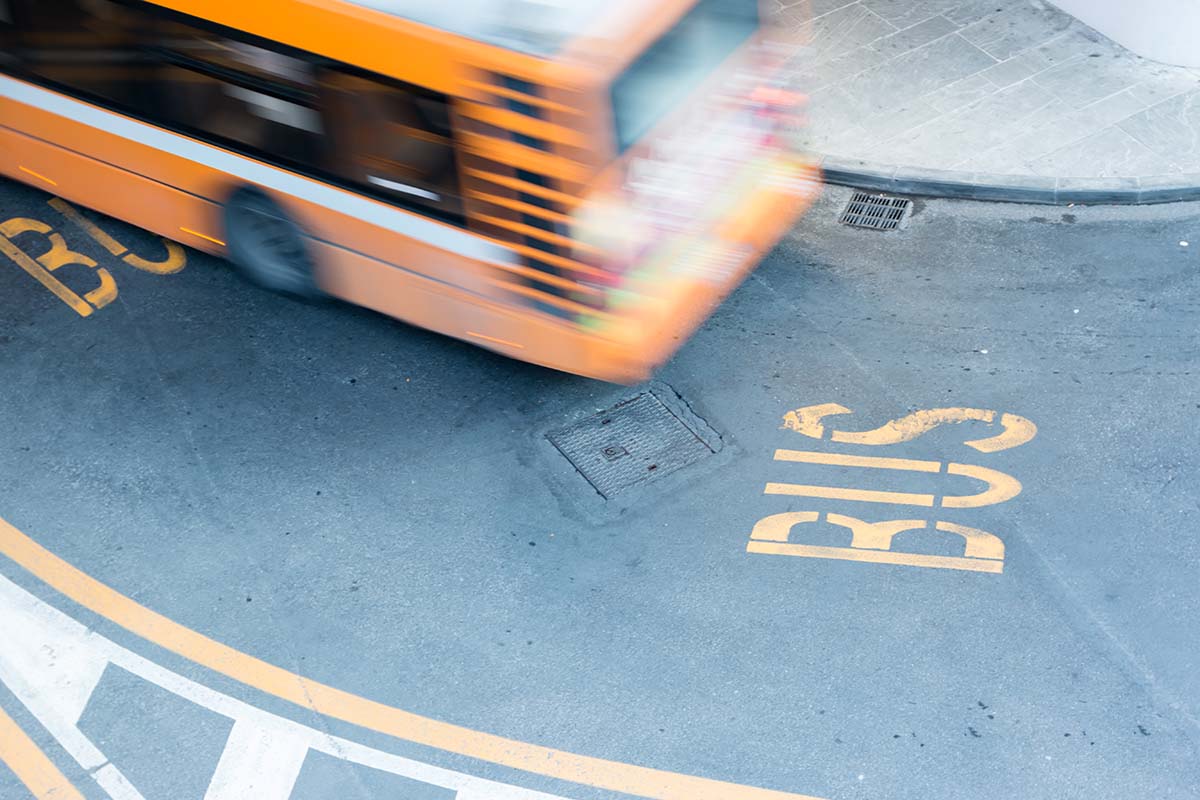
Zoom in on the roadway details that tie the lane to a restriction, including BUS ONLY pavement text, any red-painted lane surface, and the edge line that separates the lane from general traffic.
If the lane markings are worn, covered, or outside the frame, note that along with where your vehicle sits in relation to the line.
Timestamps matter only if the posted restrictions are visible or can be linked to the spot shown.
Check if a sign with hours appears in the image, and if the time on the notice matches what the camera overlay shows.
Pay attention to what is not captured, such as the sign placement before the camera, a turn pocket, a loading zone, or a construction channel that changes the lane path.
Save the original images at full resolution before the portal compresses them.
Check the Signs and Street Layout
Bus-lane restrictions are easy to miss when the approach includes bus stops, curb bulbs, parked vehicles, or a right-turn pocket that pulls traffic toward the curb.
Review the exact block in person or with street-level imagery and note what is visible from one block back, half a block back, and at the lane entry point.
Focus on faded lane text, worn edge lines, red pavement that drops out, and signs that appear only after a driver is already committed.
Construction barrels, temporary bus stop relocations, and fresh striping can change how a lane reads, so verify the date on any online view you rely on.
In dense corridors, signs may be blocked by buses, trees, signal hardware, or awnings.
Sudden transitions near a garage entrance, loading zone, or curb cut can make brief lane entry look intentional in a still frame, so document the approach angle and sign placement with clear location photos.
Match the Facts to the Ticket
The notice matters most when its wording matches what the images actually show.
Read the violation description closely and identify the specific action the city appears to be alleging, then compare that claim to the still frames.
A bus lane camera ticket should show more than a vehicle near the curb.
It should support sustained lane use, not just a brief entry near a right turn, driveway, curb cut, or merge point.
If the images do not show clear lane boundaries or the point where your vehicle entered, note that gap and where the camera view begins.
Registered-owner details matter too because the paper record has to match the vehicle tied to the notice.
Confirm that the plate, mailing name, address, and vehicle description are correct, especially if the vehicle is leased, part of a work fleet, borrowed, or shared, because in the everyday economics of living in Seattle, even small administrative errors can turn into unnecessary costs.
Keep copies of anything that shows who controlled the vehicle on the listed date, and compare those records against the notice before building the rest of your response.
Build a Practical Response

Court and online response forms can limit how much you can write, and the deadline on the notice controls what options remain.
Paying closes the case, mitigation seeks a reduction without disputing the violation, and contesting requires a hearing request plus follow-through on filing steps.
Check if the ticket lists a specific response method and if the portal shows a different cutoff time than the mailed notice.
A clean packet keeps the response focused on what can be verified quickly.
Gather the citation, full-resolution images, portal screenshots, and dated photos of the lane approach, then draft two or three short points tied to the record, such as unclear posted hours, a camera frame that does not show lane markings, or brief lane entry near a right turn.
Keep the wording factual, because driving smarter in Seattle often comes down to how clearly you present the details.
What it often doesn’t show clearly, especially in cases caught on a Seattle bus lane camera is just as important.
Details like where signs were placed, how the lane approached the intersection, and whether pavement markings were visible can change how the situation is interpreted.
If the record shows a strong mismatch between the notice and the posted control, that can work in your favor.
A traffic lawyer may be able to present that gap more effectively during a Seattle hearing.
Treat a Seattle bus lane camera ticket as a record to test, not a charge to accept without review.
The best starting question is simple: do the notice details, camera images, and on-street signs actually support the violation the city says occurred.
If the plate, location, lane markings, sign context, or lane-entry path do not line up cleanly, the ticket may deserve mitigation or a contested hearing instead of immediate payment.
Save the mailed notice, preserve the original images, and organize a few fact points tied to the location and lane.
Once the record is assembled, the next step is easier to choose and easier to submit before the deadline passes.