Check those Changing the Future of Social Media Technology
- Social media is engineered around emotional engagement and dopamine-driven behavior, not just information sharing.
- AI personalization and predictive algorithms shape what users see based on subconscious reactions.
- Growth in 2026 depends on understanding attention psychology, adapting to emerging attention economy trends 2026, applying modern neuromarketing strategies, and leveraging short-form video dominance to capture and retain audience focus in increasingly competitive digital environments.
If we look back at the early days of Instagram, Facebook, or X, it is clear how dramatically social media has evolved.
What began as simple photo sharing and status updates has transformed into a powerful system built around the attention economy, emotional activation, and behavioral psychology.
Today, more than 5 billion people use social media worldwide, and the average user spends over 2 hours per day on platforms powered by AI-driven algorithms.
Short-form video generates two to three times more engagement than static posts, and over 70% of Gen Z consumers say social media influences their purchasing decisions.
These numbers show that platforms are no longer just communication tools.
They are engineered ecosystems designed to capture attention, increase retention time, and shape subconscious behavior through algorithm-driven engagement.
What has changed most is the focus on dopamine consumption online and emotional triggers that activate the subconscious.
Modern platforms now prioritize:
- AI-powered personalization based on behavioral data;
- Predictive content feeds that anticipate emotional reactions;
- Short-form video dominance designed for rapid dopamine spikes;
- Variable reward systems that reinforce scrolling habits;
- Emotional triggers such as identity, belonging, aspiration, and FOMO;
- Neuromarketing strategies that increase retention and share rates.
Instead of simply rewarding informative content, algorithms shaped by attention economy trends 2026 now amplify posts that generate emotional intensity, increase dwell time, and drive deeper engagement through subconscious behavioral signals.
The 2026 Attention Economy: Moving Beyond Likes
In 2019, success was measured by likes, comments, and follower counts.
In 2026, platforms operate on a far more advanced model within the Attention Economy 2026 framework.
The real currency is no longer clicks; it is dwell time, subconscious scrolling patterns, and behavioral micro-signals.
Today’s platforms measure:
- Dwell time — how long a user pauses on a post, even without interacting;
- Scroll velocity — whether content slows or accelerates scrolling behavior;
- Rewatch patterns — repeat views that indicate emotional resonance;
- Subconscious engagement signals such as hesitation, hover time, and silent consumption.
- Completion rates on short-form video
This shift, aligned with attention economy trends 2026, signals a move from surface engagement metrics to deep behavioral analytics powered by machine learning, while also helping explain why social media feels empty for so many users navigating dopamine-driven digital environments.
In line with attention economy trends 2026, platforms are no longer asking whether someone liked a post; they are analyzing whether it altered attention flow, increased dwell time, slowed scroll velocity, or triggered emotional activation at a subconscious level.
The system is optimized for stimulation, not fulfillment.
When content is engineered primarily around dopamine spikes and rapid engagement loops, it can generate activity without generating meaning.
For businesses and creators, this means digital growth strategies must move beyond simple visibility tactics and vanity metrics.
Competing in the modern attention economy requires emotional depth, retention engineering, and a conscious understanding of subconscious pattern design.
Technology is evolving beyond features and into cognitive optimization, reshaping how brands compete and forcing creators to balance algorithmic performance with authentic human connection if they want to avoid contributing to the very emptiness audiences are beginning to feel.
Let’s now see how certain types of technology are changing the future of social media.
Artificial Intelligence and Automation
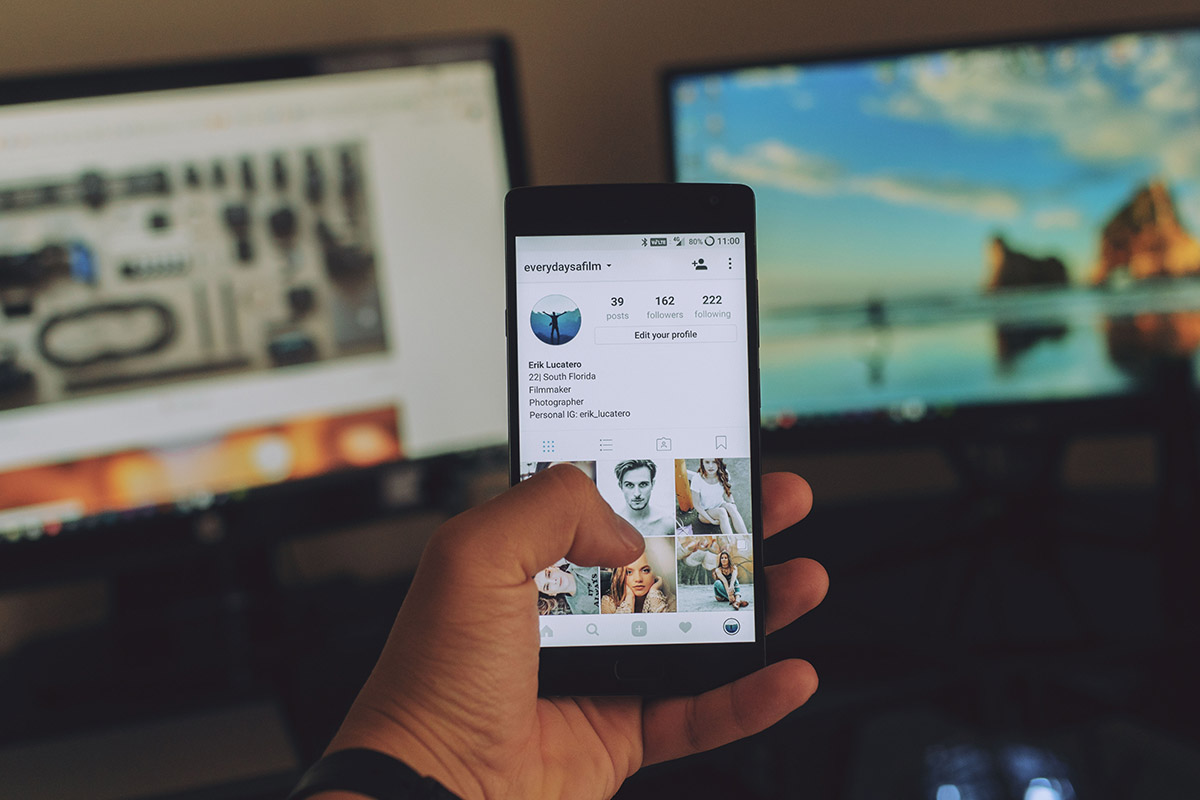
We are already seeing advanced software that supports Instagram automation, especially when it comes to repetitive growth tasks that used to consume hours of manual effort.
There are many Instagram like bots and engagement automation tools that can perform actions such as liking, following, hashtag monitoring, and audience targeting.
This does not mean people have stopped using Instagram.
What has changed is that users and brands are delegating repetitive, growth-oriented tasks to algorithms instead of handling them manually.
Virtual Reality Technology and the Future of Immersive Social Media

Another rapidly evolving trend shaping the future of social platforms is Virtual Reality (VR) and Augmented Reality (AR) technology.
What once felt experimental is now becoming part of mainstream digital strategy.
We already see immersive filters, 3D visuals, and AR-enhanced experiences integrated into major platforms like Facebook and Instagram, signaling a shift toward more interactive and emotionally engaging environments.
The direction is clear: social media is moving beyond flat screens toward immersive, spatial experiences.
Instead of simply scrolling through content, users may soon experience feeds inside fully interactive VR environments, where videos, images, and digital interactions feel physically present.
Major tech companies are investing heavily in this space, positioning immersive platforms as the next stage of the attention economy.
Here’s what this shift could mean:
- Social feeds accessed through VR headsets instead of smartphones;
- Interactive 3D content replacing traditional static posts;
- Augmented Reality filters integrated into daily communication;
- Immersive branded experiences designed for deeper emotional impact;
- New forms of spatial social networking and digital identity.
However, widespread adoption still depends on accessibility.
VR and AR hardware must become more affordable, lightweight, and user-friendly before immersive social environments fully replace traditional mobile experiences.
While smartphones remain dominant, the trajectory suggests a gradual evolution toward mixed-reality ecosystems.
What makes this development especially important is its emotional potential.
Immersive environments increase sensory engagement, presence, and memory retention aligning perfectly with modern neuromarketing trends and subconscious engagement strategies.
When VR Videos and AR become more accessible, social media will not just be something we scroll through. It will be something we step into.
The Bottom Line

Even beyond AI, automation, and immersive VR, we are now seeing emerging technologies like biometric facial recognition, predictive behavioral tracking, brain-computer interface experiments, and Radio Frequency Identification (RFID) technology entering early development conversations.
While some of these innovations still sound futuristic, they all point in the same direction: deeper automation, smarter personalization, and more frictionless interaction inside social platforms.
For example, RFID systems and biometric integrations could eventually automate check-ins, preference tracking, and contextual engagement based on physical location or real-world behavior.
Facial recognition and behavioral pattern mapping already influence content recommendation systems at scale.
The common thread is clear social media is moving toward predictive automation, where platforms anticipate actions rather than waiting for manual input.
Technology is accelerating rapidly, but here is the actionable bottom line:
- Social media is becoming more automated, predictive, and emotionally engineered.
- Growth will depend on understanding attention psychology, AI personalization, and subconscious triggers.
- Brands that rely only on posting frequency will fall behind brands that build strategic emotional ecosystems.
The future is not just about new tools. It is about building a social media map that aligns technology, psychology, and brand identity.
If you want to stay ahead instead of reacting to trends, you need a clear strategy that includes:
- Emotional trigger mapping for your audience;
- AI-driven content positioning;
- Retention and dwell-time optimization;
- Platform-specific growth architecture;
- Ethical automation planning.
I help brands create strategic, data-informed social media growth maps designed for the 2026 attention economy.
If you are ready to move beyond surface engagement and build a system that actually converts attention into loyalty and revenue, let’s build a customized social media roadmap for your brand.
✨Highly Valuable FAQ Section
Q: What is the biggest technology trend in social media for 2026?
A: The biggest trend is Predictive Personalization. Algorithms no longer just show you what your friends like; they use AI to anticipate your emotional state and deliver content (mostly short-form video) that triggers a specific dopamine response, keeping you on the platform longer.
Q: How does AI change social media marketing?
A: AI has moved from simple automation to Automated Targeted Marketing. In 2026, brands use “Emotion AI” to analyze which hashtags and visual styles activate their specific target audience’s subconscious, allowing for near-perfect conversion rates in social commerce.
Q: Will Virtual Reality (VR) replace smartphones for social media?
A: While smartphones remain dominant, 2026 is seeing a surge in Augmented Reality (AR) integration. Instead of full VR headsets, users are utilizing AR filters and “mixed reality” layers on their phones to interact with 3D products and digital environments in real-time within their social feeds.
Q: What is “Neuromarketing” in social media? A: Neuromarketing is the use of brain science to drive social media growth. It involves designing content that appeals to the “reptilian brain”—focusing on identity, tribalism, and instant gratification to ensure higher retention and share rates.