
Top 10 Must-Have Features for Making a Google Friendly WordPress Website
✨Key Points
- A Google-friendly WordPress website helps customers find you faster, trust your content, and take action, leading to more leads and sales.
- Strong SEO, speed, and structure drive higher visibility, better user experience, and more qualified traffic.
- When optimized correctly, your website becomes a system that consistently attracts, engages, and converts your ideal audience.
Today, building a Google-friendly WordPress website is no longer just about adding a few keywords and hoping for the best.
Search has changed.
Google now looks more closely at user experience, site quality, helpful content, trust signals, and how clearly your website answers real questions.
On top of that, AI-powered search experiences are changing how people discover content, which means your website needs to be easy for both users and search engines to understand.
That is why it has become more important than ever for website owners to build sites that are:
- fast;
- mobile-friendly;
- easy to navigate;
- clear in structure;
- helpful and trustworthy;
Most people still click one of the first few results they see on Google.
If your site does not offer a strong experience right away, visitors will leave quickly, and that can hurt both rankings and conversions.
The good news is that you do not need to overcomplicate it.
While every website has different goals, there are core features that almost every Google-friendly WordPress site should have.
These basics help improve search visibility, make your site easier to use, and give your content a stronger chance of performing well in both traditional search and AI-driven search results.
In this guide, we’ll walk through the top features your WordPress website should include if you want better rankings, stronger visibility, and a site that is built for how search works today.
SSL Encryption is the backbone
Consumers are incredibly aware as well as concerned regarding security in the digital sphere.
They exercise this concern strictly while browsing online and checking out your website.
In this way, SSL Certificates’ importance also encompasses security as cybercriminals worldwide cause a lot of financial loss to the website owners throughout the world.
With the increasing malicious activities, it is essential to employ SSL security certificates. It indicates whether the site is HTTP or HTTPS.
Nowadays, several SSL Certificates are available in the market like a Single Domain SSL Certificate, Multi-Domain SAN SSL, Wildcard SSL Certificates, EV SSL, Organization Validation Certificate.
It needs thorough research and deep understanding to choose anyone from them.
These certificates should only be bought from reliable providers.
Google-Friendly WordPress Website: Focus on Readable, Helpful Content
A strong WordPress website is not built on design and technical setup alone.
Your content matters just as much.
Google does not reward pages filled with vague, unreliable, or thin information.
If your content does not clearly help the user, answer the question, or offer real value, it is far less likely to perform well in search.
Today, this matters even more because both Google and AI-powered search systems look for content that is:
- clear and easy to read;
- accurate and trustworthy;
- detailed enough to be useful;
- written for real people, not just search engines;
In other words, readable content helps your website rank better because it keeps people engaged and gives search engines stronger signals that your page is helpful.
Content should also be updated and published regularly.
Websites that post consistently often build more visibility, stronger audience trust, and better long-term SEO performance than websites that stay inactive for long periods.
For businesses, that means good content can help you:
- reach more of the right audience;
- improve engagement and time on page;
- build trust with visitors;
- support stronger rankings over time..
The goal is not just to publish more, but to publish content people can understand, trust, and actually use.
Quality Images to Attract Viewers
Content matters, but visuals matter too.
If your website uses poor-quality images, it can weaken the message, reduce trust, and make the overall experience feel less professional.
Good website images should be:
- high quality and clear;
- relevant to the page content;
- sized properly so they do not slow down the site;
- consistent with your brand style;
This is especially important for products and services, because many people rely on images before making a decision.
Visuals help them understand quality, style, and value before they take the next step.
Google also tends to favor content that offers a richer experience, and quality images or videos can support that by improving engagement and helping users stay longer on the page.
For businesses, strong visuals can help:
- attract attention faster;
- build trust;
- improve user experience;
- support conversions;
The goal is not just to add images, but to use visuals that strengthen your message and make the website feel more useful and credible.
No Broken Links for a Better User Experience
A Google-friendly website also needs to work properly from a functional point of view.
Broken links create dead ends, frustrate visitors, and make the website feel outdated or poorly maintained.
Even if your design looks good and your SEO is strong, users can quickly lose trust when they click on something and it does not work.
This matters because Google pays attention to user experience.
If visitors leave the site disappointed or cannot reach the information they need, that can hurt both engagement and overall performance.
To keep your website healthy, broken links should be:
- checked regularly;
- fixed as soon as possible;
- replaced or redirected when needed;
For businesses, this helps:
- improve user experience;
- keep visitors moving through the site;
- protect trust and credibility;
- support better SEO performance.
A strong website is not just about content and design.
It also needs to function smoothly, and working links are a basic but essential part of that.
Website Speed Could Be Your Achilles Heel
In a fast-moving online world, people do not wait long for a page to load.
Even if your content is strong, a slow website can make visitors leave before they see any of it.
users open several links at once, and the site that loads faster often gets their attention first.
That is why speed is one of the most important website features today.
A fast website improves user experience, keeps people engaged, and supports better search performance.
Google also measures site speed and page experience, which means slow loading times can affect your rankings.
For businesses, a faster website can help:
- reduce bounce rates
- keep visitors on the page longer
- improve engagement
- support better Google rankings
- increase conversions
Website speed can also be checked with Google tools, which help you find performance problems and improve them before they start hurting your visibility.
A Mobile-Responsive Website

Today, most people search, browse, and read content on their phones first.
That means a website that does not work well on mobile can quickly lose both visitors and visibility.
Google takes mobile usability seriously, and mobile-friendly performance plays a major role in how websites are evaluated.
If your site is hard to read, slow to load, or difficult to navigate on a smartphone, it can hurt both user experience and search rankings.
That is why mobile responsiveness should be a priority from the start.
A mobile-responsive website helps businesses:
- reach users where they actually browse;
- improve engagement on phones and tablets;
- reduce bounce rates;
- support stronger rankings in mobile search;
- create a smoother path to inquiries, sign-ups, or sales;
Google also provides tools that let you check how mobile-friendly your site is.
If your website does not meet a strong standard yet, improving mobile responsiveness should be one of the first things you fix.
Google-Friendly WordPress Website: Connected to Google Search Console
Connecting your website to Google Search Console is one of the easiest ways to improve SEO and understand how your site performs in search.
It gives you a clearer view of how Google sees your website and what people are actually finding you for.
This makes it easier to spot opportunities, fix problems, and improve visibility over time.
A key step here is submitting your XML sitemap, which helps Google crawl and understand your website more efficiently.
Google Search Console is especially useful because it shows:
- the search queries your site appears for;
- how often people click on your pages;
- which pages get visibility and which do not;
- technical issues that may affect indexing or performance;
For businesses, this matters because it helps you:
- understand what content is bringing traffic;
- improve click-through rates;
- detect site problems early;
- make smarter SEO decisions based on real data;
The best part is that it is completely free, which makes it one of the most valuable tools you can connect to a Google-friendly WordPress website.
Google Friendly WordPress Website: Sitemaps, Robots.txt, Canonical Tags, and Pagination as essential elements
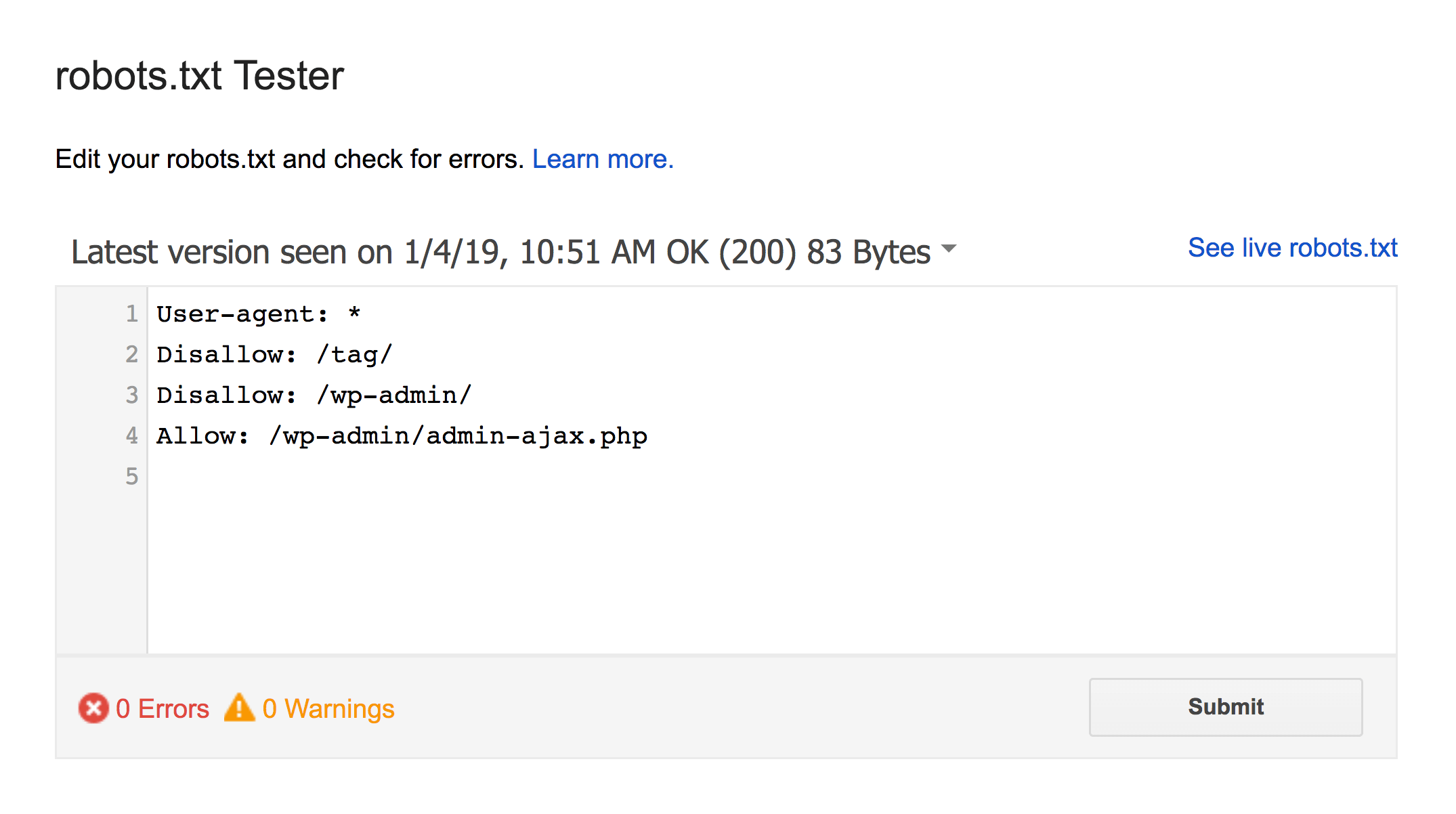
Sitemaps are important because they help Google understand how to crawl and index the pages on your website.
An XML sitemap gives search engines a clear map of your content, which is especially useful for larger websites, blogs, online stores, or sites with many updated pages.
Traditionally, robots.txt was used to guide search engine bots on what they could access and crawl.
It still plays a role, but today, canonical tags are also very important.
Canonical tags tell Google which version of a page should be treated as the main one when similar or nearly identical content exists.
This helps prevent confusion, reduces duplicate content issues, and makes sure ranking signals are passed to the correct page.
This is especially useful when:
- multiple URLs show similar content;
- product or category pages have filter variations;
- blog content is republished or closely repeated;
Pagination also matters when content is split across several pages, such as blog archives, category listings, or product collections.
It helps organize content clearly and supports a better user experience while reducing the risk of search engines misreading repeated page structures as duplicate content.
For businesses, these elements help:
- improve crawl efficiency;
- reduce duplicate content problems;
- strengthen indexing accuracy;
- make site structure clearer for Google;
Together, sitemaps, canonical tags, and pagination help search engines understand your website more accurately, which supports stronger visibility and cleaner SEO performance.
Maintain Your Social Profile

A strong social presence can support your website’s visibility, traffic, and brand trust.
While social media links do not work like traditional SEO backlinks, search engines do pay attention to brand signals, content reach, and how often your website is connected to active, credible platforms.
That is why your website should be easy to share across social channels and your brand should stay active where your audience already spends time.
This matters because social media can help you:
- bring more people to your website;
- increase content reach;
- strengthen brand recognition;
- support trust and authority around your business;
Your website content should also be created in a way that makes sharing easy.
Blog posts, landing pages, visuals, and insights should be useful and clear enough that people want to pass them along.
This is especially valuable for B2B businesses, where social sharing often plays a major role in visibility, relationship building, and distribution of thought leadership content.
Google-Friendly WordPress Website: Conclusion
Building a Google-friendly WordPress website is not just about technical setup. It directly affects how your business performs online.
When your website is optimized the right way, customers get:
- faster access to your content and services;
- a smoother, more reliable experience;
- clear information that is easy to trust and understand;
- a simple path to take action, whether it’s contacting you, signing up, or making a purchase
For your business, this leads to:
- higher visibility in Google search;
- more qualified traffic;
- better engagement;
- increased conversions and sales.
Using modern tools and technologies helps, but the real impact comes from applying the fundamentals consistently, including speed, structure, content quality, and user experience.
When these elements work together, your website becomes more than just an online presence.
It becomes a system that attracts, engages, and converts the right audience.
Using SSL Certificates, keeping the content accurate, Pagination, fixing the broken links will help you immensely.
Through careful planning, one can employ the amalgamation of the basic features and find the suitable ones to score top rankings on Google.