
Why Use Acrylic Paint? Key Benefits for Artists
Acrylic paint has sometimes been treated as the beginner-friendly alternative to oil, but that description seriously undersells the medium.
Today, professional-grade acrylics are used for fine art, illustration, mixed-media work, murals, and experimental techniques.
For artists choosing between acrylic, oil, and watercolor, the decision often comes down to practical frustrations: drying time, cleanup, cost, flexibility, and how easily mistakes can be corrected.
Acrylic solves several of these problems particularly well.
Choosing the best acrylic paint to work with can also make a noticeable difference. Higher-quality paints typically provide:
- Stronger pigment concentration and richer color;
- Better coverage with fewer layers;
- More consistent texture and application;
- Better performance when mixing colors or adding mediums.
✨Key Reasons to Use Acrylic Paint
- Fast drying makes painting and layering quicker. Unlike oil paint, which can remain wet for days, acrylic generally dries much faster. Artists can build layers, add details, and continue working without lengthy pauses between stages.
- One medium supports many painting techniques. Acrylic can be used straight from the tube for bold, opaque applications, thinned for transparent washes, or combined with gels and mediums for heavier texture. That flexibility allows artists to experiment without constantly switching materials.
- Cleanup and everyday studio work are simpler. Wet acrylic can generally be cleaned from brushes and tools with soap and water. Artists who want to avoid the more involved cleanup associated with traditional oil painting may find acrylic particularly practical.
These advantages make acrylic especially useful for artists who want:
- Less waiting between layers.
- Fewer materials to manage in the studio.
- More freedom to experiment with texture and application.
- Straightforward cleanup after a painting session.
- A versatile medium suitable for both quick studies and finished artwork.
Acrylic isn’t simply a stepping stone to oil painting. For many artists, its speed, versatility, and practicality are precisely what make it the preferred medium.
It requires a few simple tools
The good thing about acrylic is it’s not a high-maintenance medium.
You only need a brush, a cup of water, and the surface to get started.
It’s unlike oil painting, where you need to use different supplies before you can do anything.
Preparing your workstation doesn’t take time.
For the brushes, artists should consider using synthetic bristles instead of brushes made from animal hairs. The results look better.
Another reason to use acrylic is to clean and fix the station once you finish painting.
When you use a palette, it doesn’t take time to remove excess paint.
Just run a wet rage on the surface to remove the residue.
If not, wait for the palette to be dry and remove the paint by peeling it off.
There is also a lot of fun and easy acrylic painting options for beginners, and you’ll be able to stay busy for weeks once you’ve started with this hobby!
Be sure to research some great tips and tricks to help you out when starting, and give yourself some space to express your creativity – you never know what masterpieces are just waiting to be created!
Whether you decide to focus on landscapes or portraits, there are more than a few techniques to utilize as well to really bring your art to life and make it pop.
It’s easy to control the consistency and texture
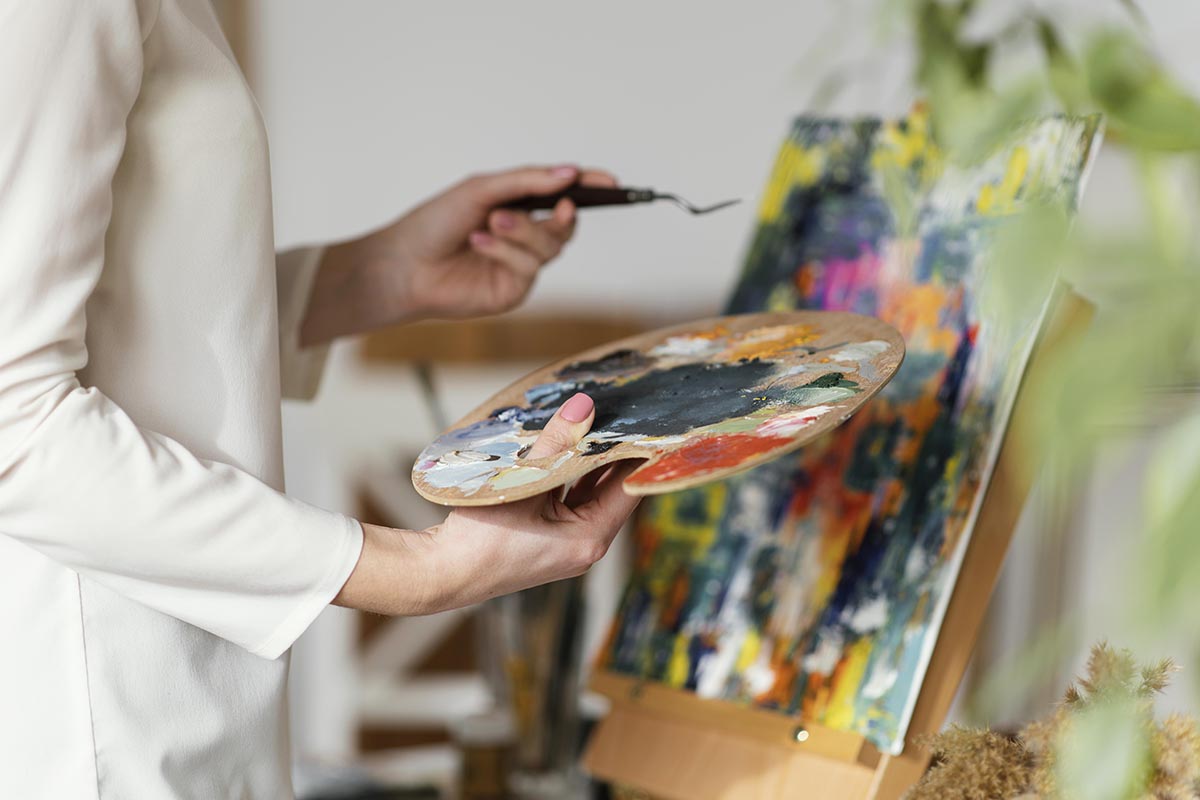
Acrylics are a malleable medium. It means that controlling the texture and consistency is easy.
By adding other materials on acrylic, it will look like a different medium.
For instance, if you decide to use an acrylic retarder, it will look like oil.
Other materials will allow the acrylic to shimmer and dry faster.
Given how easy it is to manipulate acrylic, you can do whatever you want based on your vision.
It’s easy to paint anywhere
Another reason to use acrylic is you can paint anywhere you want. It’s unlike oil that contains hazardous materials.
If you paint in an area without proper ventilation, it can lead to a significant problem. With acrylic, it doesn’t matter where you are.
If you can only afford to have one small studio, it’s your choice.
There will be no health issues to worry about.
Acrylic Paint Dries Faster Than Oil Paint
Waiting days for a layer of paint to dry can interrupt your momentum, especially when you are working on a deadline or want to build several layers in one painting session.
This is one of the areas where acrylic has a clear practical advantage over traditional oil paint.
Acrylic paint is known for its relatively fast drying time.
Depending on the thickness of the application, surrounding temperature, humidity, and the products used, a layer can become touch-dry surprisingly quickly.
This allows artists to:
- Build layers faster without waiting days for the previous application to dry.
- Add details sooner and move through different stages of a painting in the same session.
- Correct mistakes quickly by allowing an area to dry and painting over it.
- Finish time-sensitive projects faster, which can be particularly useful for commissions, commercial artwork, studies, and experimental pieces.
- Work without long interruptions, helping maintain creative momentum from the initial sketch to the final details.
Fast drying does come with a trade-off.
Artists who like to blend colors directly on the canvas may find that acrylic gives them less working time than oil.
However, techniques such as working in smaller sections or using acrylic mediums designed to slow drying can provide greater control.
For artists who value speed, layering, and experimentation, acrylic can remove one of the biggest frustrations associated with slower-drying media.
More importantly, the choice of medium does not determine whether an artist can produce serious work.
Developing technique, experimenting with materials, and building a recognizable visual language are ultimately more important to achieving your artistic goals than whether you choose acrylic, oil, or another medium.