How Does Daylight Affect Driving?
✨Key Points
- Daylight generally improves visibility, but it doesn’t eliminate driving risks. Glare, shadows, fog, rain, and low sun can still make pedestrians, road signs, and other vehicles difficult to see.
- Better visibility can give drivers more time to identify hazards. It doesn’t make your brakes work faster, but seeing a problem earlier may give you more time to react and stop safely.
- Safe driving still depends on your habits. Speed, following distance, attention, vehicle condition, and understanding changing road conditions matter whether you’re driving during the day or at night.
Most of us probably feel more comfortable driving during the day, and there’s a practical reason for it: daylight generally gives us better visibility of the road, other vehicles, pedestrians, signs, and potential hazards.
But how does daylight affect driving beyond simply making everything brighter?
Better visibility can help you recognize a pedestrian approaching a crossing, notice traffic slowing ahead, read road signs earlier, or identify a hazard with more time to react. However, daylight doesn’t automatically guarantee safe driving.
Daytime conditions can create their own road safety challenges faced by drivers, including:
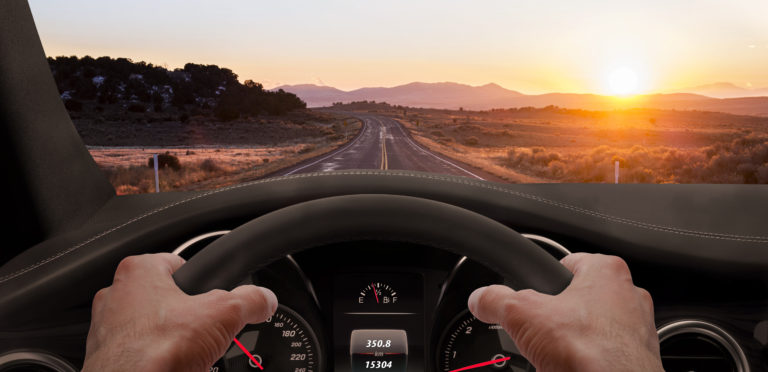
- Low sun and glare temporarily reducing visibility.
- Deep shadows making pedestrians or cyclists harder to notice.
- Rain, fog, and storms reducing the advantages of natural light.
- Changing terrain and road conditions affecting how far ahead you can see.
- Driver distraction and overconfidence, even when visibility appears excellent.
Good driving habits therefore matter just as much during the day.
Maintaining a safe following distance, controlling your speed, staying focused, and anticipating other road users can help you prevent road accidents regardless of how bright it is outside.
Understanding how light, weather, and visibility affect your decisions is ultimately another way to become a better driver.
Daylight can help you see danger sooner, but what you do with that extra information is what makes the real difference.
How does daylight affect driving a vehicle: understand how our eyes adjust to different levels of light
Our eyes are remarkable organs that allow us to see the world in stunning detail. But have you ever wondered how they adjust to different levels of light?
Our eyes have an incredible ability to adapt to changing light conditions, whether we’re in a dimly lit room or out in bright sunlight.
This is all thanks to a complex network of cells in our eyes that work together to regulate the amount of light that enters.
When we step outside into bright light, for instance, our pupils will naturally constrict to reduce the amount of light that enters our eyes, protecting our sensitive retinas from damage.
On the other hand, in low light conditions, our pupils will dilate, allowing more light to enter and improving our ability to see in the dark.
Driving in daylight conditions allows us to take full advantage of this natural adjustment process, and it’s one of the many ways that daylight can make a difference when we’re behind the wheel.
Find a guide to safe driving online and start familiarizing yourself with the basics.
This can help you understand the components that make up a safe driving experience and any relevant laws in your area.
Learn how brightness and contrast affect what we can see in the daylight
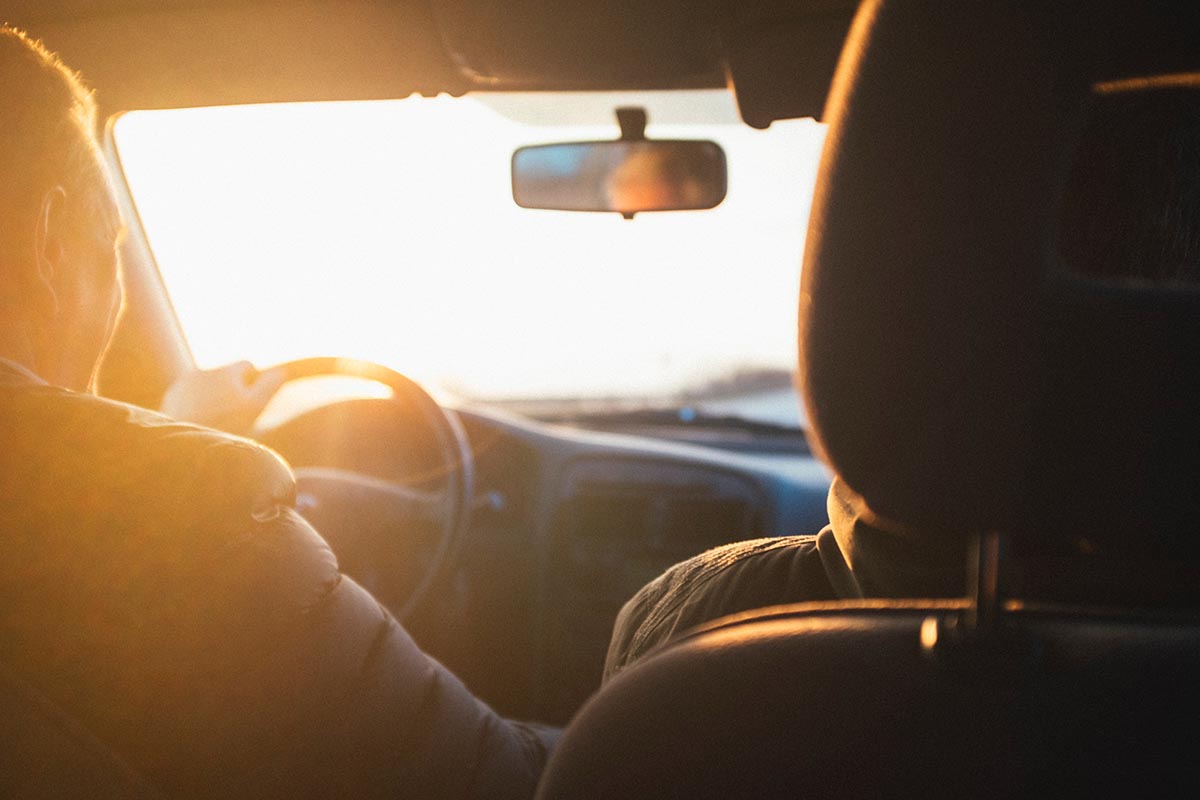
The brightness and contrast of our environment are two of the most significant factors that dictate how much we’re able to see in daylight.
Imagine driving through a dark tunnel, for example.
Because of the low light levels in the tunnel, you may not be able to see much ahead or behind you.
This is why it’s important to keep an eye on your headlights and keep a safe distance between yourself and other drivers when driving in lower-light conditions.
On the other hand, when we drive in daylight, our eyes can better take advantage of the increased brightness and contrast that comes with it.
This makes it easier for us to pick out details on the road, such as potential hazards like animals or debris, which is essential for driving safely and avoiding any potential accidents.
Common Risks of Driving in Low-Light Conditions
Driving in low-light conditions changes what you can see and, importantly, how early you can see it.
A pedestrian, cyclist, stopped vehicle, or road hazard that would be obvious in daylight may take longer to recognize at dusk or at night.
Some of the main risks include:
- Reduced visibility: You may have less time to identify pedestrians, road signs, obstacles, and other vehicles.
- Headlight glare: Oncoming headlights can temporarily make it more difficult to see what is happening beyond the approaching vehicle.
- Reduced contrast: Pedestrians, cyclists, animals, and objects may blend into darker backgrounds.
- Changing depth perception: Darkness and uneven lighting can make distances and road features more difficult to judge.
- Fatigue: Low-light driving often happens early in the morning or later at night, when tiredness may become another road-safety risk.
This is why safe driving after dark requires more than simply turning on your headlights.
Reduce your speed when visibility is limited, increase your following distance when appropriate, and give yourself more time to recognize signals from the road.
How to Improve Visibility When Driving During the Day
Daylight generally makes driving easier, but daytime visibility isn’t always perfect.
Bright sun, glare, deep shadows, rain, fog, and a dirty windshield can all make it harder to see what’s ahead.
A few simple driving habits can improve visibility:
- Keep your windshield, mirrors, and lights clean. Dirt, streaks, and condensation can become particularly noticeable when sunlight hits the glass.
- Use your sun visor when low sun interferes with your view.
- Wear appropriate sunglasses in bright conditions. Polarized lenses may help reduce certain types of reflected glare, but make sure you can still clearly see displays, signals, and your surroundings.
- Adjust your seat and mirrors correctly so you have a clear view of the road and minimize blind spots.
- Slow down when visibility changes. The fact that it’s daytime doesn’t mean the posted speed is appropriate for every condition.
- Pay extra attention when moving between bright sunlight and deep shade, when hazards may initially be more difficult to recognize.
Daylight Helps, but Your Driving Habits Matter More
The real danger of poor visibility isn’t simply that you can’t see as clearly.
It’s that you may see a problem too late to do anything about it.
A pedestrian stepping from a shadow, brake lights appearing through heavy rain, an animal crossing at dusk, or a stalled vehicle on a dark road can leave you with only seconds to react.
That uncertainty is what makes changing light conditions uncomfortable for many drivers.
You can’t control the sun, weather, or visibility ahead, but you can create a larger margin for error:
- Slow down when you can’t clearly see what’s ahead.
- Increase your following distance when visibility or road conditions deteriorate.
- Keep your windshield and lights clean so you aren’t making an already difficult situation worse.
- Remove distractions when conditions require more concentration.
- Don’t force yourself to continue if visibility becomes too poor to drive safely.
Good driving isn’t about proving that you can handle every condition.
It’s about recognizing when the road has changed and changing your behavior with it.
The more time and space you give yourself to notice danger, the less you have to depend on a perfect split-second reaction when something suddenly appears in front of you.