
What Makes a Property Damage Report Complete Enough for Insurance Claims
✨ Key Points
- A complete damage report helps insurers act faster, especially when your business can’t afford delays.
- Clear causes, scope, and details reduce follow-up questions and keep claims from stalling.
- Strong documentation protects you from extra reviews and keeps liability issues clear.
After a fire or flood, the property damage report form (referred to as แบบฟอร์มรายงานความเสียหายต่อทรัพย์สิน in Thai) is often what insurers rely on first, and it can affect how quickly your claim starts moving.
When you are trying to keep a business running, this is not the moment for vague notes or half-filled details.
Insurers usually need a clear picture early, because that first submission often sets the pace for everything that follows.
And when the report feels thin, the waiting starts.
Why Does a Complete Report Matter So Much for Business Claims?
A complete report gives the insurer something solid to work with, especially when operations are already under pressure.
If a workspace is closed, staff are displaced, or production has paused, even small delays can feel heavy.
There is also the liability side.
General liability insurance can come into play when damage touches shared areas or another party’s property.
In those situations, a clear report helps keep responsibilities from becoming blurred, which is where claims sometimes slow down.
What Do Insurers Usually Look For Before Approving a Claim?
Insurers tend to look for a believable cause and a specific scope.
Not just “water damage happened,” but where it started, what it reached, and what was affected.
The more precise that picture is, the easier it is for an adjuster to move forward without circling back for basic clarification.
Documentation also matters because insurers are careful about insurance fraud screening.
That does not mean honest claims are treated as suspicious, but incomplete or inconsistent reporting can create extra review steps.
And that is the last thing you need when time already feels tight.
What Gets Missed Most Often When Businesses Fill Out Loss Forms?
Hidden damage is one of the biggest blind spots when deciding what makes a property damage report complete enough.
Dampness behind walls or inside equipment doesn’t always look serious at first.
A space may seem fine on day one, only for corrosion or contamination to surface later.
Another common issue is underestimating exposure. A machine might still power on, but that doesn’t mean it’s safe to run long-term.
These grey areas are exactly where insurers begin asking more questions, especially when early documentation is thin.
How Can You Document Damage Clearly Under Pressure?
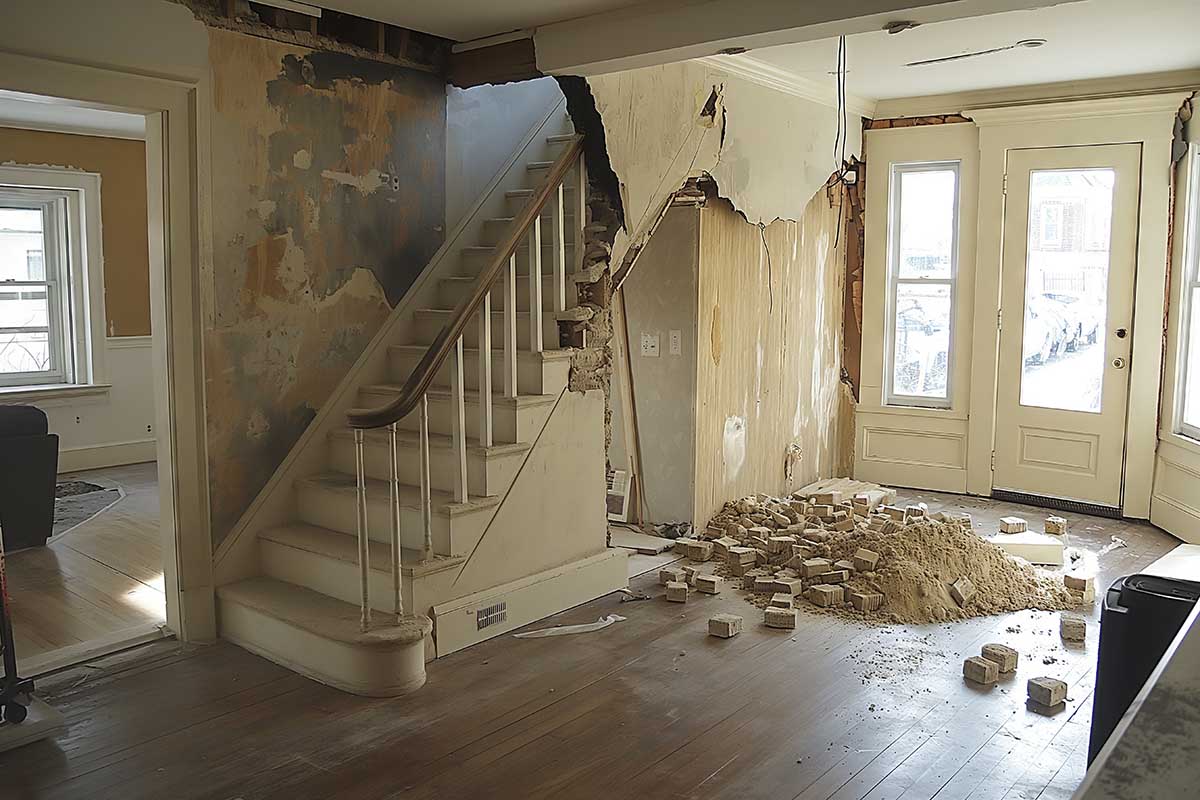
Treat the site like something you have to explain to a stranger who was not there.
Take wider photos first so the insurer understands the setting, then move closer so the damage is undeniable.
A smudged ceiling stain means more when it is shown in context, not as an isolated close-up.
Written notes help too, especially when the day feels chaotic.
If work stopped suddenly or areas had to be sealed off, say that plainly.
Those details connect the physical damage to the real operational disruption.
How Do You Show the Difference Between Restore and Replace?
Insurers often need to know what can realistically return to use and what cannot.
After water exposure, some assets may be recoverable with proper cleaning and testing.
Others carry too much functional risk, even if they look intact on the surface.
That distinction affects cost, but it also affects time.
Replacement orders can stretch out for weeks, and businesses feel that delay immediately.
A clear early assessment makes the claim file easier to act on.
How Soon Should the Report Be Completed After the Incident?
Timing matters because damage does not always stay frozen in place.
Moisture spreads, residue becomes more aggressive, and secondary deterioration can start fast once conditions settle.
For a business, early reporting is tied to continuity.
The sooner the claim file is clear, the sooner decisions about repairs or recovery steps can actually begin.
When Is Professional Loss Assessment Helpful for a Stronger Claim File?
Professional assessment helps when the loss is complex or partly invisible.
Heat exposure can affect structural elements even when surfaces look normal.
Water intrusion can travel into systems that are not easy to inspect casually.
Specialists can document those conditions in a way insurers can rely on, especially for buildings, industrial machinery, or high-precision electronics.
That kind of evidence often prevents later disagreement about what was truly damaged.
What Should You Check Before Submitting to Avoid Back-and-Forth?
Before you submit, read your report like an insurer would.
Does it explain what happened clearly, or does it leave gaps that invite follow-up emails?
Make sure the written description matches the supporting photos, and that affected spaces are identified without guesswork.
A complete first submission is one of the simplest ways to keep the claim moving, rather than getting stuck in repeated requests while downtime grows.
What Does “Complete Enough” Really Mean for Your Business?
“Complete enough” means the insurer can understand the loss without needing to pull the story out in fragments.
When documentation is clear, timely, and grounded in real site evidence, recovery planning becomes less uncertain.
For many businesses, that clarity also affects staffing decisions, temporary relocation, and how quickly customers can be served again.
The less back-and-forth you face, the sooner your normal operations start to feel possible.
Even a small delay can ripple into supplier schedules, tenant concerns, and postponed reopening dates for weeks.
For expert property loss assessment support after a disaster, contact Belfor.