Eosinophilic Granuloma in Cats: What Your Cat’s Skin Could Be Telling You
✨ Key Points
- Eosinophilic granuloma can appear in different forms. Cats may develop swollen lips, red or raised sores, raw skin patches, hair loss, or lesions on the belly, thighs, face, or inside the mouth.
- Allergies are often part of the underlying problem. Reactions to fleas, food, or environmental allergens may trigger the inflammation, so treatment often involves identifying and managing the cause rather than treating the visible sore alone.
- A veterinary diagnosis matters because many skin conditions look similar. A swollen lip or red lesion does not automatically mean eosinophilic granuloma. Your vet may need to examine the lesion and rule out infections, parasites, tumors, or other skin conditions before recommending treatment.
You’re petting your cat when you notice something that wasn’t there before, a swollen spot on her lip, a red sore near her mouth, or a raw patch of skin she keeps licking.
Your first thought may be: What is that? Is it serious? Does she need to see a vet?
You may even find yourself searching questions like:
- Why is my cat’s lip swollen?
- What does eosinophilic granuloma look like in cats?
- Is a rodent ulcer in cats serious?
- Why does my cat have a red sore on her skin?
- Can allergies cause sores on a cat’s lips or body?
Skin changes can be easy to miss in cats, especially under all that fur.
But a new bump, ulcer, swollen area, or irritated patch can be an important sign that something is affecting your cat’s skin or immune system.
One possible cause is eosinophilic granuloma complex, a group of inflammatory skin conditions that can appear in several different ways.
You may notice:
- swelling or sores on the lips;
- red, raised, or irritated patches of skin;
- hair loss around an affected area;
- frequent licking, scratching, or chewing;
- lesions on the belly, thighs, face, mouth, or other parts of the body;
These changes can look alarming, but appearance alone cannot confirm the cause.
Similar-looking skin problems can have different explanations, which is why a veterinary evaluation is important.
If you’ve just discovered a strange sore, bump, or swelling on your cat, this guide will help you understand what eosinophilic granuloma can look like, what may trigger it, how veterinarians diagnose it, and what treatment may involve.
Skin Problems Are Surprisingly Common in Cats
If your cat has never had a skin issue, count yourself lucky.
According to the Cornell Feline Health Center, studies indicate that between 6 and 15 percent of feline patients have at least one skin disease, and many cats deal with more than one at the same time.
Skin is a cat’s largest organ and often the first place an underlying problem shows up, whether that’s allergies, parasites, infection, or an overactive immune response. Eosinophilic granuloma complex falls into that last category.
What Eosinophilic Granuloma Complex Actually Is
Eosinophils are a type of white blood cell whose job is to fight parasites and respond to allergens.
In some cats, these cells overreact, flooding the skin with inflammatory chemicals even when there’s no real threat.
The result is a group of lesions collectively called the eosinophilic granuloma complex, or EGC.
It’s important to know that EGC isn’t a single disease.
It’s a reaction pattern, meaning it’s the skin’s way of responding to something else going on, most often an allergy. That “something else” is what your vet will ultimately want to find.
The Three Ways It Can Show Up
EGC has three main presentations, and a cat can have one or several at once:
- Indolent ulcer (sometimes called a rodent ulcer). A well-defined, often painless sore on the upper lip. It can look like a small dent or, in severe cases, cause noticeable swelling and disfigurement of the lip.
- Eosinophilic plaque. A raised, red, moist, and usually very itchy patch, most often on the belly or inner thighs. Cats lick these obsessively, which makes them worse.
- Eosinophilic granuloma. Firm, raised, pinkish-yellow nodules or a linear ridge of thickened skin. Common spots include the back of the hind legs, the chin (sometimes causing a puffy “fat chin” look), footpads, and inside the mouth on the tongue or palate.
Because these lesions can resemble other problems, including infections, injuries, or in rare cases tumors, a proper diagnosis matters.
What Usually Triggers It
Most cases trace back to some form of hypersensitivity. The usual suspects include:
- Flea bites, even from a single flea on a cat that’s otherwise well protected;
- Food allergies, often to a protein the cat has eaten for years;
- Environmental allergens such as pollen, dust mites, or mold;
- Insect bites from mosquitoes or other biting bugs.
Some cats appear to have a genetic predisposition, and in a small number of cases no trigger is ever identified.
Lesions also tend to flare seasonally, which is another hint that allergies are often involved.
Getting a Diagnosis
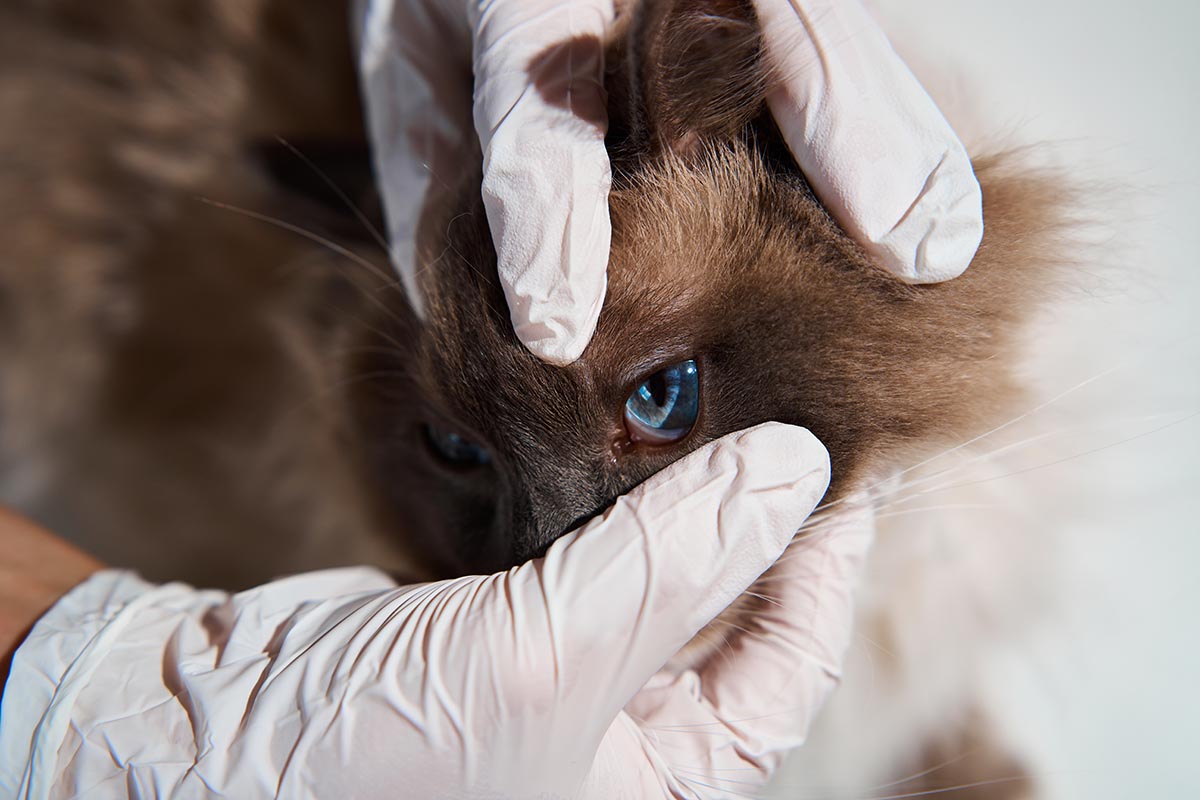
Your vet will start with a physical exam and a close look at the lesions.
Because EGC can mimic other conditions, they may take a small sample of cells or a biopsy to confirm that eosinophils are the main players.
Bloodwork and a check for parasites are often part of the process too.
If you want to read up before your appointment, understanding eosinophilic granuloma in cats in more detail can help you ask better questions and recognize what your vet is looking for.
MedcoVet offers a thorough breakdown of the different lesion types, causes, and treatment paths, which is useful to have in your back pocket when you’re trying to make sense of what’s happening on your cat’s skin.
Just remember that online information supports the conversation with your vet; it doesn’t replace it.
How It’s Treated
Treatment usually has two parts: calming the current flare-up and finding the trigger so it doesn’t keep coming back.
For the flare-up, vets commonly use corticosteroids, either as oral medication or a longer-acting injection, to reduce inflammation and itching.
Some cats need other immune-modulating medications if steroids aren’t a good fit.
Secondary bacterial infections, which are common when cats lick and chew at lesions, may need antibiotics.
For the underlying cause, expect your vet to recommend:
- Strict, year-round flea prevention for every pet in the household;
- A food elimination trial using a novel or hydrolyzed protein diet for eight to twelve weeks;
- Environmental changes or allergy testing if other triggers are suspected;
It can take patience. Lesions often recur, and it may take a few rounds to identify what’s driving them.
But many cats go on to live perfectly comfortable lives with the right combination of prevention and occasional treatment.
When to Call the Vet
Knowing how to support your pet’s wellbeing includes recognizing skin changes that need professional attention rather than home monitoring.
Contact your veterinarian if your cat has:
- a lip sore, swollen chin, or skin lesion that is getting larger
- persistent licking, scratching, bleeding, or discharge
- nodules or sores inside the mouth
- difficulty eating or signs of pain
- unusual tiredness or loss of appetite
If you’re concerned about how much does a vet visit cost, ask the clinic about the examination fee and potential diagnostic costs when scheduling.
Getting a suspicious lesion evaluated early may also help avoid more extensive treatment if the condition progresses.
Conclusion: Looking Beyond the Current Flare-Up
Treating eosinophilic granuloma in cats is not only about making the visible sore disappear.
The deeper goal is understanding why the reaction happened and what you can do to reduce the risk of another flare-up.
Allergies to fleas, food, and environmental triggers are among the common underlying causes veterinarians investigate.
Once the immediate problem is under control, think longer term:
- maintain consistent flea prevention and watch for possible allergy triggers;
- learn what is normal for your cat’s skin, grooming habits, appetite, and behavior;
- photograph unusual lesions so you can track changes or show your veterinarian;
- plan ahead for veterinary expenses, especially if your cat develops a condition requiring repeat visits, testing, or long-term management.
That last point can become particularly important with recurring health problems.
Comparing companies that offer pet insurance for cats before you actually need coverage can help you understand exclusions, waiting periods, deductibles, and which future veterinary expenses may or may not be covered.
And this is one of those things you didn’t know about cats until you suddenly need to know it: a seemingly small change on the lip or skin can be part of a much bigger inflammatory response.
Eosinophilic lesions are clinical signs rather than one single disease, so finding and controlling the underlying trigger can be more important for the future than simply treating what you can see today.
The more familiar you become with your cat’s normal skin and behavior, the easier it becomes to notice when something changes.
That gives you a better chance to act early, work with your veterinarian on the cause, and keep your cat comfortable rather than waiting for the next flare-up to become impossible to miss.