Paint My Pixels: How a Milwaukee Artist Turned Collaborative Pixel Art Into the World’s
✨ Key Points
Paint My Pixels pioneered collaborative internet art before it was mainstream. In 2006, Jon Baas invited 5,400 people worldwide to co-create a single digital artwork, anticipating modern ideas like crowdsourcing and community-driven creativity years ahead of their time.
The project transformed digital participation into a tangible, physical artwork. Once completed online, the pixel composition was recreated as a real canvas painting, auctioned, archived, and preserved—bridging the gap between internet art and traditional fine art.
The experiment prioritized creativity and community over advertising or hype. Unlike pixel ad sites, Paint My Pixels focused on artistic contribution, personal expression, and shared ownership, proving that meaningful art can emerge from simple, honest collaboration.
In 2006, long before NFTs, social media creators, or crowdfunding platforms became mainstream, a 26-year-old artist from Milwaukee asked a deceptively simple question: What would happen if thousands of people worked together to create a single piece of art online?
That question became Paint My Pixels, a creative experiment that blended art, technology, and entrepreneurship into what its creator called The World’s First Internet Painting.
The goal wasn’t to strike it rich or chase internet fame. It was personal, practical, and refreshingly human—buy a first car, upgrade a wardrobe, and invest in an acting career, all through shared creativity.
At the center of the project was Jon Baas, a native of Milwaukee who had never owned a car but had no shortage of imagination.
A Creative Idea Born Before Its Time
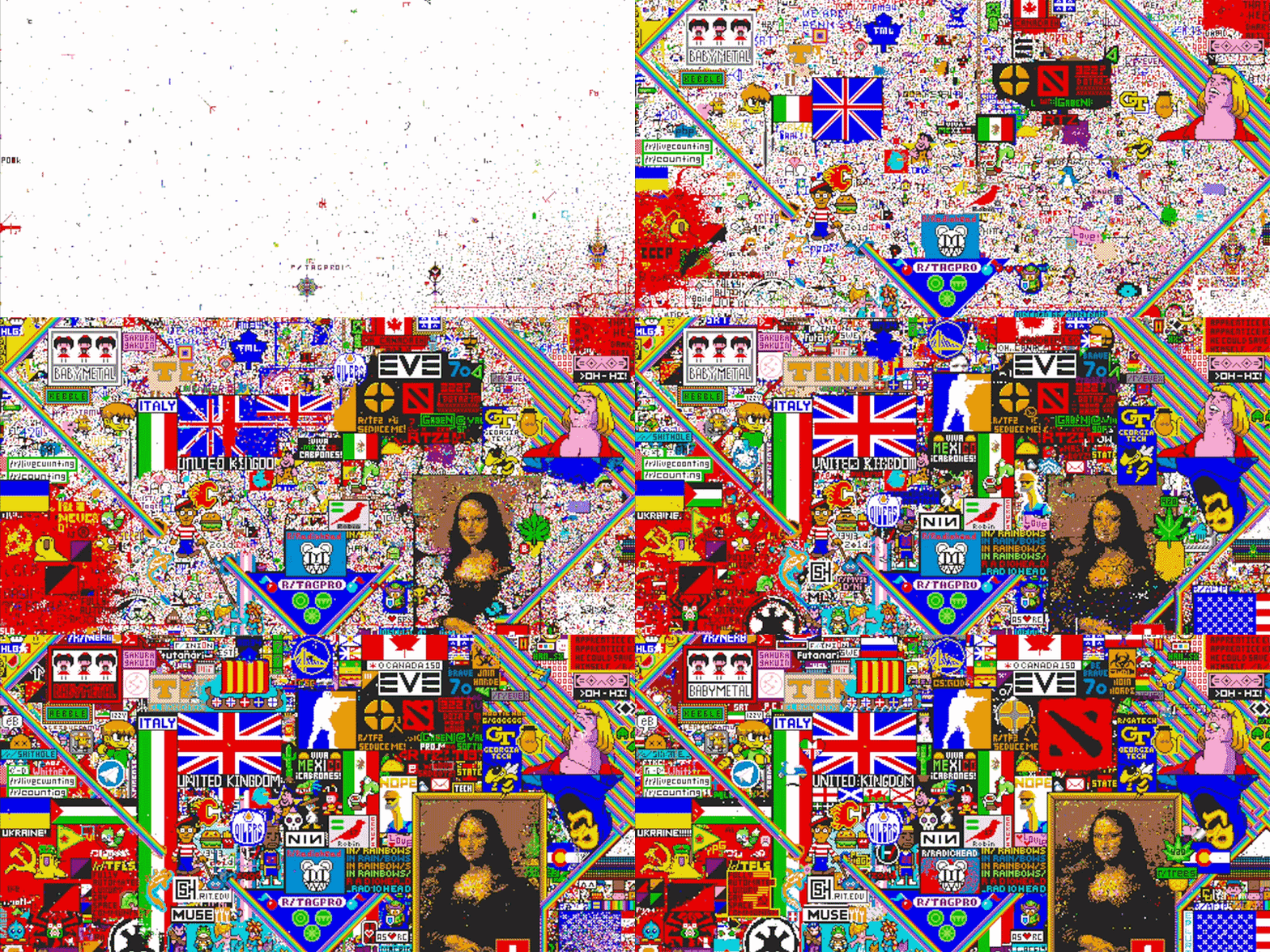
Paint My Pixels launched at a moment when the internet still felt experimental. Social networks were young, blogs were personal, and online art projects were rare. Baas wasn’t responding to a trend—he was inventing one.
His idea was straightforward but ambitious: create a large digital canvas made up of 5,400 small squares.
Each square contained exactly 100 pixels. Anyone, anywhere in the world, could claim a square, fill it with a single solid color, and become part of a collective artwork.
For one dollar, participants added their own “brushstroke” to the growing composition.
That was it. Just people, pixels, and the shared act of creation.
More Than a Pixel Site
At first glance, Paint My Pixels could be mistaken for the pixel advertising sites that were popping up around the same time. Those platforms sold digital real estate to brands and websites, turning pixels into billboards.
Baas was doing something very different.
This wasn’t about promotion or traffic. Participants could optionally link their square to a website, but that feature was secondary. The focus was creative contribution, not visibility. Each square existed as part of a whole, not as an isolated advertisement.
As Baas explained, advertising comes and goes. Art lasts.
That distinction mattered. Paint My Pixels wasn’t selling attention—it was inviting collaboration.
How Paint My Pixels Worked
The mechanics of the project were intentionally simple, lowering the barrier to entry while encouraging thoughtful participation.
Participants followed a clear process:
View the evolving digital canvas online
Observe the emerging color patterns and composition
Select an unclaimed 100-pixel square anywhere on the canvas
Choose a single solid color to fill that space
Pay $1 to permanently add that square to the artwork
Once a square was filled, it became part of the permanent composition. No edits. No do-overs. Each decision shaped the final image in a small but meaningful way.
The result was a living artwork, slowly forming as more people joined in.
Turning Digital Collaboration Into Physical Art
What truly set Paint My Pixels apart was what happened after the digital canvas was complete.
When all 5,400 squares were filled, Baas committed to recreating the entire pixel composition as a physical painting on canvas.
Every color choice, every square, every contribution would be translated by hand into a real-world artwork.
This step transformed the project from an online experiment into a tangible piece of art history.
The finished canvas painting would then be:
Sold at auction
Offered with equal opportunity for anyone to purchase;
Documented alongside the original pixel composition;
Preserved through prints and an online gallery;
In doing so, Baas ensured that contributors weren’t just participating in a website—they were helping create a physical artwork that could exist independently of the internet.
Art With Purpose, Not Hype
Baas was transparent about his goals, and that honesty gave the project credibility.
He wasn’t promising massive returns, viral success, or revolutionary technology.
He simply wanted to use creativity to reach a few personal milestones—buying his first car, improving his professional image, and investing in new acting headshots.
That clarity resonated.
“I’m not looking to make a million dollars,” Baas explained. “I just want to share my talents and reach a few goals at the same time.”
In an era now crowded with monetized creativity, that restraint feels especially authentic.
Community Response and Early Support
The project quickly attracted participants who understood its spirit. One early supporter, Hakan B., a small-time weblogger, described why the site spoke to him.
Having used computers since the early 1990s and the internet since its early days, he saw Paint My Pixels as a reminder of a simpler digital era—when creativity mattered more than algorithms.
To him, the project echoed the charm of ASCII art, bulletin boards, and early web experimentation. It wasn’t polished or commercial. It was playful, personal, and sincere.
That sense of nostalgia helped fuel participation, turning the canvas into a shared cultural memory rather than just a novelty.
A Collaborative Experiment in Creative Thinking
Paint My Pixels wasn’t just about filling squares with color. It subtly challenged participants to think like artists.
Before choosing a square, contributors had to consider:
How their color choice would affect the surrounding areas;
Whether to blend in or deliberately contrast;
How individual decisions shape collective outcomes;
In that way, the project became an informal lesson in composition, restraint, and collaboration.
Every square mattered, but no single square defined the piece.
Baas also hinted at surprises along the way—small gifts, unexpected rewards, and moments designed to encourage participants to explore their own creativity.
It was his way of giving back to a community that was helping bring the experiment to life.
Why Paint My Pixels Still Matters
Nearly two decades later, Paint My Pixels feels surprisingly modern.
It anticipated ideas that are now common:
Crowdsourced creation;
Community-driven funding;
Digital-to-physical art workflows;
Personal storytelling as a creative engine.
What makes it stand out is not technology, but intention.
The project wasn’t built to scale endlessly or dominate attention. It was designed to be finished, archived, and remembered.
Once the first painting was complete, Baas even considered starting again—only if there was genuine interest.
That willingness to stop is rare, and telling.
Art, Ownership, and Shared Legacy
One of the most compelling aspects of Paint My Pixels is how it rethinks ownership.
No single participant could claim authorship over the final work.
Yet everyone who contributed could honestly say they helped create it.
The physical painting belonged to one buyer, but the creative act belonged to thousands.
That shared legacy is what makes the project more than a curiosity.
It’s a reminder that art doesn’t always need a single author or a grand statement. Sometimes, it just needs a structure that allows people to participate.
Final Thoughts
Paint My Pixels was never about pixels alone. It was about curiosity, collaboration, and the belief that small creative acts can add up to something meaningful.
For Jon Baas, it was a way to blend art and acting, ambition and humility, the digital and the physical.
For participants, it was a chance to leave a tiny mark on a shared canvas and be part of something larger than themselves.
In a world now saturated with monetized creativity, Paint My Pixels stands as a quiet reminder: when art invites people in—without pressure, hype, or promises—it can still bring strangers together, one square at a time.