
Low-Maintenance Landscaping Ideas Without Grass
✨ Key Points
- Reduce water use: Replacing thirsty turf with native plants, mulch, or permeable hardscaping can lower irrigation needs.
- Choose landscaping for real life: Design each area around how your household uses it, whether for entertaining, pets, gardening, or relaxation.
- Plan for less work—not zero work: Low-maintenance yards still require occasional weeding, pruning, cleaning, and mulch replacement, but eliminate much of the repetitive lawn care.
A beautiful yard should give you a place to relax, not consume every free weekend with mowing, watering, edging, and weed control.
Replacing part or all of a traditional lawn with native plants, ground covers, mulch, gravel, or functional outdoor living areas can reduce routine work while making the property more useful.
The potential water savings are significant.
According to the U.S. Environmental Protection Agency, outdoor use accounts for more than 30% of average household water consumption and can reach 60% in arid regions.
The EPA also estimates that up to 50% of outdoor water may be wasted through evaporation, wind, runoff, and inefficient irrigation.
Landscaping experts at the University of Minnesota Extension recommend designing around three priorities:
- How the yard needs to function;
- How much maintenance the homeowner can realistically manage;
- How the landscape affects soil, water, wildlife, and the surrounding environment.
Sometimes the grass really is greener, but a conventional lawn is not the only way to create curb appeal.
Climate-appropriate native plants generally require less supplemental water, fertilizer, and pesticide once established, while patios and pathways can turn unused lawn into practical space for dining, entertaining, or relaxing.
These three low-maintenance landscaping ideas can help you spend less time fighting weeds and more time enjoying your yard.
Artificial Turf
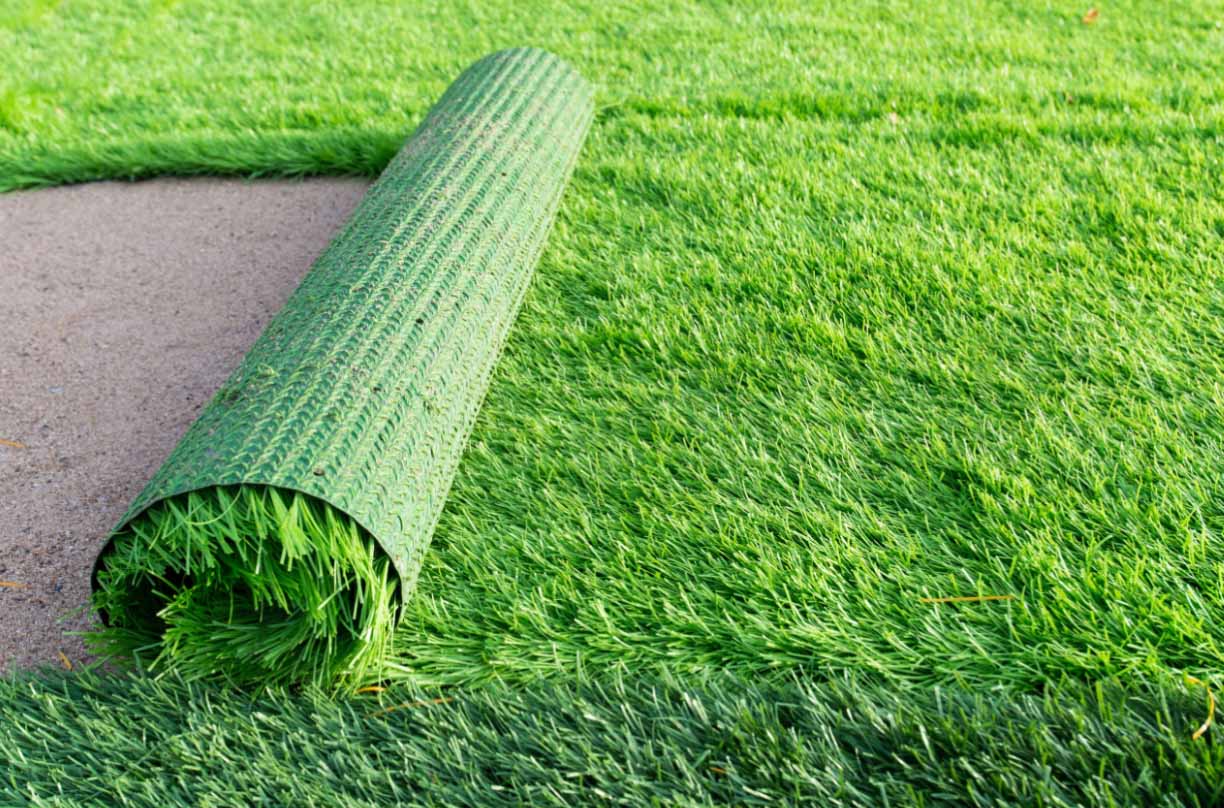
Artificial turf is a practical alternative for homeowners who want the appearance of a green lawn without mowing, fertilizing, or constantly repairing brown and muddy patches.
It can work particularly well for:
- Shaded areas where natural grass struggles to grow;
- Small urban yards and rooftop spaces;
- Pet runs and frequently used play areas;
- Landscapes with recurring mud or worn patches;
- Homeowners who want to reduce irrigation and lawn care.
Proper installation is essential.
The base must be graded correctly, and the turf needs adequate drainage and suitable artificial grass infill for its intended use. Poor installation may lead to standing water, wrinkles, odors, or premature wear.
Artificial turf is low-maintenance, but it is not maintenance-free.
Homeowners should still:
- Remove leaves and debris;
- Rinse dusty or pet-used areas;
- Brush compressed fibers when necessary;
- Treat stains and odors promptly;
- Inspect seams, edges, and drainage periodically.
Before choosing artificial turf, compare its installation cost, expected lifespan, warranty, surface temperature, drainage performance, and local regulations.
When the product matches the space and is professionally installed, it can provide an attractive, usable surface throughout the year with far less work than conventional grass.
Check out https://buyturfonline.co.uk/ for some great options.
When in Doubt, Use Mulch
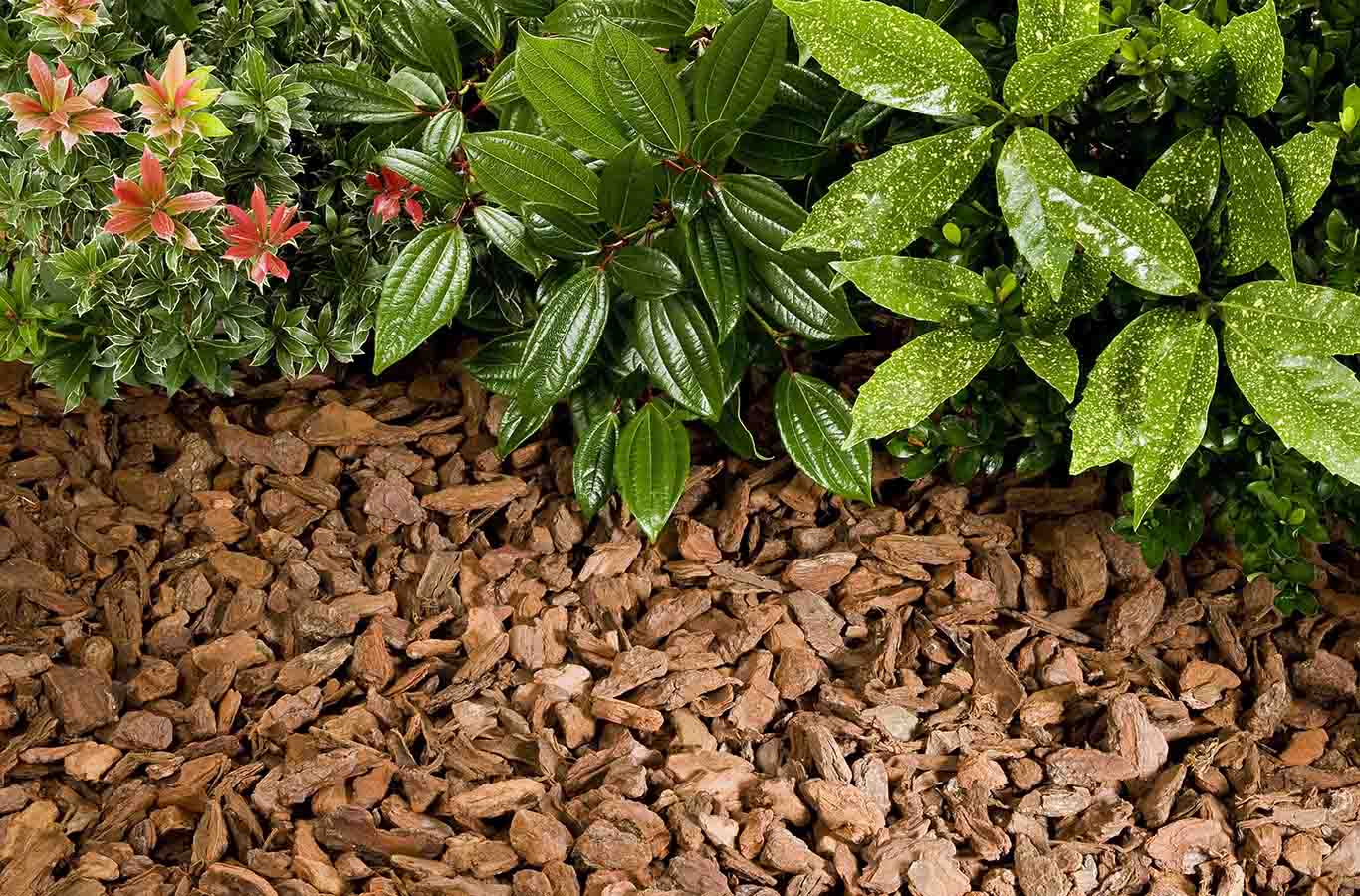
If parts of your yard look empty or natural grass struggles to grow, mulch can create a cleaner, more intentional landscape without adding another area that needs mowing or frequent watering.
Oasis Landscape, a lawn care company in Woodstock, GA, recommends mulch as a practical alternative to grass in suitable areas.
Organic varieties, such as shredded bark and wood chips, provide several benefits:
- Suppress weed growth by limiting sunlight
- Help the soil retain moisture
- Protect plant roots from temperature extremes
- Reduce mud and soil erosion
- Add organic matter as they decompose
- Give flower beds a clean, finished appearance
Mulch does not eliminate weeds completely, but a properly applied layer can significantly reduce them.
Apply approximately two to three inches around established plants while keeping it away from trunks, stems, siding, and the foundation.
Piling mulch against trees can trap moisture and contribute to bark decay.
For a large project, a local mulch delivery service can help calculate the required volume and deliver bulk material directly to your property.
This may be more convenient and affordable than transporting dozens of individual bags.
Organic mulch does not always need complete replacement every spring.
Check its depth, loosen compacted sections, and add only enough to restore the recommended layer.
Concrete pavers, stepping stones, or landscape edging can complete the design while creating a defined path through the garden.
Choose Your Trees Wisely
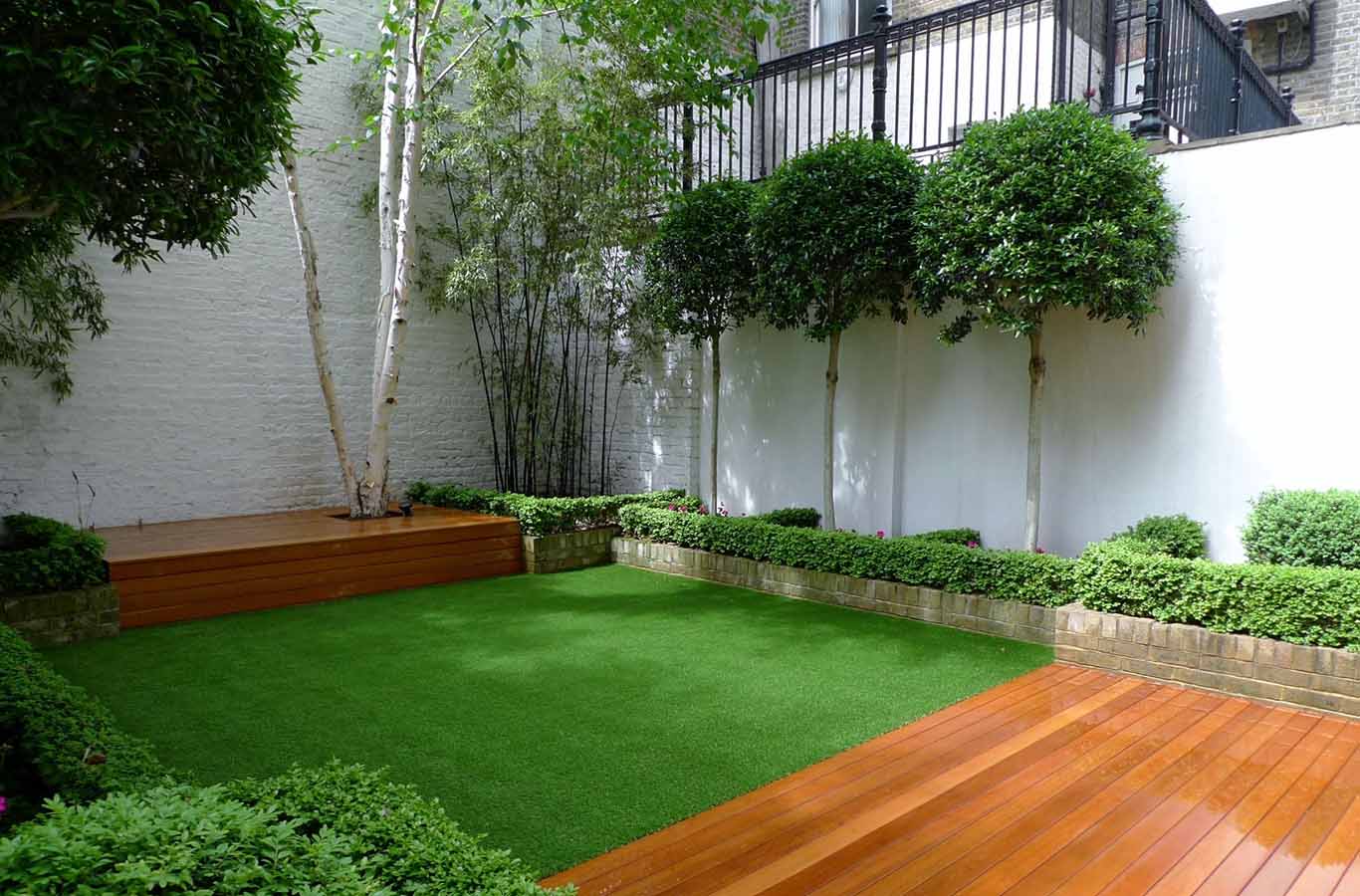
Trees can provide shade, privacy, seasonal color, and wildlife habitat, but choosing the wrong species may create years of unnecessary pruning, leaf cleanup, root problems, or storm damage.
Before planting, evaluate:
- The tree’s mature height and canopy width;
- Root distance from foundations, pipes, and pavement;
- Local climate, soil, sunlight, and drainage;
- Resistance to regional pests and diseases;
- Flowers, fruit, seeds, and seasonal leaf drop;
- Proximity to power lines and neighboring properties.
An ornamental cherry tree can suit a smaller landscape, but mature sizes vary significantly by cultivar.
Choose a non-fruiting or low-fruiting variety if you want to reduce fallen fruit, and confirm that the selected tree is appropriate for your local climate and available space.
Tulip poplar is usually unsuitable for a small, low-maintenance yard.
It can grow approximately 70 to 90 feet tall, develop a broad canopy, and drop flowers, leaves, and seed material. Its mature size also requires substantial clearance from structures and utility lines.
Consulting a certified arborist before planting can prevent expensive mistakes.
Hiring a tree surgeon may also become necessary when an established tree develops broken limbs, disease, structural weakness, or conflicts with buildings and power lines.
Professional assessment is especially important before major pruning or removal, as incorrect cuts can permanently damage a tree or create safety risks.
The lowest-maintenance tree is not simply the one described as “hardy.”
It is the species whose mature size, root system, environmental needs, and cleanup requirements genuinely match your property.
In this case, local tree services like https://www.thelocaltreeexperts.com/tn/memphis/ may come in handy.
Which Low-Maintenance Landscaping Idea Will You Try?
Low-maintenance landscaping is not about neglecting your yard.
It is about creating an attractive outdoor space that requires less water, repetitive work, and ongoing expense.
Start with the problem that affects your daily life most:
- Use artificial turf where natural grass repeatedly becomes muddy or patchy;
- Add mulch to reduce weeds and protect planted areas;
- Select climate-appropriate trees that fit the property at maturity;
- Create pathways or patios where you need functional outdoor space;
- Improve drainage before investing in decorative features.
Avoid common landscaping mistakes, such as planting trees too close to the house, covering poor drainage with artificial turf, piling mulch against trunks, or choosing plants without considering their mature size.
A low-maintenance design only works when its materials suit the climate, soil, sunlight, and way your household uses the yard.
If you plan to move, include the landscape among the essential checks to make when selling a home.
Remove dead plants, trim unsafe branches, repair broken irrigation, refresh thin mulch, clean artificial turf, and make sure pathways are stable.
These practical improvements can create a stronger first impression without committing to an expensive redesign.
The deeper benefit is getting your time back.
Instead of spending every weekend mowing, watering, and repairing problem areas, you can use the yard for morning coffee, family dinners, pets, gardening, or simply relaxing.
Begin with one difficult section and improve it thoughtfully, the best landscape is not the one that demands the most work, but the one you can genuinely enjoy.