
How to Keep Your Business Moving Forward Even When You’re Not There
✨Key Points
- Business downtime reduces revenue by up to 30%, often due to missed engagement and follow-ups.
- Ethical ways to create cognitive dissonance in marketing encourage action without pressure by highlighting gaps between intention and behavior.
- Automated, transparent messaging keeps businesses active, engaged, and converting even without constant hands-on management.
Your business needs to keep moving at all times, yet many owners don’t realize how much downtime directly costs them revenue.
Research shows that businesses can lose 20–30% of potential revenue due to inefficient processes, missed follow-ups, and inactive customer engagement.
These gaps often appear when no one is actively managing communication, marketing, or sales.
A healthy business should continue to function, attract attention, and prompt customer decisions even when no one is physically managing operations.
This is where ethical ways to create cognitive dissonance in marketing become especially valuable
By thoughtfully highlighting the gap between a customer’s current behavior and their desired outcome, businesses can encourage action without pressure or manipulation.
For example, ethical cognitive dissonance can be applied through:
Messaging that contrasts intention vs. action, such as wanting growth but delaying decisions;
Educational content that reveals missed opportunities, without fear-based tactics;
Automated follow-ups and reminders that prompt reflection and next steps;
Transparent comparisons that help customers self-identify the best choice.
When used responsibly, ethical cognitive dissonance increases engagement, strengthens trust, and improves conversion rates helping your business stay active and responsive during periods of lower direct involvement.
With that in mind, the following strategies will help you keep your business operating smoothly, customer-focused, and revenue-generating at all times.
Schedule Your Social Media (With Strategy, Not Just Automation)
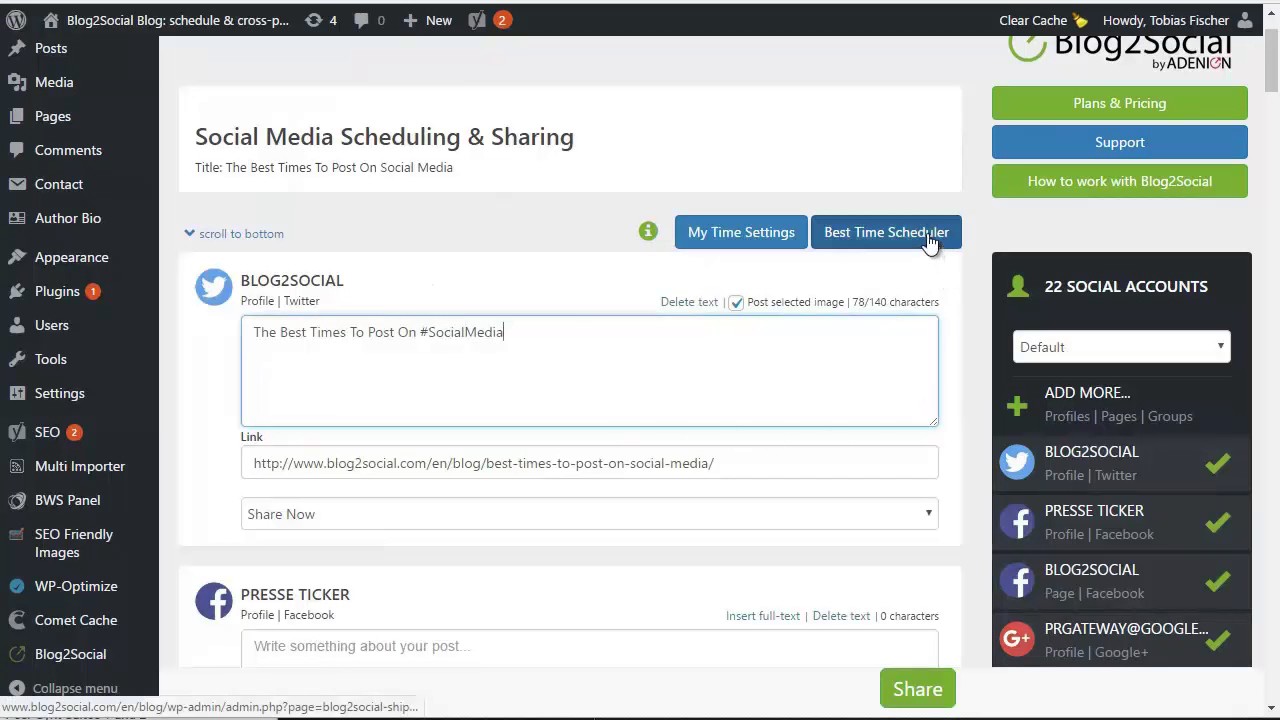
Social media works best when it’s consistent, but no business owner can be online all day creating and posting content.
You still have a business to run.
That’s where smart scheduling combined with AI-driven content creation makes a real difference.
Instead of posting randomly, you can plan content in advance and let it work for you in the background.
Start by using AI tools to research your audience, identify pain points, and generate content ideas mapped to Ben Hunt’s Awareness Ladder.
This ensures your content has a clear purpose—educating unaware audiences, nurturing problem-aware prospects, and guiding solution-aware clients toward action.
When content follows this structure, it doesn’t just fill your feed; it builds trust and moves people closer to becoming clients.
You can then batch-create posts and schedule them using social media tools that automatically publish to platforms like Instagram and Facebook.
This approach allows you to stay visible and relevant without being tied to your phone or posting manually every day.
More importantly, your content continues nurturing potential clients through meaningful, pain-focused topics—even when you’re offline.
To make this work effectively:
Use AI to research audience pain points and generate content ideas aligned with each awareness stage;
Create a content map based on Ben Hunt’s Awareness Ladder, so posts educate, nurture, and convert;
Batch-create content weekly or monthly, instead of daily posting;
Schedule posts in advance to maintain consistency and control;
Focus on helpful, problem-solving content, not just promotional posts.
When done right, scheduled content becomes a strategic system, not just automation.
It keeps your business moving, educates your audience, and nurtures clients thoughtfully, even when you’re not actively managing your social channels.
Keep Production Lines Going Without Costly Delays
For businesses that rely on production lines or manufacturing systems, even a small breakdown can cause major disruption.
One faulty component can stop the entire line, delay dispatch, create backorders, and directly impact revenue.
In manufacturing, downtime isn’t just inconvenient it’s expensive.
Industry data shows that unplanned downtime can cost manufacturers thousands of dollars per hour, especially when delays affect fulfillment and customer trust.
Production issues often come from worn-out or overlooked components, such as sensors, mechanical parts, or monitoring systems.
For example, failing to replace low profile load cell sensors or other critical parts on time can lead to inaccurate measurements, safety risks, or full system shutdowns.
Preventing these problems starts with visibility and planning, not reactive fixes.
To reduce the risk of costly production stoppages, businesses should:
Schedule regular maintenance and inspections to catch faults before they cause downtime;
Monitor critical components like sensors, motors, and control systems that affect the entire line;
Replace high-risk parts proactively, rather than waiting for failure;
Document maintenance schedules and performance issues for faster troubleshooting;
Assign ownership, such as hiring or appointing a project or operations manager to oversee manufacturing processes.
Having a dedicated person responsible for production oversight ensures problems are identified early, repairs are coordinated quickly, and manufacturing continues smoothly even when you’re not directly involved.
The result is fewer surprises, more reliable output, and a production line that supports growth instead of slowing it down.
Outsource Certain Aspects of Your Business to Stay Focused and Scalable

As a business owner, trying to manage everything yourself eventually becomes a bottleneck.
No matter how skilled or motivated you are, it’s simply not realistic to run operations, finances, marketing, and growth at the same time—especially as your business expands.
When too many responsibilities sit on one person’s shoulders, important tasks get delayed, quality drops, and progress slows.
Outsourcing allows you to protect your time and energy by handing off tasks that don’t require your direct involvement but are still critical to daily operations.
Many businesses struggle not because they lack ideas, but because they’re stretched too thin trying to execute everything alone.
Common areas businesses successfully outsource include:
Accounting and bookkeeping, to stay compliant and avoid costly financial mistakes;
Marketing and content creation, so your brand stays visible and consistent;
Social media management, keeping engagement active even when you’re offline;
Administrative or operational tasks, freeing up mental space for strategy.
Outsourcing doesn’t mean losing control it means creating systems that keep your business running smoothly without constant hands-on effort.
By delegating the right tasks, you reduce stress, improve efficiency, and ensure your business continues to operate and grow even when your attention is focused elsewhere.
The result is a business that feels lighter to manage, more organized, and far better positioned for long-term growth.
Use SEO—and AI Automation—to Keep Your Business Moving Forward
Your website is your digital storefront.
It works for you 24/7—even when you’re sleeping, traveling, or focused on running the business.
But if your site isn’t visible in Google search or AI-powered search results, it can’t attract customers or generate sales.
This is exactly why understanding how local brands can show up in Google and AI search without burning out has become essential.
Traditional SEO alone is no longer enough; consistency, relevance, and smart systems now matter more than constant manual effort.
Search engine optimization (SEO) helps your site get discovered through strategic keywords, helpful content, and clear structure.
But to avoid burnout, many local businesses are now choosing to hire an AI Automator to support SEO and content creation.
An AI automation specialist can build systems that research keywords, map content to real search intent, and show how local business SEO can drive foot traffic and sales, while optimizing pages and publishing content consistently without requiring you to be hands-on every day.
This allows your business to stay visible across both search engines and AI-driven platforms while protecting your time and energy.
The benefits of combining AI SEO with AI automation include:
Consistent visibility in Google and AI search, without daily posting or constant effort;
Automated keyword research and content planning, based on real customer questions;
A better user experience, with content that’s useful, clear, and easy to find;
Sustainable growth for local brands, without marketing burnout.
By investing in SEO supported by AI automation, local businesses can build an online presence that works continuously helping them show up, stay relevant, and grow without exhausting themselves in the process.