The Importance of Different Types of Advertising for Business Growth
✨Key Points
- Different advertising types support different goals: Awareness channels introduce the brand, educational content builds trust, and conversion-focused campaigns encourage action.
- Modern discovery combines paid, earned, and creator-led visibility: Search ads, AI recommendations, influencers, UGC, reviews, and direct mail can support different stages of the customer journey.
- Strategy must come before spending: Businesses should define the audience, objective, budget, message, tracking method, and expected return on investment before selecting a channel or advertising company.
Advertising helps consumers discover, understand, and compare products or services before making a decision.
For businesses, its purpose is to reach the right audience with the right message at the right moment, whether the immediate goal is launching a product, generating sales, building trust, or expanding into a new market.
However, choosing among the many types of advertising has become increasingly difficult.
A business may invest in social media ads that attract engagement but no buyers, hire an influencer whose followers do not match the target market, or generate thousands of website visits without knowing which campaign produced revenue.
Some brands also create polished advertisements that fail because customers want authentic demonstrations, independent reviews, and proof that the product works in real life.
Common advertising challenges include:
- Reaching many people but attracting few qualified customers;
- Choosing platforms because competitors use them;
- Spending money without reliable conversion tracking;
- Using the same message for every customer segment;
- Focusing on clicks and impressions instead of sales;
- Struggling to balance short-term conversions with long-term awareness;
- Producing enough authentic content for multiple platforms;
- Appearing in search results but not in AI-generated recommendations;
- Hiring creators without clarifying usage rights or campaign goals;
- Connecting digital campaigns with offline customer experiences.
Traditional advertising options include television, radio, podcasts, newspapers, magazines, outdoor placements, display ads, email campaigns, events, video advertising, and product placement.
Businesses can also use automated direct mail to trigger personalized physical mail from digital customer data, giving campaigns a tangible way to reconnect with prospects or existing buyers.
Modern advertising also includes:
- Search and social advertising to reach people according to their interests, behavior, location, or buying intent.
- Influencer marketing to introduce products through trusted creators with relevant audiences.
- User-generated content (UGC) to show products being used in relatable, everyday situations.
- Creator-led paid ads that combine authentic content with targeted advertising distribution.
- AI-powered advertising that assists with audience selection, bidding, personalization, testing, and campaign optimization.
- AI recommendation visibility that helps brands become discoverable through credible content, reviews, structured information, expert mentions, and trusted third-party sources.
AI recommendations are not always paid advertisements, and no company can guarantee inclusion in an AI-generated response.
Businesses improve their chances by publishing accurate, useful content and building consistent authority across their website, media coverage, customer reviews, creator content, and reputable external sources.
Influencer marketing and UGC solve another major problem: customers may notice a traditional advertisement but still hesitate because they cannot imagine the product in their own lives.
A credible creator review, customer demonstration, tutorial, or lifestyle video can answer practical questions and reduce uncertainty.
Paid partnerships, free products, and other material relationships must be clearly disclosed according to Federal Trade Commission guidance.
Advertising can introduce products, expand markets, increase sales, encourage competition, educate consumers, build goodwill, and motivate businesses to improve quality.
Yet the best campaign is not the one using the most channels.
It is the one that connects a relevant message with a genuine customer need and produces measurable results.
Digital Advertising

Digital advertising helps businesses reach potential customers online and guide them directly to a product page, booking form, store, or other next step.
Unlike an advertisement on the side of a bus—which may be seen briefly and forgotten, an online ad can be clicked, tracked, tested, and connected to a measurable action.
Common forms of digital advertising include:
- Search ads shown when someone looks for a product or solution
- Social media ads on platforms such as Facebook, Instagram, TikTok, and LinkedIn
- Display or banner ads placed on websites and apps
- Video ads on streaming and social platforms
- Retargeting ads shown to previous website visitors
- Sponsored influencer and creator content
- UGC-style advertisements demonstrating products in real situations
- Affiliate marketing based on tracked referrals or sales
- Native ads designed to match surrounding editorial content
Display advertising is sometimes described as an online billboard.
Banner ads may be static, animated, interactive, or video-based and can appear in different sizes across websites and apps.
They are useful for building awareness and reminding previous visitors about a brand, but they must communicate the main benefit quickly because users may scroll past within seconds.
Before launching a campaign, businesses should understand:
- Who the ideal customer is;
- What problem the customer wants to solve;
- Where that person searches or spends time online;
- Which message matches their stage of the buying journey;
- What action the advertisement should generate;
- How leads, sales, and revenue will be tracked;
- How much the business can afford to acquire one customer;
Platforms such as Google and Meta use data and automated systems to help advertisers reach relevant audiences.
However, broad access to targeting tools does not replace a strong strategy.
Businesses should use customer needs, intent, location, interests, and behavior responsibly while following privacy rules and platform restrictions.
Knowing your marketing strategies makes it easier to select the right channel and avoid wasting money on audiences unlikely to buy.
Digital advertising is especially valuable because businesses can compare creative versions, monitor performance, adjust budgets, and measure conversions more easily than with many traditional formats.
Accessibility and measurability make digital advertising a practical option, but clicks alone do not indicate success.
The campaign must attract the right people and turn their attention into qualified leads, customers, or profitable affiliate sales.
Which Advertising Platform Is Best for Your Business?
There is no single advertising platform that is best for every business.
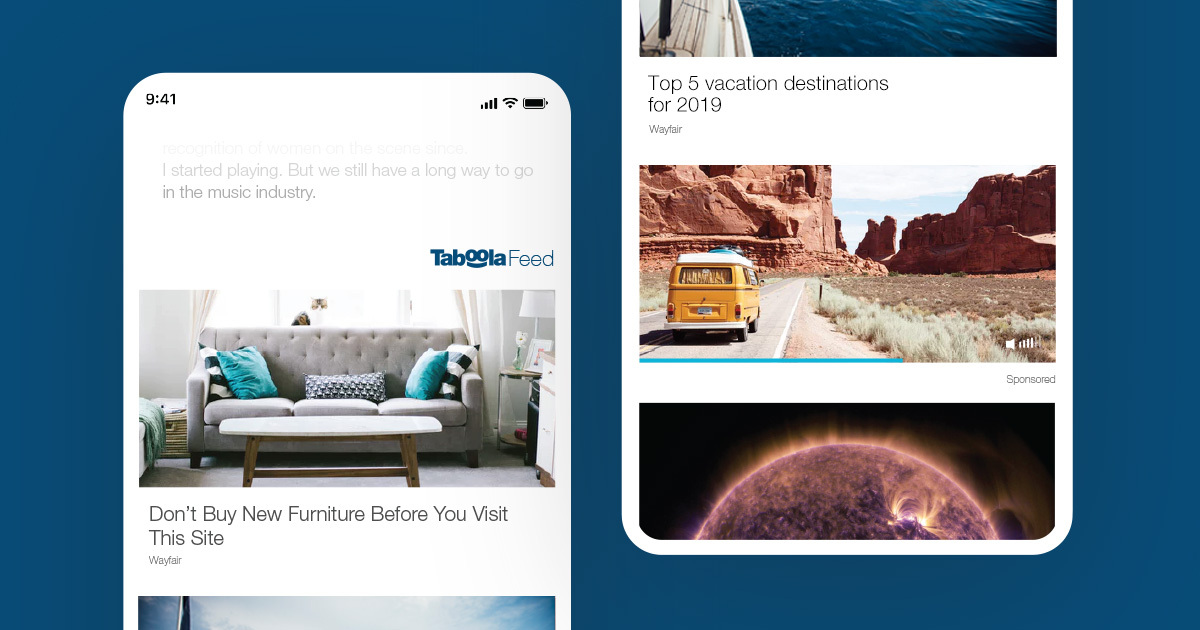
Taboola, Teads, Revcontent, MGID, and Smaato serve different audiences, campaign goals, and advertising formats.
Most are advertising technology platforms, not full-service agencies, so you will usually need to plan, create, and monitor your own campaigns.
Sponsored content is one form of paid media strategy designed to match the surrounding editorial experience.
The following platforms can help distribute that content:
- Taboola: Its Realize platform supports native and performance advertising beyond search and social media. It may suit established brands, ecommerce companies, lead-generation campaigns, and agencies seeking access to large publisher audiences.
- Teads, formerly Outbrain: Outbrain acquired Teads in 2025, and the combined company now operates under the Teads name. It offers advertising across the open internet, including native, display, and video formats.
- Revcontent: This platform specializes in native advertising that resembles recommended editorial content. It can be useful for brands and publishers that have compelling articles, landing pages, or visual stories to promote.
- MGID: MGID connects advertisers with publishers through native and programmatic advertising. It may suit businesses seeking content-discovery traffic, international reach, lead generation, or alternatives to conventional social-media advertising.
- Smaato, now part of Verve: Smaato was acquired by Verve and has evolved into a mobile-first, multichannel advertising and monetization platform. It is particularly relevant to app developers, mobile publishers, and advertisers interested in in-app, video, web, and connected-TV inventory.
Before choosing a platform, consider:
- Whether you need native, mobile, video, display, or app advertising;
- The countries and audience segments you want to reach;
- Minimum campaign budgets and expected cost per acquisition;
- Placement transparency, brand-safety controls, and traffic quality;
- Conversion tracking and compatibility with your analytics tools;
- The creative assets and landing pages required;
- Whether your team can manage testing and optimization;
Start with a controlled test budget and compare conversion quality, not clicks alone.
High traffic means little when visitors leave immediately, never buy, or fall outside your target audience.
The best advertising company or platform is the one that reaches qualified customers while producing measurable results at a sustainable cost.
Taboola vs. Outbrain: Campaign Goals, Targeting, and Key Differences
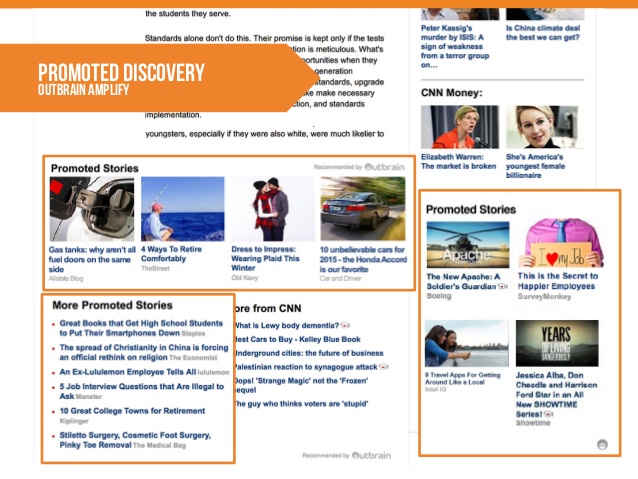
The comparison between Taboola and Outbrain has changed. Outbrain acquired Teads in 2025, and the combined company now operates as Teads.
Both Teads and Taboola use AI-powered optimization, so automation is no longer exclusive to Taboola.
The practical differences include:
- Taboola Realize focuses heavily on performance advertising across publisher websites. Businesses can optimize campaigns for awareness, website traffic, leads, purchases, video views, app installations, and return on ad spend.
- Teads offers a broader omnichannel approach covering native advertising, premium display, online video, mobile, and connected TV. It may be more suitable for brands combining awareness and performance campaigns across multiple screens.
- Taboola provides automated bidding options such as Maximize Conversions and target cost per acquisition. Its Predictive Audiences can also identify users who resemble previous converters.
- Teads uses predictive AI to select audiences, placements, formats, and creative variations while optimizing campaigns toward measurable outcomes.
Taboola may be the stronger choice for a business focused on generating website conversions through publisher traffic.
Teads may offer greater value to brands seeking premium placements, video reach, connected-TV advertising, and coordinated campaigns across different devices.
However, the right choice depends on budget, target market, creative assets, and campaign objectives.
Target Customers More Accurately
Both platforms can use combinations of demographic, contextual, behavioral, interest-based, location, device, and first-party audience signals.
Demographic targeting may include age, gender, language, and location, but businesses should not rely on demographics alone.
Someone’s age or income does not necessarily reveal what they need or intend to purchase. Stronger campaigns combine demographic information with:
- Search and browsing intent;
- Relevant interests and behaviors;
- Previous website interactions;
- Purchase or lead data;
- Page context and content topics;
- Device, location, and time of engagement.
Regardless of whether a business uses native ads, banners, videos, emails, or publisher placements, effective advertising must answer several customer questions:
What is being offered? Who is it for? What problem does it solve? How much does it cost? Why is it worth the price? What should the customer do next?
Graphics and videos can make that message easier to understand, but creative quality cannot compensate for a weak offer or an irrelevant audience.
Businesses should test both platforms with clear conversion tracking and compare qualified leads, sales, CPA, and ROAS, not impressions or clicks alone.
Choose Advertising That Supports Real Business Growth
The best advertising strategy is not the one that generates the most impressions or uses the newest technology.
It is the one that connects your business with people who genuinely need what you offer and encourages them to take meaningful action.
Choosing the right combination of digital ads, native advertising, influencers, user-generated content, video, email, and automated direct mail can provide real-life benefits:
- More qualified customers instead of empty website traffic;
- Lower acquisition costs and less wasted advertising spend;
- Stronger trust through helpful, relevant messages;
- Better sales without depending on a single platform;
- Clearer performance data for future decisions;
- More time to focus on products, customers, and business development.
Start with one clear objective, select the channel that matches it, and track leads, sales, CPA, and return on advertising spend.
Test on a manageable scale before increasing your budget.
Advertising should make business growth more predictable, not more complicated.
When your message, audience, platform, and offer work together, advertising becomes more than promotion.
It becomes a practical system for attracting customers, building recognition, and creating sustainable revenue.