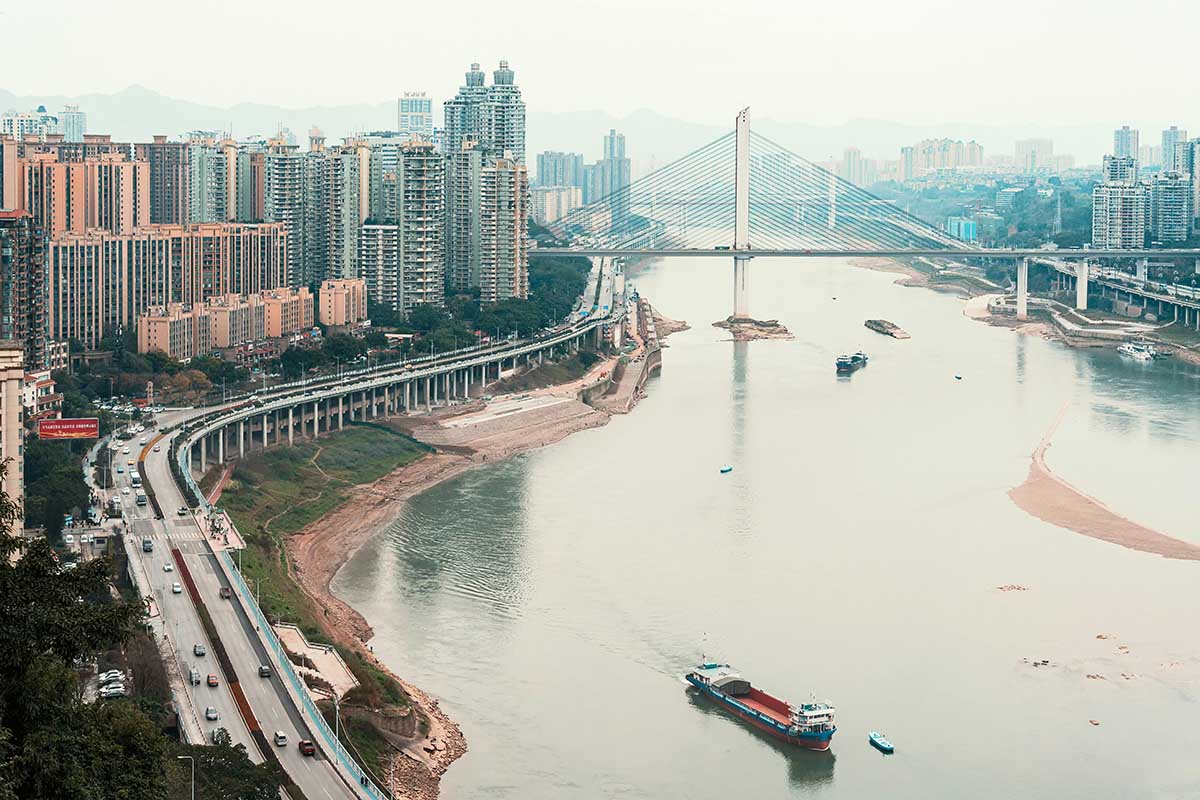
The Yellow River and Yangtze: China’s Most Important Rivers Explained
✨ Key Points
- Yellow River → northern origins, early civilisation, political history;
- Yangtze → southern growth, commerce, population expansion;
- Both remain critical today for infrastructure, environment, and national development.
If you are learning Mandarin online or working with an online Chinese teacher, you have probably already come across China’s two great rivers.
They appear constantly in poetry, idioms, historical writing, and everyday cultural references.
Understanding what these rivers are, their historical significance, and their role today gives you a far deeper picture of China, something that becomes especially valuable when you learn Mandarin online.
The Yellow River and the Yangtze are not simply large waterways on a map.
They have helped shape where people settled, how agriculture developed, how political power was organised, and how different regions of China connected with one another.
Even today, they remain central to China’s economy, infrastructure, and environmental planning.
The Yellow River: China’s Mother River
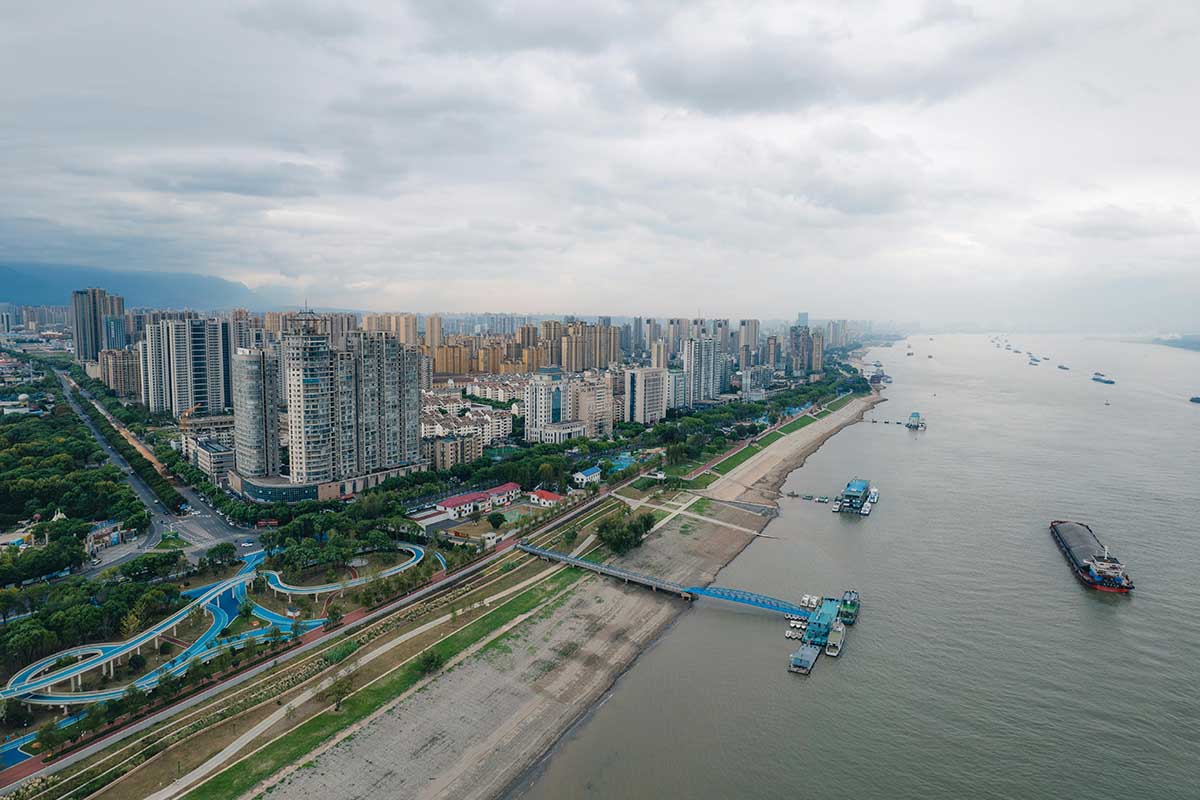
The Yellow River is known in Mandarin as Huáng Hé (黄河).
It is traditionally called the Mother River of Chinese civilisation, and that title is not just symbolic.
The river has long been associated with the origins of early Chinese society, especially in the north.
It flows for roughly 5,400 kilometres, beginning on the Tibetan Plateau and moving eastward through the Loess Plateau, across the North China Plain, and finally into the Bohai Sea.
Along the way, it picks up enormous quantities of loess, which is a fine, windblown sediment.
This is what gives the river its famous yellow-brown colour.
That sediment is also what makes the Yellow River so distinctive and so dangerous.
Why the Yellow River Has Been So Destructive
The Yellow River is one of the most silt-laden rivers in the world.
As the sediment settles onto the riverbed, the bed itself gradually rises.
Over time, the river can end up flowing higher than the surrounding land, held in place only by embankments and dikes.
This has had devastating consequences throughout Chinese history.
When the embankments failed, the river could change course dramatically and flood vast areas of the North China Plain.
These disasters destroyed farmland, displaced populations, and caused immense loss of life.
For that reason, the Yellow River gained another reputation alongside “Mother River”: it was also known as China’s Sorrow.
For successive dynasties, controlling the Yellow River was never just an engineering problem.
It was a political test.
A government that could manage flood control, irrigation, and relief efforts demonstrated competence and legitimacy.
A government that failed risked unrest, famine, and the perception that it had lost the right to rule.
That connection between water management and political authority is one of the most important themes in Chinese history.
The Cradle of Early Chinese Civilisation
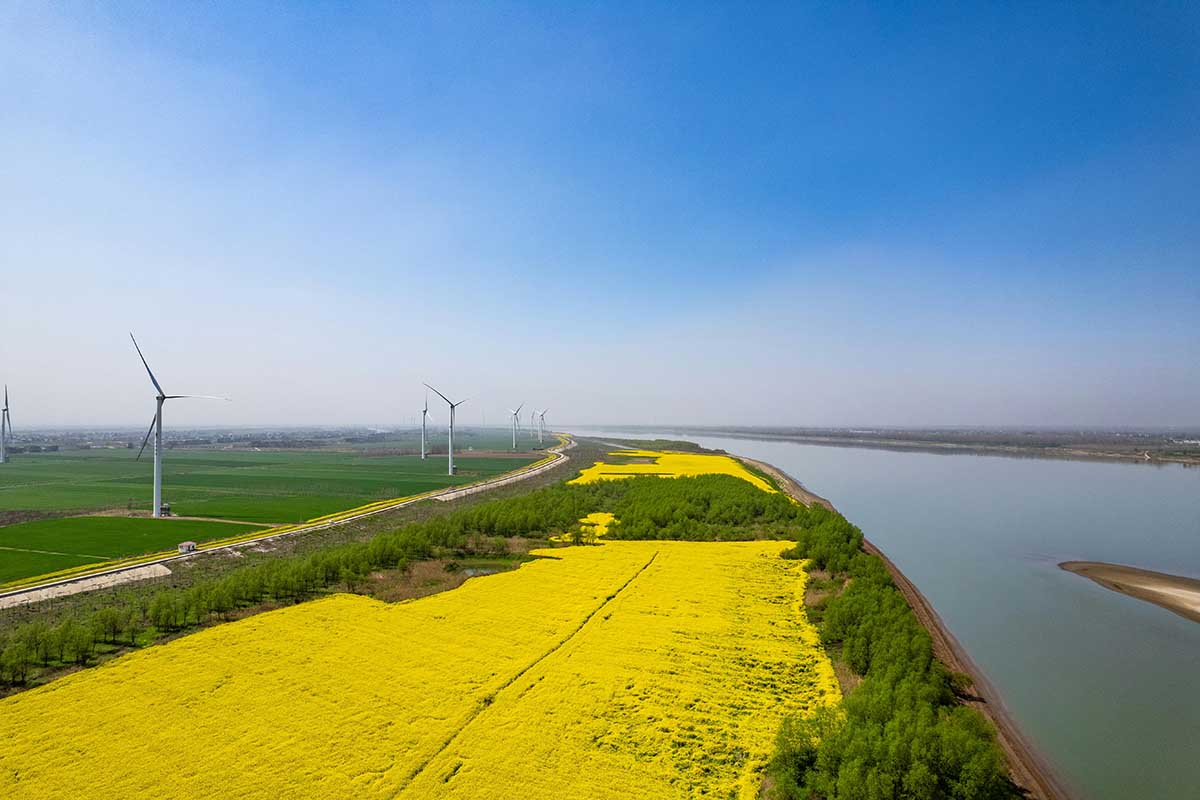
Despite its dangers, the Yellow River basin was one of the most favourable environments for early agriculture in northern China.
The loess soil in the middle reaches of the river is exceptionally fertile and relatively easy to work.
That made it ideal for early farming communities.
Some of the earliest major cultures associated with Chinese civilisation developed in this region, including the Yangshao and Longshan cultures.
These are not merely archaeological names.
They represent the deep historical foundations of settled life, social organisation, and technological development in northern China.
Later, many of the formative periods of early Chinese history emerged in the broader Yellow River basin:
- the oracle bone culture of the Shang dynasty;
- the political order of the Zhou dynasty;
- the intellectual world of the Spring and Autumn period;
- the rise of classical Chinese philosophy;
In that sense, the Yellow River is not just important because it watered fields.
It helped create the conditions in which early Chinese political institutions, religious practices, and systems of thought could take shape.
The Yellow River in Chinese Culture
The Yellow River occupies a special place in Chinese cultural imagination.
It appears in classical poetry as a symbol of force, scale, endurance, and historical continuity.
It is often linked with the northern landscape, with hardship, and with the origins of Chinese identity itself.
This matters for language learners because cultural references to the river are often larger than geography.
When Chinese writers mention the Yellow River, they may be invoking:
- the beginnings of civilisation;
- the resilience of the Chinese people;
- the power of nature;
- the weight of history.
That is why learning about the Yellow River deepens your Mandarin beyond vocabulary.
This cultural understanding helps you make better sense of real-world topics like Chinese food franchise business opportunities.
The Yangtze: China’s Long River
The Yangtze River is known in Mandarin as Cháng Jiāng (长江), which literally means Long River.
At around 6,300 kilometres, it is longer than the Yellow River and is the longest river in Asia.
It also differs from the Yellow River in character, geography, and historical role.
Like the Yellow River, it begins on the Tibetan Plateau and flows eastward.
But its basin is much larger and more ecologically diverse.
The river passes through or connects regions including Yunnan, Sichuan, Hubei, Hunan, Jiangxi, Anhui, and Jiangsu before reaching the East China Sea near Shanghai.
Where the Yellow River is often associated with early civilisation and flood control, the Yangtze is more closely associated with transport, trade, agricultural abundance, and regional integration.
A Commercial Lifeline for Central and Southern China
Historically, the Yangtze was far more navigable than the Yellow River.
Its waters, though not without dangers, were relatively more suitable for long-distance transport.
This made it one of the great commercial arteries of China.
The Yangtze connected inland regions to the coast and allowed goods, people, and ideas to move across enormous distances. Its importance can hardly be overstated.
Cities along the river became major centres of administration, trade, manufacturing, and culture.
Among the most significant are:
- Chongqing, a vital inland port and gateway to the southwest;
- Wuhan, a major industrial and transportation hub in central China;
- Nanjing, one of China’s great historical capitals;
- Shanghai, the country’s leading commercial metropolis at the river’s mouth.
The Yangtze helped make these cities powerful because it linked them into a single economic system.
Even today, the Yangtze River Economic Belt remains one of the most important zones of development in China.
The Agricultural Wealth of the Yangtze Basin
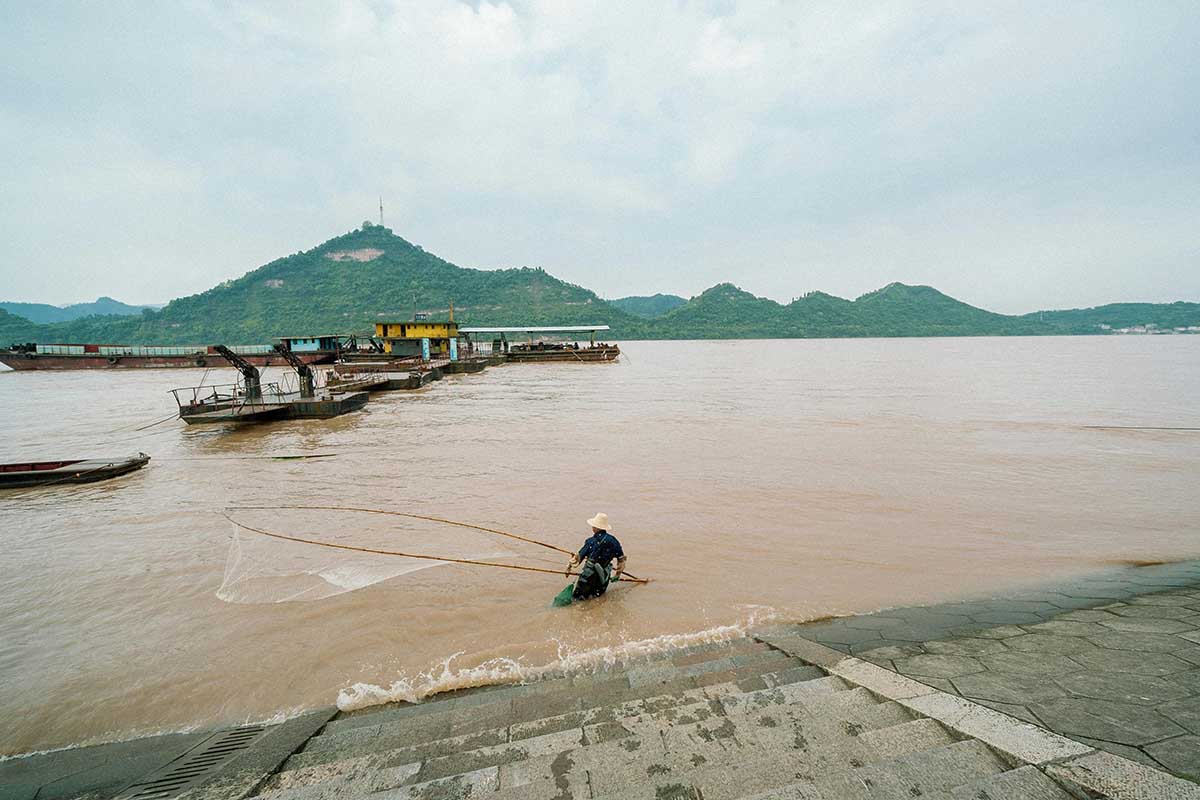
If the Yellow River basin is tied to early northern agriculture, the Yangtze basin is closely linked to the prosperity of central and southern China.
Its warmer climate, abundant rainfall, and extensive water network made it especially suitable for wet-rice cultivation.
Over time, the Yangtze region became one of China’s most productive agricultural areas.
It has long produced large quantities of:
- rice;
- freshwater fish;
- tea;
- rapeseed;
- cotton in some regions.
This agricultural richness played a major role in China’s demographic and economic history.
As southern regions became more developed, the centre of economic gravity in China gradually shifted southward.
The Yangtze basin was central to that transition.
In other words, if the Yellow River helps explain where Chinese civilisation began, the Yangtze helps explain how China grew into a vast, economically integrated society.
How the Two Rivers Compare
The Yellow River and the Yangtze are often mentioned together, but they are not simply two versions of the same thing.
They represent different historical experiences and different regional patterns within China.
The Yellow River is associated with:
- early civilisation in northern China;
- loess soil and millet agriculture;
- flooding, silt, and hydraulic control;
- dynastic legitimacy and political order;
- deep historical symbolism.
The Yangtze is associated with:
- long-distance transport and internal trade;
- rice agriculture and southern prosperity;
- large urban centres and commercial growth;
- ecological diversity across central and southern China;
- modern industrial and logistical importance.
Together, they tell a larger story about how China developed across both north and south, inland and coastal zones, ancient settlement and modern urbanisation.
The Rivers in Contemporary China
These rivers are not just important in textbooks.
They continue to matter in present-day China in very practical ways.
In fact, if you’ve ever wondered what is the secret of the robust health of the Chinese, part of the answer lies in systems like these, reliable water sources, fertile agricultural basins, and long-standing environmental management that support food quality and daily life.
Both river systems are tied to major questions of water supply, agriculture, environmental protection, flood management, and energy production.
The Yangtze, for example, is closely linked with large-scale infrastructure projects, inland shipping, and hydroelectric power.
The Yellow River remains a focus of water conservation and ecological restoration, especially because parts of its basin face soil erosion, water scarcity, and environmental stress.
At the same time, both rivers face modern pressures.
Industrial activity, dam construction, pollution control, habitat loss, and climate-related changes all affect how these waterways are managed.
In contemporary China, rivers are still deeply political, not because dynasties rise and fall on them now, but because they remain essential to food security, regional development, and environmental stability.
That continuity between past and present is worth noticing.
The same rivers that shaped early settlement still shape national priorities today.
Why This Matters for Mandarin Learners
Some Mandarin teaching institutions, including programs such as GoEast Mandarin in Shanghai, include cultural and historical knowledge alongside language study.
That approach makes sense. Language becomes much more meaningful when you understand the geography and history behind the references you encounter.
When you hear the Yellow River or the Yangtze mentioned in a lesson, a poem, or an idiom, it helps to know that these are not abstract symbols.
They are real rivers with very different personalities and very different places in Chinese history.
Learning about them gives you more than factual knowledge.
It helps you understand why northern and southern China developed differently, why certain cities became so important, and why rivers hold such a powerful place in Chinese thought.