The Ultimate Diamond Jewelry Buying Guide
Buying diamond jewelry can feel intimidating.
Prices vary widely, grading terminology is unfamiliar, and two stones that look almost identical may differ considerably in quality and cost.
When purchasing an important piece, such as an engagement ring, the fear of overpaying or choosing the wrong diamond can make an emotional decision unnecessarily stressful.
Before buying, you need to understand:
- Whether the diamond is natural, laboratory-grown, or a simulant;
- How cut, color, clarity, and carat weight affect its appearance and price;
- Whether an independent grading report supports the seller’s claims;
- How the setting and metal will withstand everyday wear;
- What the return, resizing, warranty, and upgrade policies cover.
The Gemological Institute of America identifies the Four Cs—cut, color, clarity, and carat weight—as the industry standard for evaluating diamond quality.
However, a confident purchase also requires comparing prices, verifying disclosures, and choosing a reputable seller.
The FTC further requires sellers to disclose clearly when a diamond is laboratory-grown rather than mined.
Use the following five diamond-buying tips to compare your options, protect your budget, and choose jewelry that suits both your personal style and everyday life.
Research the Jeweler and Verify the Diamond Report
Customer reviews can reveal recurring concerns about quality, resizing, returns, repairs, and after-sales service.
However, testimonials alone do not prove that a diamond matches its description.
Before purchasing:
- Read reviews across several independent platforms;
- Check the return, warranty, resizing, and upgrade policies;
- Request an independent diamond grading report;
- Verify the report number in the grading laboratory’s online database;
- Confirm that the report details match the actual stone.
A jeweler is not “GIA certified,” and GIA does not certify or appraise diamonds.
It examines eligible stones and issues grading reports describing their quality and identifying characteristics.
Color
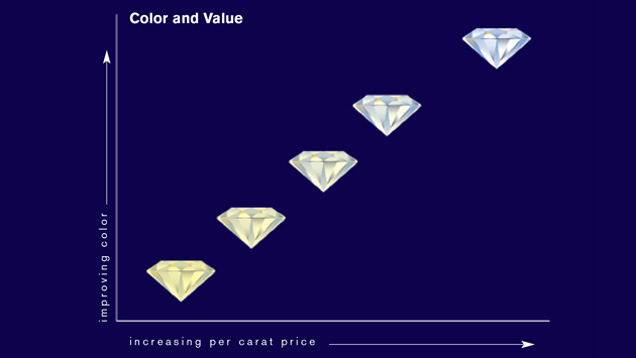
The GIA color scale for natural diamonds ranges from D to Z:
- D–F: Colorless
- G–J: Near colorless
- K–M: Faint color
- N–R: Very light color
- S–Z: Light color
There is no universal requirement to choose H color or better.
A near-colorless diamond may provide better value while still appearing white, particularly when its color complements the setting metal.
Compare stones in person under neutral lighting whenever possible.
Clarity
Clarity describes inclusions within a diamond and blemishes on its surface.
The GIA scale ranges from Flawless to Included, but higher clarity does not always create a visible improvement.
Rather than automatically paying for an IF, VVS, or VS diamond:
- Examine the stone without magnification;
- Ask where its inclusions are located;
- Consider whether the setting will conceal them;
- Determine whether any inclusion could affect durability.
An “eye-clean” diamond with a lower clarity grade may look virtually identical during ordinary wear while costing considerably less.
Carat Weight
Carat measures a diamond’s weight, not its visible size.
Two diamonds with the same carat weight can have different face-up dimensions because of their shape, cut proportions, and depth.
Compare:
- Carat weight;
- Length and width measurements;
- Cut proportions;
- Visible surface area;
- Price differences near popular weight milestones.
Do not judge a 1.25-carat diamond by an expected diameter alone. Evaluate its measurements and proportions together.
Cut
Cut describes how effectively a diamond’s proportions, symmetry, and polish interact with light. It should not be confused with shape, such as round, oval, cushion, or pear.
For standard round brilliant diamonds, GIA uses five cut grades:
- Excellent
- Very Good
- Good
- Fair
- Poor
An Excellent or Very Good cut is often a sensible place to begin, but compare diamonds visually because stones within the same grade can still look different.
GIA’s overall cut grade applies specifically to standard round brilliants in the D-to-Z color range.
Protect and Maintain Your Purchase
Buying the jewelry is only the beginning. Protect it by:
- Keeping the grading report and receipt;
- Obtaining an independent appraisal when appropriate;
- Considering specialized jewelry insurance;
- Checking the setting and prongs regularly;
- Cleaning the piece according to the jeweler’s instructions;
- Storing it separately to prevent scratching.
The same principle applies to other luxury possessions: use storage appropriate to the item, whether learning how to store a Rolex or protecting fine diamond jewelry.
Once quality, authenticity, and buyer protections are confirmed, you can confidently compare current styles without allowing a temporary trend to outweigh lasting wearability.
Five Diamond Jewelry Styles to Consider
Jewelry trends change, but the best design is one that complements your style, lifestyle, and budget.
Before choosing a dramatic setting or intricate details, consider how often you will wear the piece and how much maintenance it may require.
Make a Statement
Statement jewelry does not require the largest diamond available.
You can create visual impact with:
- An elongated diamond shape;
- A halo or cluster setting;
- Contrasting gemstones;
- A sculptural band;
- A bold cocktail-ring design.
Prioritize cut quality and balanced proportions over carat weight alone.
A thoughtfully designed setting can make a moderately sized diamond appear more prominent without forcing you beyond your budget.
Choose Vintage or Antique Style
Vintage-inspired jewelry can add character through milgrain edges, filigree, engraving, and Art Deco geometry.
You can choose an authentic antique or a newly made piece inspired by an earlier period.
When purchasing genuine antique jewelry:
- Request information about its age and provenance;
- Inspect the prongs, setting, and band for wear;
- Confirm whether stones or components have been replaced;
- Obtain an independent appraisal;
- Ask whether resizing could damage the design.
Consider an Emerald-Cut Diamond
Emerald-cut diamonds offer clean lines and a sophisticated “hall-of-mirrors” appearance rather than the intense sparkle associated with round brilliant cuts.
Because their broad, open facets can reveal color and inclusions more easily, examine emerald-cut diamonds carefully and compare them in person when possible.
Explore Different Metals
A diamond does not have to be paired with traditional yellow gold.
Depending on your preferred appearance, budget, skin sensitivity, and lifestyle, consider:
- Yellow gold for warmth and classic appeal;
- White gold for a bright, modern look;
- Rose gold for a softer, romantic tone;
- Platinum for durability and a naturally white finish;
- Mixed metals for contrast and versatility.
Ask about metal purity, maintenance, resizing, and possible nickel content before choosing.
Add a Halo Setting
A halo places smaller diamonds or gemstones around the center stone, adding sparkle and potentially making it appear larger.
It can suit vintage-inspired, glamorous, or contemporary designs.
However, a halo includes more small stones and prongs that may require regular inspection and maintenance.
Compare it with solitaire, bezel, three-stone, and cluster settings before deciding.
The setting should secure the diamond while supporting everyday comfort and wearability.