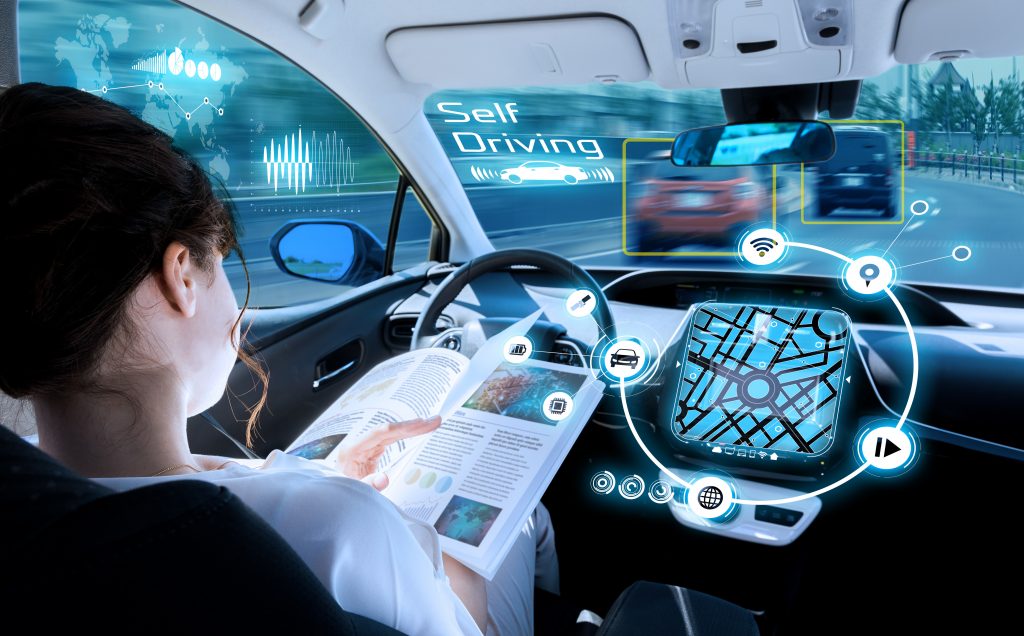
All You Should Know About the Self- Driving Cars
✨ Key Points
- Self-driving doesn’t always mean driverless. Most consumer systems still require some level of human responsibility or supervision.
- Automation is changing driving gradually. Modern driver assistance technology already handles or supports tasks that once depended entirely on the driver.
- Future drivers need a new skill: knowing when to trust technology. Understanding what your car can, and cannot, do is becoming part of road safety.
Self-driving cars once sounded like science fiction: choose your destination and let the vehicle handle the journey while you relax.
In 2026, that future is partly here, but the reality is more complicated.
Autonomous vehicles already operate in certain locations and conditions, while consumer cars increasingly offer driver assistance technology for speed, lane positioning, blind spots, parking, and collision avoidance.
But assisted driving isn’t necessarily the same as fully driverless driving.
I notice this evolution even with my Mazda CX-30.
Its safety and assistance features can make everyday driving easier, but I still see them as exactly that—assistance.
I’m responsible for watching the road and making decisions.
As technology advances, some familiar driving habits may change, but the fundamentals won’t disappear:
- Road safety and driver awareness still matter.
- Drivers need to understand their vehicle’s technology and limitations.
- Weather, pedestrians, road conditions, and unpredictable drivers remain real challenges.
- Car maintenance matters, especially as vehicles depend increasingly on cameras, sensors, and other technology.
Perhaps learning to become a better driver in the future will also mean knowing when technology can help, and when you need to take control yourself.
So how close are we to truly self-driving cars, and what can today’s technology actually do?
Let’s take a closer look.
How Does a Self-Driving Car Work?
As the name suggests, self-driving cars are vehicles that do not require a human operator to get to the desired destination.
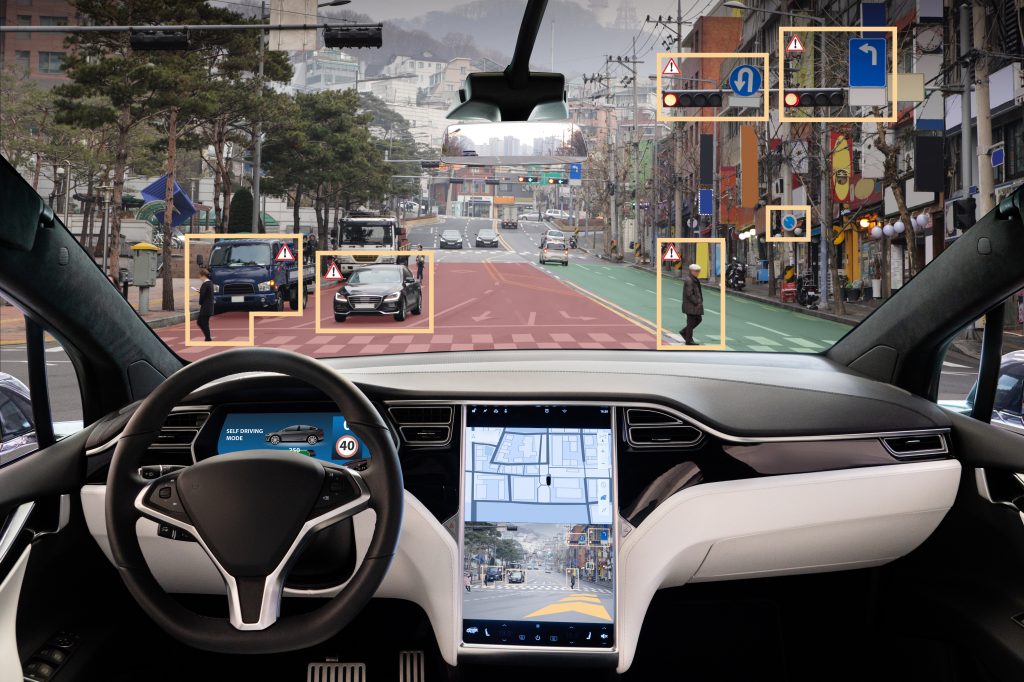
Powered by AI technologies, self-driving cars use sensors, cameras, and other advanced hardware and software to respond to traffic, people, animals, and miscellaneous objects they might encounter on the road.
Developers of self-driving cars use large amounts of data from image recognition systems, along with neural networks and machine learning. There are five different levels of autonomy when it comes to self-driving cars.
Here’s how they work:
- Level 0 – No Automation. For vehicles that fall in this category, their functionality and systems are entirely controlled by humans.
- Level 1 – Driver Assistance. At level one, the computer controls some minor things on the vehicle, such as automatic braking and cruise control. These operations are being controlled one at a time.
- Level 2 – Partial Automation. This is the combination of human and computer interaction, in which the computer can control multiple automated functions. The human driver still needs to take over under unsafe conditions and be there to perform emergency procedures.
- Level 3 – Conditional Automation. In this scenario, the computer can simultaneously control all vital operations of the car, including steering, navigation, and stopping. The human driver should still be there to assist in case of an emergency.
- Level 4 – High Automation. Cars at level four are completely autonomous, and in some cases, they do not require a human driver at all. If the weather conditions are good, and it’s sunny or cloudy, these cars can get to their destination with no help whatsoever. However, if it’s snowing or there are other, more extreme weather conditions, they will still require human assistance.
- Level 5 – Full Automation. The vehicles at level five are completely capable of self-driving in any given situation or weather conditions.
The majority of self-driving cars we hear about today, including those made by Tesla and Google, are the level two vehicles.
They can drive on their own, but they still require a human driver to ensure their operations are safe. Here’s how Google’s self-driving car project, called Waymo, works.
- The passenger picks a destination.
- A rotating sensor monitors a 60-meter range around the car to create a dynamic 3D map of the car’s current environment.
- The left rear wheel sensor monitors sideways movement to identify the car’s position in relation to the 3D map.
- Radar systems in the front and rear bumpers calculate the distances to obstacles.
- AI software in the car, which is connected to all the sensors, collects information from video cameras in the car and Google Street View.
- The AI replicates driver decision-making processes, such as when to use brakes and steering.
- The car’s software consults Google Maps to collect data about landmarks, lights, and traffic signs.
- An override function is there to ensure a human driver can take control of the vehicle if needed.
Benefits of Self-Driving Cars
Even though self-driving cars can help you enjoy the ride and finish some other tasks while on the road, they come with even more significant benefits for society.
According to a study called “Three Revolutions in Urban Transportation,” three simple changes in the transportation industry could make a great impact on the world we know today.
If properly adopted, these measures could unveil the full potential of self-driving vehicles.
The three revolutions include more widespread vehicle automation, vehicle electrification, and ridesharing. By 2050, these three, if combined, could:
- reduce traffic congestion;
- reduce urban CO2 emissions by 80% worldwide.
- cut transportation costs;
- free up parking lots;
- improve everyday life;
Another benefit of a self-driving car is that it could be used by people who have some sort of disability that prevents them from operating a vehicle.
Disabled or older people could use them to help perform daily tasks with ease.
In theory, autonomous cars would ensure smooth traffic in which all the participants could do productive activities while commuting to work.
Downsides of Self-Driving Technology
Although, in theory, things work perfectly well, the actual situation on the ground is still a bit different. Riding in a vehicle without a human driver can be distressing.
Relying on self-driving vehicles can be tricky as in cases of software failures or mechanical issues, human drivers need to take the initiative instead of relying on autopilot technology.
There have been a few self-driving car accidents where drivers did not hold their hands on the wheel, even though they were advised to do so.
In March 2018, there was an accident that involved an autonomous car operated by Uber.
As the company later reported, the vehicle’s software identified a pedestrian but considered it a false positive and failed to avoid hitting her.
This unfortunate event made Toyota cease its testing of self-driving cars on public roads.
However, they still perform those tests elsewhere.
Another significant downside of a self-driving car is how much it costs to insure such vehicles.
Just as you would want to protect the majority of your assets when gambling, you shouldn’t invest in just any self-driving car.
Self-driving cars are a gamble, as the technology is very young and still under heavy development.
Therefore it might be a good idea to think about finding some reasonable insurance options.
Right now, in the US, the average annual premium to insure a Tesla car is $4,352.
Until this technology becomes mainstream, high costs will remain one of the main disadvantages of self-driving cars.
Final Thoughts
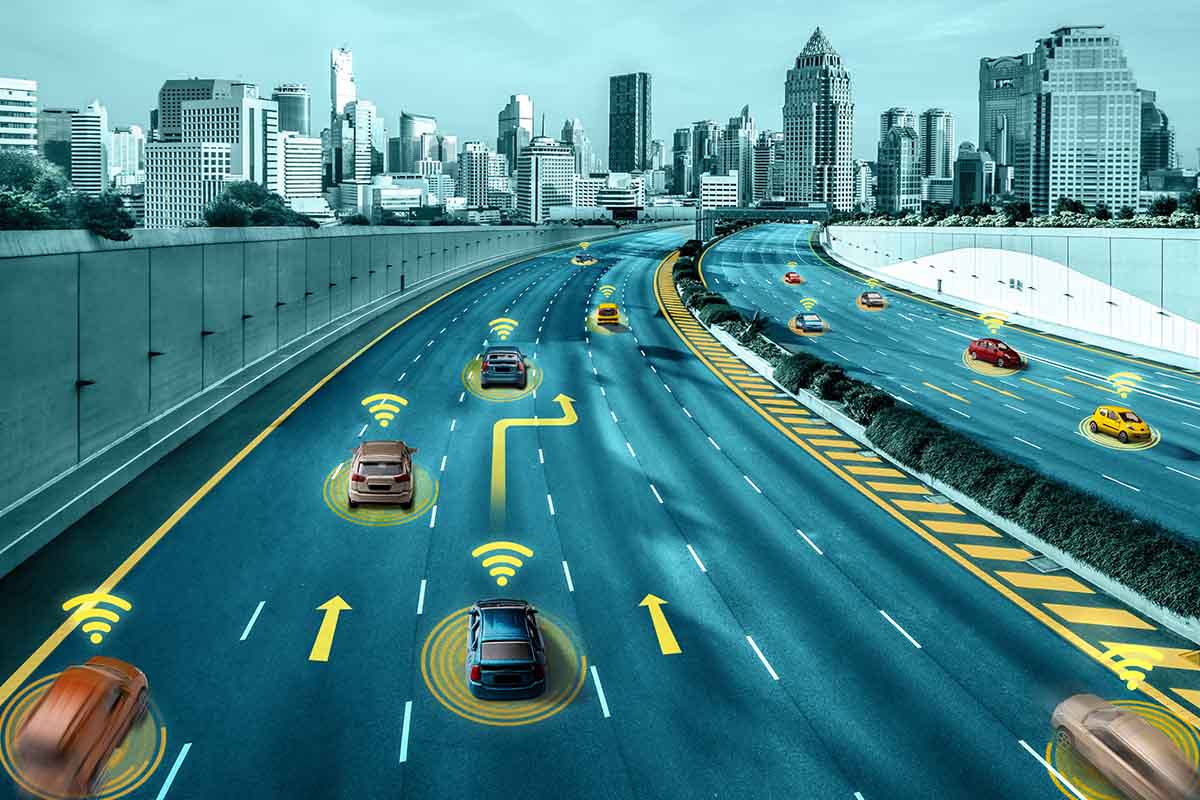
Self-driving cars could eventually change much more than who holds the steering wheel.
As the technology develops, some of its biggest potential benefits may be practical ones:
- Safer driving: Autonomous systems could help reduce some crashes linked to distraction, fatigue, or human error, although they introduce their own technical and safety challenges.
- Easier commutes: More automation could give people back some of the time currently spent concentrating on repetitive stop-and-go traffic.
- Greater independence: People who cannot drive because of age or certain disabilities could potentially gain new transportation options.
- More enjoyable journeys: If vehicles eventually handle more routine tasks safely, it could help driving become more enjoyable and less stressful.
- Better response to changing conditions: Future systems may become increasingly sophisticated at responding to traffic, weather, and even factors such as how daylight affects driving a vehicle.
There could also be wider changes to delivery services, taxis, public transportation, insurance, and jobs that currently depend on professional drivers.
We don’t yet know when, or whether, fully autonomous vehicles will dominate U.S. roads.
What seems much more realistic is a gradual transition in which cars take responsibility for more driving tasks while humans adapt to a new relationship with technology.
The biggest promise of self-driving technology isn’t simply a car that drives itself. It’s the possibility of making transportation safer, more accessible, less stressful, and eventually more useful to the time we spend on the road.